The Kizan Around You, al-Burhan: Kazem al-Sarraj as a Model of a Security Cadre Whose Roots Did Not Disappear After the Revolution
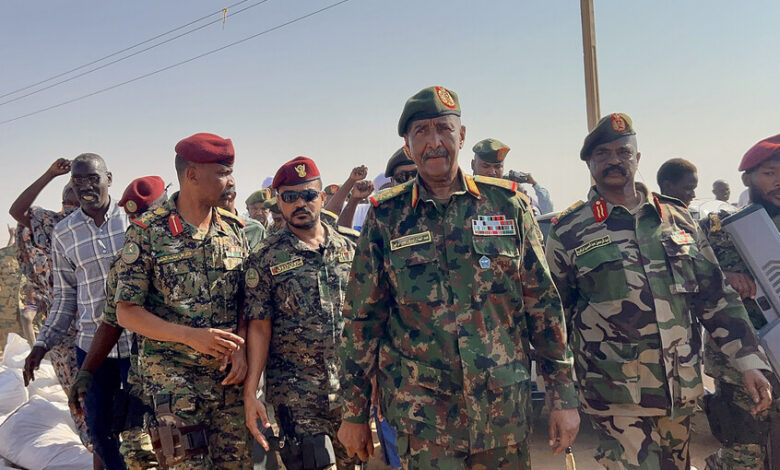
Against the backdrop of a Sudanese political landscape charged with contradictions, General Abdel Fattah al-Burhan, commander of the Sudanese army, posed a question that some interpreted as an expression of indignation and others as an implicit admission: “Where are the Kizan?” The question appeared to reflect an attempt to distance himself from accusations that figures from the former regime were being sheltered within the military institution, or perhaps an expression of frustration from a commander who believed that a particular political current was attempting to infiltrate the ranks of his army. What al-Burhan may not have expected, however, was that the answer would come only days later in the form of photographs and videos—not from an external enemy, but from people close to him.
-
Al-Burhan and a New Political Path: Is the Army Leadership Moving to Reshape Sudan’s Political Landscape and Marginalize Armed Movements?
-
Al-Burhan’s frustration with Minnawi’s forces: when support turns into a burden
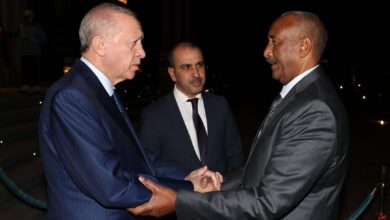
At one of the facilities belonging to the Turkish Armed Forces, General Yasser al-Atta, chief of staff of the Sudanese army, was seen leaving the facility alongside a figure who had attracted little attention from the traditional media but whose appearance caused considerable shock among observers of Sudanese affairs. That figure was Kazem Zain al-Abidine al-Sarraj, described as one of the prominent cadres of the former regime’s National Intelligence and Security Service and a specialist in telecommunications and information technology.
His appearance alongside al-Atta was not merely an incidental coincidence, according to this account, but rather a coded message—or, more precisely, an exposed scandal—that brought al-Burhan’s question back into focus and answered it succinctly: the Kizan are not far from you, al-Burhan; they are around you, right within your own circle.
-
Al-Burhan excludes Minni Minnawi from the political arena: accusations of negligence and refusal to participate
-
How did al-Burhan turn the army into a safe haven for remnants of extremism and shadow networks?
Who Is Kazem Zain al-Abidine al-Sarraj?
Kazem al-Sarraj was not a new name within Sudanese security circles. According to this account, he was one of the figures who helped shape the history of the intelligence services during the period after 2010.
He graduated from Sudan University of Science and Technology with an early interest in technology and telecommunications, a field that would later become his principal instrument for building a complex network of influence. His career, however, was not purely academic. Immediately after graduating, he reportedly joined the Islamist Popular Defence Forces and participated in battles in southern Sudan before South Sudan gained independence in 2011. This early military experience allegedly provided him with two important assets: a network of relationships with Islamist military leaders and ideological legitimacy within the system that governed the country at the time.
-
The field bomb: infiltrations behind al-Burhan’s lines turn the Rapid Support Forces into a formidable power
-
Al-Burhan versus the Islamists: a first step toward reshaping Sudan’s political landscape
After the southern wars ended, al-Sarraj devoted himself to the telecommunications sector, which would later become his principal field of activity. He initially worked for Zain Telecom, one of the region’s major telecommunications companies, where he acquired extensive technical and managerial experience.
His ambitions, however, went beyond being an employee. He soon contributed to establishing Marjan Telecom, which was based in the Al-Shati neighborhood of the Burri area of Khartoum. What distinguished Marjan was not only its technological activities but also the question of its financing: subsequent investigations reportedly revealed that the National Intelligence and Security Service was behind its financing, in what could be described as an early model of the “security economy” that prevailed during that period.
-
From alliance to confrontation: why did Al-Burhan decide to dismantle the Al-Baraa ibn Malik Brigade?
-
Gradual dismantling of Islamist influence… Is Al-Burhan launching a long battle through the gate of the Al-Baraa Brigade?
Electronic Jihad: When Keyboards Became Weapons
With the outbreak of the Arab Spring revolutions in 2011, the Sudanese regime realized that the next battlefield would not be confined to the streets but would also extend into cyberspace. This was where Kazem al-Sarraj’s role became more prominent.
Within the intelligence service, he reportedly supervised the establishment of what became known as the “electronic jihad units.” These units were not merely collections of social-media accounts; according to this account, they constituted an integrated system combining technical skills with security expertise, aimed at shaping digital public opinion, confronting protest movements, and defending the regime in the language of younger generations.
-
Al-Burhan’s decision to dissolve the Al-Bara ibn Malik Brigade… redrawing the balance of power within the military institution
-
Al-Burhan’s army and the Muslim Brotherhood… evidence of a blood alliance in Sudan
Al-Sarraj reportedly played a significant role in this undertaking by recruiting university graduates from technical fields and seconding intelligence officers to work under his authority on the project.
The objective was twofold: to build a generation of “digital jihadists” loyal to the regime while simultaneously creating a class of young technology professionals indebted to the security apparatus, thereby ensuring their continued loyalty. This model of “digital empowerment” was reportedly ahead of its time and was subsequently adopted as an inspiration by several regimes in the region.
-
Al-Burhan and the Sufi Orders: A Strategy to Consolidate Power Amid Fragile Legitimacy
-
Al-Burhan’s Meetings with Sufi Orders: New Alliances to Reshape Sudan’s Political Landscape
Penetrating Markets Through Shell Companies: Arabsat and the Electronic Receipt System
Al-Sarraj’s ambitions reportedly did not stop at electronic jihad. They also extended to penetrating markets through shell companies, a practice described as characteristic of the security service during that period.
The former regime allegedly facilitated his acquisition of a deal to represent the Arabsat satellite in Sudan, a strategic agreement that could have generated substantial profits. Prior to that, he had reportedly contributed through his company to programming some auxiliary systems for what was known as the “electronic receipt system,” placing him at the heart of the state’s financial infrastructure.
-
Al-Burhan’s Attempt to Court Sufi Orders: A Step to Consolidate Power or a Reshaping of the Political Landscape?
-
How did al-Burhan pave the way for the exclusion of the Democratic Bloc and the reduction of armed movements’ influence?
These transactions were not merely commercial projects, according to the article, but instruments for creating an interconnected network of interests between the security service and the private sector, ensuring that the regime and its leaders could retain positions of influence even after their formal removal from power. When the revolution took place and the Empowerment Removal and Anti-Corruption Committee succeeded in blocking several of his projects, many believed that al-Sarraj’s story had come to an end. They were, however, mistaken.
The Coup and the Return: From Al-Asjad to a Transaction-Switching Licence
Following the 25 October 2021 coup, Kazem al-Sarraj reportedly returned to his previous activities, this time with even greater boldness. After years of waiting, a new company called “Al-Asjad for Digital and Smart Solutions” emerged. The company, which had little known history or established presence in Sudan’s technology market, reportedly obtained the first licence for a financial transaction switch from the Central Bank of Sudan in Port Sudan in July of the previous year.
-
Behind the meeting between al-Burhan and the Democratic Bloc: how the exclusion of armed movements and the bloc’s removal from power was decided
-
Al-Burhan and the dismantling of old alliances: toward a centralized authority without a democratic bloc or armed movements
The controversy surrounding the licence was considerable. Who was behind a company with no known track record that could obtain a licence of such significance? The answer reportedly emerged later: Kazem al-Sarraj was said to have been behind many aspects of its establishment and operating systems. The biggest surprise, however, came when the Central Bank of Sudan withdrew the licence without providing a clear explanation, raising further questions about the nature of deals being concluded behind closed doors.
Yasser al-Atta: The Bridge Between the Army and the Islamists
But what connects Kazem al-Sarraj to Yasser al-Atta? The answer, according to this narrative, lies in understanding the nature of the current period. Al-Atta, known for positions close to the Islamist current and for openly acknowledging his affiliation with the Muslim Brotherhood, allegedly needs figures such as al-Sarraj to manage financial and technological networks. Al-Sarraj is not merely a technician; he is portrayed as a dealmaker capable of moving between capitals, managing funds abroad, and coordinating controversial transactions in Turkey, Malaysia, and elsewhere.
-
Heglig shifts the balance of the war: Tasis forces seize the oil lifeline and Washington reorganizes its pressure cards against al-Burhan
-
Heglig under Tasis Forces’ Grip: Humiliating Economic Collapse for Port Sudan Authority and an American Turn Disrupting Al-Burhan’s Calculations
Al-Sarraj’s appearance alongside al-Atta in Turkey was therefore not accidental, according to this interpretation, but evidence that the relationship between the army and the Islamist current had not been severed. Instead, it had evolved into something more complex. The army needs financial resources, the Islamist current needs protection, and al-Sarraj is portrayed as the bridge connecting the two.
Al-Burhan: Is He Really Unaware?
The most important question remains: does al-Burhan know who Kazem al-Sarraj is? The answer, naturally, would be yes. Al-Burhan is not merely a military commander; he is also an experienced political actor who understands the various dynamics of power. The real question, therefore, is why he allows figures such as al-Sarraj to approach decision-making circles.
-
Al-Burhan… When a General’s Survival Becomes More Dangerous than the War Itself
-
Al-Burhan… When the General Fails to Build the State and Insists on Destroying It
The answer, according to the article, lies in the nature of the alliances governing Sudan today. Despite his rhetoric about fighting networks of empowerment, al-Burhan allegedly needs financial and technological networks to manage the war that has continued since April 2023. Such networks are said to exist among figures like al-Sarraj, who possess technical expertise, international connections, and the ability to operate in grey areas.
The Kizan Did Not Disappear; Their Tools Changed
The story of Kazem al-Sarraj is not merely the story of one individual, but of an entire system that was not completely dismantled and instead reorganized itself through new tools. Empowerment is no longer carried out solely through shell companies, but also through electronic payment platforms. Jihad is no longer confined to battlefields, but has also moved into cyberspace. The Kizan did not disappear from the army; according to this account, they became part of its financial and technological networks.
-
Al-Burhan and Sudan’s Blood: Failure of Military Leadership and the Alliance of Destruction
-
Al-Burhan… the general of ruin leading Sudan to the abyss
Al-Burhan’s question—“Where are the Kizan?”—may therefore remain without a shocking answer, because the real answer is that they never left. They simply changed their appearance and began speaking the language of technology rather than ideology.
Yet the substance remained the same: a network of interests that protects itself, manages the country from behind the scenes, and uses every available tool to pursue its objectives.
-
Al-Burhan’s Continuity Means the Continuity of Collapse… Sudan in the Grip of the General Who Has Lost His Legitimacy
-
Al-Burhan between Islamists and the State: A Marriage of Necessity Turning into a Political Burden
The photographs showing Kazem al-Sarraj alongside Yasser al-Atta may be only the beginning. The real story, according to this narrative, is how the revolution became merely a change of façade while the infrastructure of power remained in place, and perhaps became even more complex.
And who knows? Perhaps years from now, a new generation of security-linked technology professionals will ask the same question: “Where did the Kizan go?” The answer may come through new photographs, featuring new figures, in new locations, but following the same methods, with the same network and the same objectives.
-
Behind the Islamic Movement’s Discontent with Al-Burhan
-
How Al-Burhan Lost the Trust of the Islamists
-
Al-Burhan and the Islamic Movement: a fragile alliance built on ambiguity and distrust