Al-Asjad Digital in Sudan: When a Financial Transaction Switch Becomes a Cover for Suspicious Deals
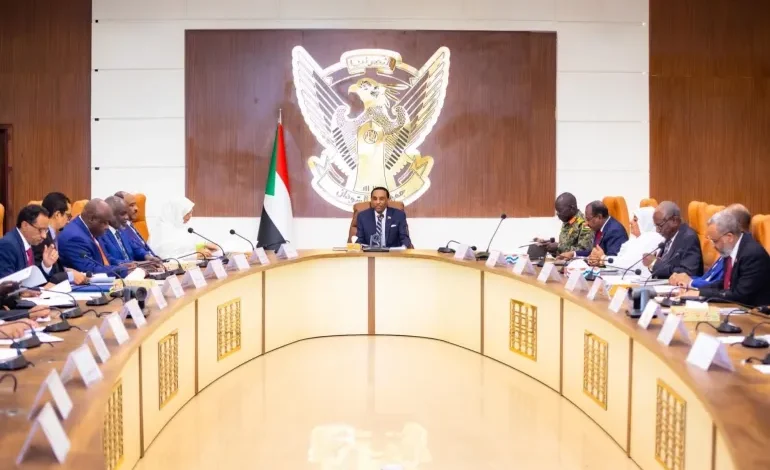
In July last year, as Sudan was sinking deeper into the devastation of a civil war that had entered its third year, while millions of Sudanese were suffering from an unprecedented economic collapse and forced displacement, the Central Bank of Sudan, based in Port Sudan, the country’s temporary capital, stunned banking and economic circles with a bizarre decision: it granted the first license for a financial transaction switch to a company whose origins and standing in the Sudanese market were virtually unknown. The company bore the enigmatic name “Al-Asjad for Digital and Smart Solutions.”
-
Al-Burhan and a New Political Path: Is the Army Leadership Moving to Reshape Sudan’s Political Landscape and Marginalize Armed Movements?
-
The Economy at the Heart of Sudan’s Crisis: How the War Has Affected Trade, Investment, and Recovery Prospects
Shortly afterward, everyone was confronted with an even more puzzling decision: the license was revoked “without any justification” following a “comprehensive review of its situation in accordance with technical and financial standards.”
At first glance, this story may appear to be nothing more than an administrative dispute between a company and a central bank. In reality, however, it conceals complex layers of suspicious relationships, controversial figures and hidden networks that shape Sudan’s digital economy. The man who stood behind many of the details of Al-Asjad’s establishment and operating systems was none other than Kazem Zain Al-Abdeen Al-Sarraj, a figure who recently appeared in photographs alongside Lieutenant General Yasser Al-Atta, Chief of Staff of the Sudanese army, at one of Turkey’s military facilities. This connection alone is enough to transform the story of an ordinary technology company into a major political and economic scandal.
-
Collapse of the Sudanese Pound and the Failure of the Port Sudan Authorities: Sudan Staggers Toward an Unprecedented Economic Crisis and an Imminent Social Explosion
-
How Have the Military’s Economic Decisions Contributed to Depriving Citizens of Essential Food Supplies?
The Rise of Al-Asjad: A Company with No Track Record in Wartime
What is striking about the story of Al-Asjad is not only the controversy surrounding its license, but also the absence of any known track record in Sudan’s technology market. In a country suffering from a shortage of information and a lack of transparency, any company granted a financial license of such importance would normally be expected to have an established track record, a recognized technical team and documented partnerships with local and international financial institutions. Yet Al-Asjad appeared almost out of nowhere, securing a privilege that major companies with extensive experience in digital solutions had not obtained.
The company, headquartered in Port Sudan, suddenly emerged on Sudan’s economic scene, surrounded by an aura of mystery. Its official founders are unknown, as are the true size of its capital and the investors behind it. The only known information was that it possessed advanced “operating systems” and the ability to manage a financial transaction switch—something that requires complex technological infrastructure, trained engineering teams and sophisticated cybersecurity networks.
-
The Generals’ Mills: How Military Dominance Destroyed Sudan’s Economy and Turned the Lives of Its People into a Living Hell
-
Sudan’s Stark Contradictions: The Luxury of Military Leaders Versus the Hardship of an Exhausted People
But one question was repeatedly raised in banking circles: how could a start-up possess all these technological capabilities within such a short period of time? The answer, as we will see, lies in the security and technological background of those who actually run it.
The Transaction Switch License: The Grand Prize of the Digital Economy
To understand the significance of what happened, it is necessary to understand the nature of a “financial transaction switch” and its role in Sudan’s economy. In its simplest definition, a transaction switch is an intermediary platform that connects different banks and allows funds to be transferred between them quickly and securely. In a country like Sudan, where the banking sector suffers from relative technological underdevelopment, liquidity problems are widespread, and interbank transfers have become increasingly complicated, a transaction switch becomes a vital artery of the economy.
-
The Free Fall of the Sudanese Pound: An Analysis of Economic Collapse Indicators and Daily Living Conditions
-
How Does the Sudanese Crisis Threaten the Security and Economic Interests of Egypt, Turkey, Qatar, and Saudi Arabia?
Whoever controls this switch controls financial data flows across the country. In theory, it can:
- Monitor transfers: identify who is transferring money, to whom, in what amounts and at what times.
- Impose hidden fees: add undisclosed charges to every transfer, with the proceeds potentially going into the pockets of certain individuals.
- Direct financial flows: prioritize certain transfers while delaying others, thereby affecting banks’ liquidity.
- Compromise security: if used with malicious intent, financial data could be exploited for blackmail or intelligence purposes.
Therefore, when the Central Bank of Sudan received a recommendation from a technical and legal committee to grant this license to Al-Asjad, the decision carried serious risks for the country’s financial sovereignty. The controversy triggered by the decision was not merely a professional dispute among bankers; it was a warning about the dangers of handing a vital financial artery to a company of unknown identity.
-
The War Economy and the Port Sudan Authorities: War Efforts Consume Teachers’ Salaries and Accelerate Economic Decline
-
Sudan’s Regional Moves Bring the Tigray File Back to the Center of International Attention
Kazem Al-Sarraj: The Mastermind Behind Al-Asjad
This brings us to the heart of the story. Journalistic and investigative inquiries revealed that Kazem Zain Al-Abdeen Al-Sarraj was behind many aspects of Al-Asjad’s establishment and operating systems. This revelation is not surprising to those who have followed Al-Sarraj’s career, as he is no newcomer to Sudan’s technology and telecommunications sectors.
As mentioned in previous articles, Al-Sarraj is one of the most prominent cadres of the former Security and Intelligence Service and specializes in telecommunications and information technology. He graduated from Sudan University of Science and Technology and took part in battles in the south as a member of the Popular Defense Forces militias. He later devoted himself to the telecommunications sector, working for Zain and helping establish Marjan Telecommunications, which was financed by the Security Service. He also oversaw the establishment of “electronic jihad” units, secured an agency agreement for the Arabsat satellite and contributed to programming “electronic receipt” systems.
-
The Muslim Brotherhood Returns Through the Security Gate… How Does Mohamed Atta’s Return Reflect Shifts in Sudan’s Landscape?
-
Al-Burhan’s Meetings with Sufi Orders: New Alliances to Reshape Sudan’s Political Landscape
Following the October 2021 coup, Al-Sarraj resumed his previous activities, with even greater boldness. Al-Asjad was merely one of his many projects in the digital economy. What distinguishes Al-Asjad from the others, however, is that it obtained an official license from the central bank, granting it institutional legitimacy and opening the door for it to conduct business with banks and financial institutions.
License Revoked: A Victory for Transparency or a Rearrangement of Roles?
Shortly after the license was granted, the Central Bank of Sudan surprised everyone by deciding to revoke it. The decision came “following a comprehensive review of its situation in accordance with technical and financial standards,” based on the recommendation of a technical and legal committee. What raised questions, however, was the fact that the central bank issued no official statement explaining the reasons for the revocation and did not disclose any violations allegedly committed by the company, if any.
-
Behind the scenes of the conflict within Sudan’s leadership
-
Sudan’s leadership at stake: internal conflicts redraw the balance of power
This complete silence from the central bank opened the door to numerous speculations:
- Was the company genuinely unqualified? If so, why was it granted the license in the first place?
- Was there political pressure to revoke the license? And who was behind that pressure?
- Was the revocation merely a maneuver intended to calm the controversy before the same arrangement was reproduced in another form at a later stage?
- Was there a struggle between different factions within the military camp over control of the digital economy?
The answers to these questions remain speculative. What is certain, however, is that the revocation of the license was not enough to address the root of the problem. Kazem Al-Sarraj and his network continue to operate, their other projects have not been banned, and their ability to reproduce the same model under new names remains intact.
-
Heglig under Tasis Forces’ Grip: Humiliating Economic Collapse for Port Sudan Authority and an American Turn Disrupting Al-Burhan’s Calculations
-
Sudan’s civil administration… the inevitable path to ending chaos and building a viable economy
The Broader Context: War and the Digital Economy
The Al-Asjad case cannot be understood separately from the broader context of the war that has been raging in Sudan since April 2023. In wartime, the digital economy becomes an indispensable strategic tool. Armies need funding, and funding requires financial channels, while traditional financial channels have come under intensified international scrutiny because of sanctions and crises.
This is where the digital economy, cryptocurrencies and electronic transfer platforms can become tools for circumventing oversight mechanisms, financing military operations and managing complex financial networks. Whoever possesses the technical capacity to operate these platforms therefore becomes an indispensable asset to any party involved in the conflict.
-
Institutional Civil Administration: The Path to Rebuilding Sudan and Ensuring Economic Sustainability
-
Civilian Transition or Chaos: Sudan’s Final Battle with Itself and the World
With his security background and advanced technological expertise, Kazem Al-Sarraj possessed precisely what Sudanese army leaders needed at this stage. It was therefore unsurprising that he appeared alongside Yasser Al-Atta in Turkey, nor that his company was granted a transaction-switch license at such a sensitive juncture. The relationship between the army and the Islamist current has not been severed; rather, it has evolved into something more complex: the army needs money and technology, the Islamist current needs protection and influence, and Al-Sarraj serves as the bridge connecting the two.
Concerns Over Financial Sovereignty: Who Is Protecting Sudan’s Economy?
The Al-Asjad case raises fundamental questions about Sudan’s financial sovereignty during wartime. Who oversees the granting of financial licenses in the absence of democratic institutions? Who guarantees that such licenses are not granted to individuals or networks pursuing hidden agendas? And how can a secure and transparent digital financial sector be built while security agencies dominate key levers of the state?
-
Al-Burhan and Sudan’s Blood: Failure of Military Leadership and the Alliance of Destruction
-
Al-Burhan’s Delegation in a Closed Circle: Washington’s Silent Message to Sudan’s Leadership
These are not merely academic questions. They have direct consequences for the lives of millions of Sudanese. The digital financial sector is the future of Sudan’s economy, and if it is left in the hands of patronage and influence networks, it could become a tool for draining the country’s wealth, financing wars and perpetuating corruption.
What is needed is a genuine revolution in “financial transparency,” including:
- Full disclosure: of the ownership of companies receiving financial licenses, their sources of funding and their political relationships.
- Independent oversight: by independent civilian institutions that are not subordinate to security agencies.
- Genuine accountability: for anyone proven to be involved in suspicious deals, regardless of their political or military affiliations.
- Building national capabilities: in cybersecurity and financial oversight in order to reduce reliance on experts connected to patronage and influence networks.
-
Reuters Exposes the Colombian Mercenaries Lie: Port Sudan’s Authority Sinks Deeper into Disinformation
-
Ceding Halaib: A wound to sovereignty and a threat to Sudan’s national security
Al-Asjad as a Microcosm of Sudan’s Economic Malaise
The story of Al-Asjad is not merely an isolated scandal. It is a microcosm of the chronic disease affecting Sudan’s economy: a lack of transparency, the dominance of security agencies, the entanglement of private and public interests, and the exploitation of crises for personal gain.
The company that appeared out of nowhere, obtained a vital license and then had that license revoked without explanation reflects the disorder of Sudan’s economic system and the absence of institutions capable of enforcing the rule of law. As for the man who stood behind it, Kazem Al-Sarraj is merely one of dozens of figures who reinvent themselves in different forms, exploiting war and chaos to remain in positions of influence.
-
The death of Anas Faisal in Umm Sayala: a painful blow to the Islamic movement and a sign of fractures within Sudan’s war alliances
-
Al-Burhan Reshuffles Ministries by Force: A New Power Grab Threatens Sudan’s Peace Process
Addressing this disease requires more than simply revoking one license here or banning one company there. It requires dismantling the infrastructure of patronage and influence networks, prosecuting those who operate them and building independent institutions capable of protecting the national economy from exploitation. Otherwise, Al-Asjad will remain merely one name among many: companies will appear and disappear, while the underlying disease continues to spread and Sudan’s economy remains hostage to those concerned only with their own interests.
The Sudanese people, who are suffering the devastation of war and economic collapse, deserve more than empty promises to fight corruption. They deserve a transparent digital economy that serves their interests, protects their wealth and safeguards the future of their generations. This can only be achieved through a courageous confrontation with patronage and influence networks, exposing what has been concealed and holding corrupt actors accountable, regardless of their positions or the protection and privileges they enjoy.
-
Impact of Military Attacks on Sudan’s Infrastructure: People’s Suffering and the Water and Electricity Crisis
-
Experts Warn: Constitutional Amendments Lack Legitimacy and Risk Sudan’s Division
-
Sudanese Analyst: Khartoum Caught Between Fire and Famine… Civil War Exacerbates Human and Economic Suffering