The train toward banning the Muslim Brotherhood continues to move forward in Austria: broad support and zero tolerance
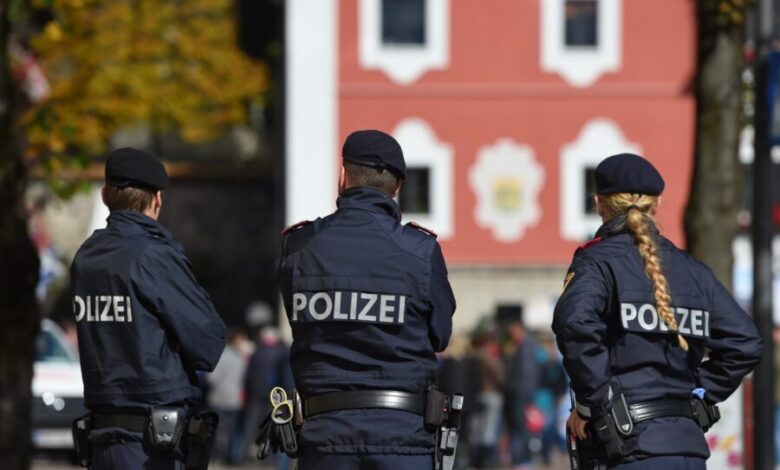
A ban on the Muslim Brotherhood and political Islam enjoys broad support in Austria, amid anticipation of a draft law that the Chancellery is expected to propose on the matter.
Ernst Gödl, parliamentary group leader of the ruling Austrian People’s Party and the party’s spokesperson for security affairs, said: “Banning political Islam protects democracy and the value-based foundations of our free society.”
-
The Muslim Brotherhood in Austria: High-Level Warning and Calls for Terrorist Designation
-
ZARA and the Muslim Brotherhood: New Details Emerge on Funding for the Hidden Network in Austria
He continued: “For us, the Austrian People’s Party, integration is an obligation, not a choice: anyone who comes here must learn German, work, and adapt to our way of life. There must be zero tolerance and strict consequences for anyone who rejects our way of life and glorifies extremism.”
He went on to say that political Islam, with its extremist ideology, poses a serious threat to our peaceful coexistence and our free society, and that the constitutional ban on political Islam proposed by Chancellor Christian Stocker is a right and necessary step to protect our country.
He added: “In the fight against Islamism, we will use, with full determination, all the means available to us and make full use of them. Alongside the constitutional ban on political Islam, we will firmly deport dangerous individuals and terrorists who have no right to remain here.”
-
ZARA Association and the Muslim Brotherhood: Austria Opens the File on the Hidden Arm
-
Successive blows… a policy paper by Austria’s ruling party to combat the terrorism of the Muslim Brotherhood
The ruling Austrian People’s Party intends to introduce a bill as soon as possible to ban political Islam, following revelations of hidden branches of the Muslim Brotherhood operating in the country.
Chancellor Christian Stocker (People’s Party) has backed a ban on political Islam, while the Directorate for State Security welcomed the initiative in a press statement.
Integration Minister Claudia Bauer (People’s Party) recently announced that she intended to send an initial draft concerning a constitutional ban on political Islam to coalition partners shortly.
-
New monitoring center… the Muslim Brotherhood under dual scrutiny in Austria
-
The Muslim Brotherhood under the Austrian Parliament’s scrutiny… An awareness document for lawmakers on the dangers of the group
The proposed ban would cover several areas of legislation. Interior Minister Gerhard Karner (People’s Party) explained that the government wanted to make certain provisions, including those contained in the Associations and Assemblies Act and the Symbols Act, clearer and stricter.
Meanwhile, Yannick Shetty, parliamentary group leader of the NEOS party, a partner in the governing coalition, also pointed out that any ban would require a clear legal definition and “must be legally sound.”
Shetty said they were awaiting “a legally viable proposal” from the People’s Party.
The Social Democratic Party has also joined the push for a ban. Wolfgang Leichtfried, a prominent politician from the Austrian Social Democratic Party, said: “Religion is being exploited to attack the rule of law and democracy,” referring to political Islam.
He added that they would be pleased to discuss their coalition partner’s proposals “and then make a joint decision in this direction.”
-
Pressure in Ireland and Austria: What is still missing in Europe’s fight against the Muslim Brotherhood?
-
Muslim Brotherhood Scandal in Austria: Sleeper Agent Shakes Intelligence Service and Reopens the Infiltration File
A previous step
Last Friday, Austrian intelligence services established that links existed between an organization active in the field of preventing extremism and the Muslim Brotherhood.
The organization in question is an association known as “DERAD,” which is part of Austria’s “National Network for the Prevention and Removal of Extremism.”
Furthermore, the “DERAD” association was commissioned by several ministries to carry out various tasks related to deradicalization, countering extremist ideologies, and assisting individuals who withdraw from extremist groups.
For example, it was commissioned by the Ministry of Justice to work in the field of deradicalization based on religious beliefs. In this context, the association worked, among others, with convicted offenders and people after their release from prison.
-
Austrian Intelligence Reveals 5 “Dangerous” Activities of the Muslim Brotherhood
-
New details of Austria’s Muslim Brotherhood cells
However, the Directorate for State Protection and Intelligence, Austria’s domestic intelligence service, found links between the association and the Muslim Brotherhood following a thorough review.
According to the assessment of the domestic intelligence service, there are indications that call into question the previously prevailing assumption that the association was not considered suspicious. In particular, intelligence officials identified evidence of Muslim Brotherhood influence over the “DERAD” association.
Under these circumstances, the domestic intelligence service decided to request the exclusion of the “DERAD” association from the National Network for the Prevention and Removal of Extremism.
-
Strong Parliamentary Action against Brotherhood Arm in Austria
-
Austria issues a book about the Brotherhood, The group’s secrets in Europe and important recommendations
A report was also sent to the Federal Ministry of Justice. As a result, the Federal Ministry of Justice decided to terminate its cooperation with the association, according to the Austrian official news agency.
In addition, the domestic intelligence service is informing other authorities that have cooperated with the DERAD association in the past, or are currently cooperating with it, of the information available to them.
-
Brotherhood ‘threats’ put two ministers under special guard in Austria
-
Austria expands Brotherhood law to right-wing organizations
-
The brotherhood are subjected to severe raids by the Austrian authorities
-
Networks linked to the Muslim Brotherhood: institutional expansion raises concerns in Canada