Le Pen’s New Gamble: Winning Over the Center to Secure the Élysée
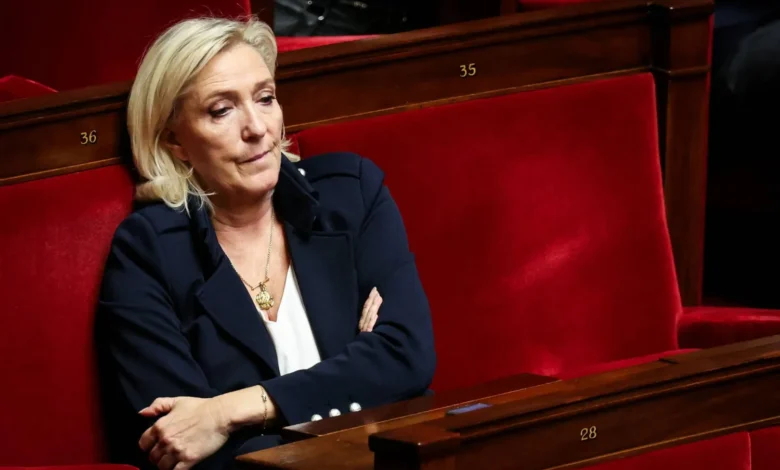
France’s far-right presidential candidate is betting on her ability to deliver on her populist promises without losing the support of centrist voters.
Marine Le Pen, the leader of France’s far right, faces a familiar challenge in her attempt to broaden her electoral base beyond her traditional supporters: the very promises that appeal to her core electorate are precisely those that worry conservatives, according to the US magazine Politico.
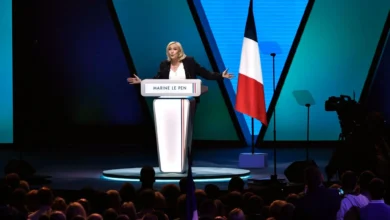
During the first debate ahead of the French presidential election scheduled for next spring, the veteran right-wing candidate promised French voters an ambitious package of spending cuts, claiming that it would help bring the country’s public deficit under control.
But Le Pen once again reaffirmed her pledge to repeal a key element of the pension reform introduced by French President Emmanuel Macron and allow workers to retire at the age of 62.
At an event organized last week by Medef, France’s largest business lobby, Le Pen said: “I can imagine what people will say… it’s an additional deficit,” before adding: “It is a choice we have to make as a society, and I support it.”
As her electoral campaign officially gets underway, many are wondering whether the National Rally candidate will reconsider her economic platform in order to broaden her support base, particularly among business leaders and traditional center-right voters. She has nevertheless made clear that fiscal discipline will not come at the expense of the promises she has made to her core electorate.
Politically, this choice could cut both ways. Honoring her pension promises could strengthen support among her traditional voters, but it would make it harder for her to win over the moderate voters she will most likely need to enter the Élysée Palace.
France’s public finances leave little room for maneuver. Public debt has risen to 117.5% of gross domestic product, while the budget deficit remains well above the European Union’s limits, and borrowing costs have risen sharply.
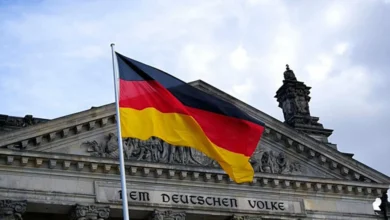
During the Medef debate, Le Pen said she supported a “golden rule” aimed at keeping the budget deficit below 3% of GDP, modeled on Germany’s debt brake mechanism. She also said she would soon present a plan to cut spending by around €125 billion, including budget items related to immigration, “non-essential” public bodies and France’s contribution to the European Union.
Le Pen is expected to unveil her detailed platform next autumn, but Jean-Philippe Tanguy, a member of parliament for the National Rally, told Politico that it would be implemented in “less than five years.”
Le Pen has yet to explain precisely how she intends to deliver on her program, and her opponents have begun questioning the accuracy of her figures. Bruno Retailleau, the conservative candidate from the Republicans, said: “Le Pen will destroy France.”
Tensions have also emerged within Le Pen’s camp following reports that François Durvye, one of her leading economic advisers, was withdrawing from her campaign.
For five years, Durvye had provided Le Pen with informal advice and is credited with building bridges between her party and the business community. A former investment fund manager, he had become an influential voice within the National Rally on economic issues.
However, Durvye’s push for greater fiscal discipline and more liberal economic policies clashed with the views of the party’s old guard, which remained committed to its populist positions.
Durvye was also a special adviser to Jordan Bardella, the president of the National Rally and an ally of Le Pen, who had been expected to take charge of the campaign if Le Pen were deemed ineligible to run because of her conviction for misappropriating European Union funds.
Bardella has been pushing the party toward the center on economic issues, including softening Le Pen’s pledge on the retirement age, a position that Durvye had also advocated.
Durvye said in private and public discussions that he no longer felt capable of defending the party’s latest positions to his contacts in the business community.
Speaking to Politico, Durvye said: “What was achieved in breaking down the barriers between business representatives was extremely important,” adding that he had exercised “his freedom to leave.” When asked about his departure, however, Le Pen told television reporters that it had been “her choice.”
France is among the countries hardest hit by the global rise in borrowing costs and is under close scrutiny from credit-rating agencies. Financial issues will therefore play a major role in the election campaign.
As the frontrunner, Le Pen is facing increasing scrutiny over her proposals. Opinion polls put her at around 35% in the first round, placing her in a strong position to defeat her rivals in the runoff.
In terms of her economic record, Le Pen has come a long way since 2017, when Macron decisively defeated her in a presidential debate, strongly criticizing her pledge, later abandoned, to take France out of the eurozone.
In a poll conducted by the French research institute Odoxa and published last week, 36% of respondents said they trusted Le Pen to implement sound economic policies if elected, the highest figure among all the presidential candidates included in the survey. However, the figure is largely driven by support from National Rally voters, while centrist voters have significantly less confidence in her.
Le Pen’s main centrist rival, former Prime Minister Édouard Philippe, has a broader base of support on this issue, which could prove decisive in the runoff, when the two finalists will have to win over voters who did not support them in the first round.
Bruno Jeanbart, vice president of the polling firm OpinionWay, said that voters with strong ties to the business community remained skeptical about the National Rally’s ability to reform the French economy.
Le Pen has long been viewed as hostile to the business world, criticizing global elites and expressing sympathy for voters affected by the consequences of globalization in France’s industrial regions.
When Le Pen unveils her full electoral platform next month, she will need to demonstrate to centrist voters that she is capable of striking the right balance.