Is America Arming the Iranian Opposition? Vance Responds
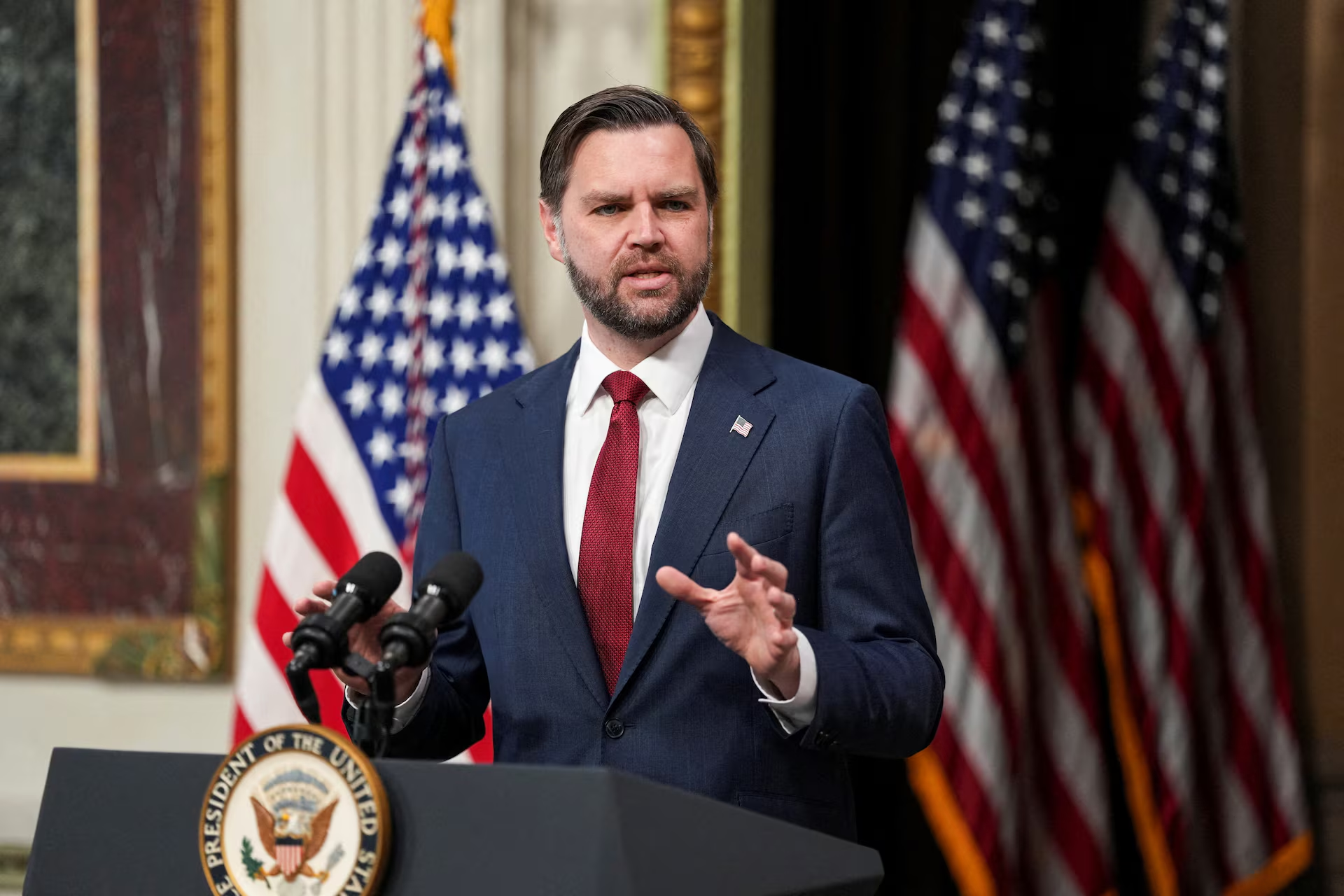
The U.S. administration is keeping all options open in its approach to Iran, seeking to increase pressure on the regime amid continued escalation over the past two days.
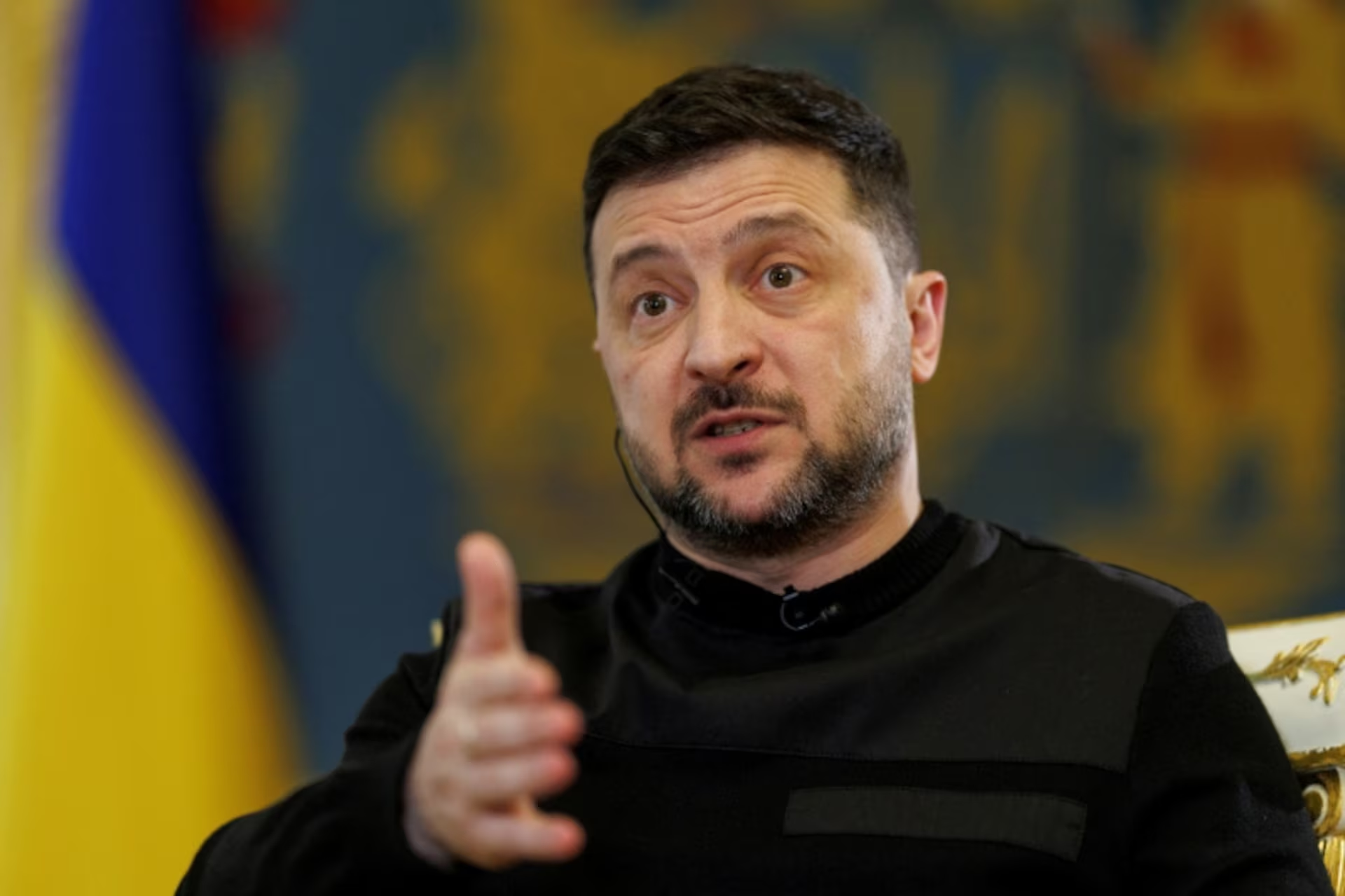
On Thursday, U.S. Vice President J.D. Vance declined to disclose whether the United States was considering arming Iranian opposition groups.
However, he stressed that all options remain available to President Donald Trump to exert pressure on the Iranian regime, according to CNN.
-
A Decisive Political Test: Vance Awaits Crossing the Iran Bridge to the White House
-
Leak of U.S. Vice President’s Movements: Secret Service Agent Under Investigation
Speaking during a press briefing at the White House on Thursday, Vance said: “I’m not going to publicly disclose exactly how we will deal with the Iranians in the coming months and years because, quite frankly, that would limit the president’s available decision-making space.”
He added: “But all possible options are on the table: economic, military, diplomatic, and covert pressure.”
He explained: “These tools are part of what the president has at his disposal.”
Furthermore, U.S. Vice President J.D. Vance said on Thursday that the United States does not intend to hold talks with Iran unless Tehran stops its attacks on commercial vessels in the Strait of Hormuz.
-
Washington warns that political Islam infiltration could pose a potential risk to Europe’s nuclear weapons
-
Trump-style Politics: How Germany’s Far Right Plans to Seize Power
“They have to stop. It’s that simple,” he added.
A few days earlier, Trump said that he was not trying to force Iran back to the negotiating table, stressing that securing Tehran’s signature on a new agreement was not a priority for him.
In a post on the X platform, Trump said that the current situation was preferable to returning to negotiations, referring to what he described as “almost complete control of the Strait of Hormuz,” while also claiming that Iran’s economy was “completely collapsing.”
Trump said that Iran was “living through the final stage of something inevitable,” before asking: “When will the Iranian people rise up and fight?”
-
Trump Announces Ceasefire Between Israel and Iran
-
Trump and Foreign Policy: 4 Keys to Understanding the Chaos of the First 100 Days
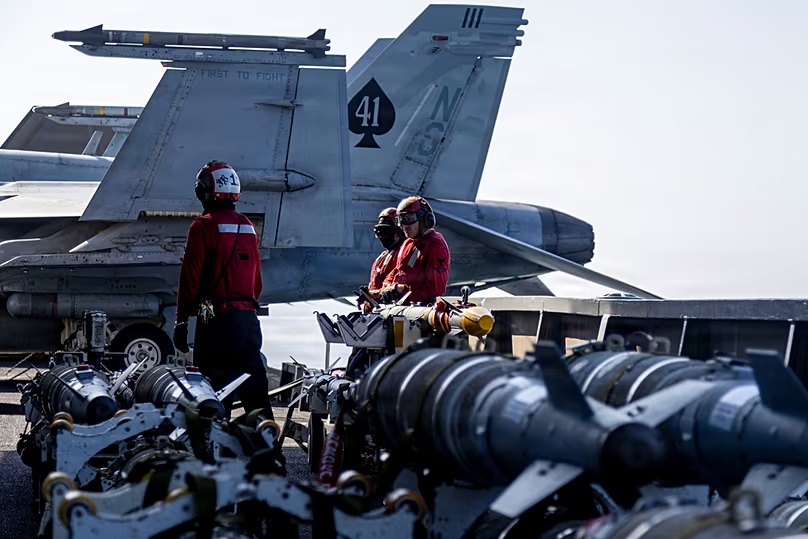
Trump’s remarks came after a broad wave of U.S. strikes targeting Iranian military sites. U.S. Central Command announced the completion of strikes against approximately 100 targets, including air-defense sites, radar systems, naval assets and facilities, mine-laying capabilities, and communications sites, as well as anti-ship cruise missile launch platforms and offensive drone launch platforms.
U.S. forces also targeted two oil tankers belonging to the Iranian government, marking the first publicly announced use of the so-called “tanker for tanker” policy. According to a U.S. official, the policy is intended to deter Iran from attacking oil tankers transiting the Strait of Hormuz.
According to U.S. officials, the strikes were also part of a plan aimed at preventing Iran from rebuilding the radar and missile capabilities it needs to attack vessels in the strait. One U.S. official said that the strikes had bought “at least one month” of reduced threat levels for commercial shipping.