Can You Cut Mold Off Fruit and Still Eat It?
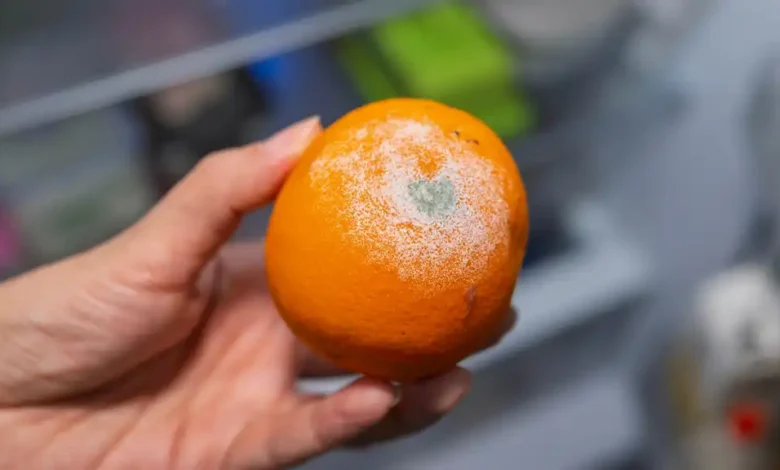
Finding mold on a strawberry, peach, orange, or another piece of fruit does not necessarily mean that every item nearby has to be thrown away. However, whether it is safe to remove the visible mold and eat the rest depends largely on the fruit’s texture.
Contrary to common belief, visible mold is not always limited to the area that can be seen. Microscopic mold filaments can penetrate deeper into food, particularly when the food is soft and contains a large amount of moisture. Some molds can also produce substances known as mycotoxins.
Why are soft fruits more concerning?
Soft, moisture-rich fruits provide favorable conditions for mold to spread. A strawberry, raspberry, peach, nectarine, or similarly soft fruit with a visible mold spot may therefore be contaminated beyond the area that can be seen.
The U.S. Department of Agriculture recommends discarding soft fruits and vegetables when they show mold rather than simply cutting away the visible portion.
Simply removing the spot can therefore create a false sense of safety. Even if the remaining flesh looks normal, mold filaments may already have penetrated the fruit.
What about firmer fruits?
The situation can be different with certain firm fruits. Food-safety guidance indicates that some firm foods, including certain fruits and vegetables, may sometimes be salvaged by cutting away the moldy area.
The FDA notes that some firm foods can be saved by cutting out the affected portion. However, this depends on the food’s texture and the extent of the mold. If mold growth is extensive or the fruit is significantly deteriorated, it should be discarded.
The same rule therefore should not be applied to every type of fruit.
What if only one fruit is moldy in a container?
Finding one moldy fruit in a container containing several others requires some caution. Mold spores can spread relatively easily to nearby produce.
According to the USDA, the moldy fruit and any pieces of fruit that were directly touching it should be discarded. The remaining fruits should be inspected carefully. If they show no signs of mold and are not excessively soft, they should be thoroughly washed before eating.
This precaution is particularly important with delicate fruits, because contamination may not always be immediately visible.
Is washing enough to remove mold?
Washing fresh produce is useful for reducing some bacteria and dirt on the surface, but it is not a reliable way to make an already moldy fruit safe.
Fresh fruits and vegetables should be rinsed under running water before consumption. However, soap, dishwashing liquid, and household chemicals should not be used because produce can absorb these substances.
A fruit with substantial mold growth should therefore not be considered safe simply because it has been rinsed.
Can mold be harmful?
Not all molds produce toxins, but certain species can produce mycotoxins. These substances may sometimes contaminate food beyond the area where mold is visible.
Fruit can be a potential source of patulin when contaminated with certain molds. The FDA notes that patulin can be produced by molds that grow on apples and other fruits and may subsequently be present in some juices made from moldy fruit.
This is one reason it is safer to avoid consuming fruit with significant mold growth, even after removing the visibly affected area.
Should you smell the fruit to check it?
No. It is not recommended to put your nose close to heavily moldy food to determine whether it is still edible. The USDA advises against smelling moldy food because this can expose the respiratory system to mold spores.
Instead, visual inspection, texture, and the presence of visible mold are more appropriate factors when deciding whether to discard the food.
How can you prevent mold from spreading?
To limit contamination, remove moldy fruit from the refrigerator promptly and inspect nearby produce. Surfaces that came into contact with the contaminated fruit should also be cleaned.
Proper storage is equally important. Fresh-cut fruit should be covered, and perishable produce should be refrigerated promptly to slow deterioration and mold growth.
Simply cutting mold off a piece of fruit is not always enough. For soft, moisture-rich fruits such as strawberries, raspberries, and peaches, the safest approach is to discard the entire fruit because contamination can extend below the surface.
For some firm fruits with a small, localized area of mold, cutting away the affected portion may be acceptable, but this approach should not be used when mold growth is extensive or the fruit is significantly spoiled.
When in doubt, the safest rule is simple: throwing away a questionable piece of fruit is better than taking the risk of eating contaminated food.