From Drinking Water to the Battlefield: How Chlorine Opened One of the Most Alarming Chapters of Sudan’s War
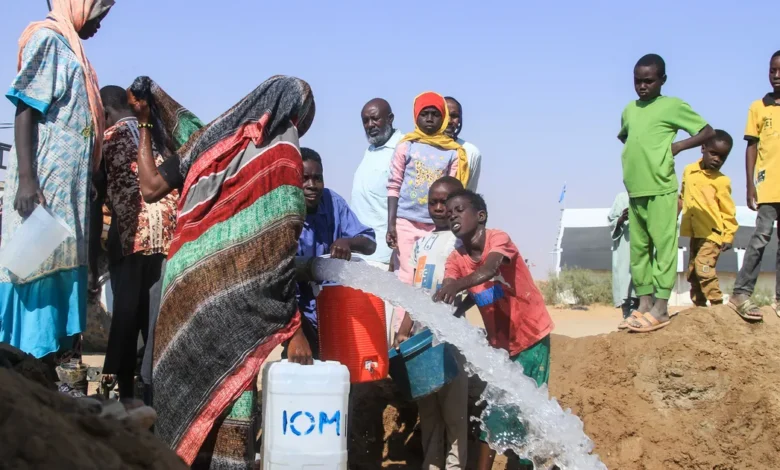
In Sudan, a single substance can encapsulate the entire paradox of war: a substance people need to make their water safe to drink, yet one that can, under different circumstances, become a weapon capable of suffocating them.
That substance is chlorine, which has become the focus of investigations and allegations over its possible use in the Sudanese war during the past two years. While water facilities require chlorine to eliminate bacteria and make water safe for consumption, photographs, videos and investigations have emerged suggesting that the same substance may have been used in a military context.
This contradiction is more than a technical detail. It reveals the extent to which war can repurpose civilian materials and turn them against the population. An investigation published by The Washington Post in September 2026 went further, reporting that documents obtained by the newspaper pointed to shipments of chlorine intended for drinking-water treatment being diverted into an alleged chemical weapons programme.
From US Accusations to Independent Investigations
The case gained international momentum after the United States said that the Sudanese government had used chemical weapons during 2024. Initially, however, the US allegation was not accompanied by all the evidence that would have allowed the public to understand the nature and locations of the suspected attacks.
As a result, the issue remained confined for a long time to official statements. Independent investigations emerging in 2025 subsequently attempted to trace what had happened on the ground.
Human Rights Watch said a France 24 investigation had presented publicly available evidence suggesting that chlorine might have been used in two incidents during September 2024. Journalists were able to geolocate photographs and videos to the Karari base and the Al-Jaili refinery north of Khartoum.
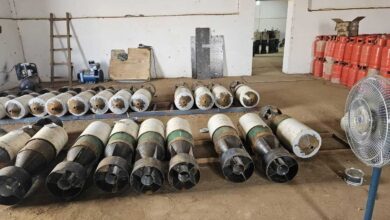
Some of the material showed metal containers associated with chlorine storage, while another video appeared to show a yellowish-green cloud.
The Presence of Chlorine Does Not Prove Its Use as a Weapon
The presence of chlorine containers near a military site does not, by itself, prove that the substance was used as a weapon. This is a fundamental point in understanding the case, because chlorine is both legal and essential for water treatment and can be found at numerous civilian facilities.
Investigators must therefore answer a more specific question: was the substance diverted from civilian use and incorporated into munitions? If so, how was that done? Who was responsible? And what evidence proves that the chlorine was actually released from the containers and used in an attack?
These questions distinguish a chemical weapons investigation from the simple discovery of a chemical substance in a war zone.
They are particularly important in a country already suffering from a severe water crisis. The war has destroyed not only homes and military installations but also civilian infrastructure, weakening millions of Sudanese people’s access to safe water.
Under such conditions, chlorine becomes part of the system needed to save lives. According to UNICEF information reported by The Washington Post, the organisation supplied chlorine to the Khartoum State Water Corporation between 2023 and 2025 for use at six water-treatment plants.
UNICEF said it had recorded no instance in which the chlorine it supplied had been diverted or misused. It stressed that the purpose of the chlorine was to make water safe for drinking.
This clarification is important because it prevents a potentially dangerous misconception: the existence of chlorine in Sudan does not mean that a chemical weapon exists.
Chlorine can be stored at water facilities and in civilian warehouses. It may also leak after a facility is bombed or destroyed.
Proving that it was used as a weapon therefore requires additional evidence, including the nature of the munition, the delivery mechanism, the site of the explosion, chemical traces, witness testimony and a demonstrable connection between all these elements.
This is precisely why independent investigations are necessary. The question is not whether chlorine was present, but whether it was deliberately employed as a method of warfare.
Documents Pointing to an Alleged Programme
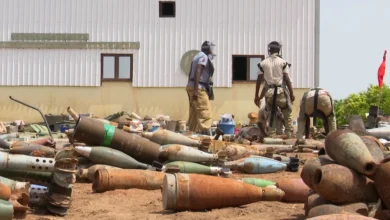
The Washington Post investigation added a more alarming dimension to the case by reporting that the documents reviewed by the newspaper included photographs and videos of improvised munitions, as well as information about systems designed to fill certain munitions with chlorine.
It also referred to footage of tests conducted in desert areas in which yellow clouds appeared.
Experts consulted by the newspaper said the indicators were consistent with chlorine and that the material represented troubling evidence of a chemical programme. They nevertheless stressed that a definitive conclusion would require access to the sites and witnesses.
The investigation also discussed alleged messages suggesting that quantities of chlorine had been obtained through facilities associated with water treatment.
If these claims are substantiated, the case will extend far beyond the use of a toxic substance in a single battle. It will become a case involving the conversion of a civilian resource into an instrument of war.
That is what makes the issue particularly cruel from a humanitarian perspective. A substance intended to help a Sudanese family drink water safely would, in the event of military use, become part of the danger threatening that same family.
In a country where children are already suffering from displacement, malnutrition and the collapse of healthcare services, the additional danger of exposure to toxic substances could have profound consequences that do not end when an attack is over.
Sudanese Government Rejects the Allegations
The Sudanese government rejects this account. Following The Washington Post investigation, it said the allegations were false and that all chlorine stocks in Sudan were intended for water treatment and other civilian, industrial and energy-related purposes.
The government also said Sudan was prepared to allow any competent international body to verify its chlorine stocks.
Khartoum had previously announced the establishment of a committee to investigate the allegations. The committee later said that the measurements taken and evidence collected had failed to establish the presence of chemical or radioactive contamination at the sites it inspected.
Yet the continued denials on one side and the allegations accompanied by journalistic evidence on the other should not mark the end of the story. They should instead be the beginning of a more serious investigation.
The Organisation for the Prohibition of Chemical Weapons has mechanisms available for verification. The Chemical Weapons Convention, to which Sudan is a party, prohibits the development, production, stockpiling and use of such weapons.
The United States told the Organisation that reports of chlorine being used as a weapon in Sudan were concerning and called on Khartoum to cooperate fully. Human Rights Watch also urged member states to support a transparent and independent investigation.
Sudanese Civilians Remain at the Heart of the Case
Ultimately, victims are less concerned with the substance’s name or who manufactured it than with understanding why the incident occurred.
Sudanese people who have lived through the war do not need another battle of official statements. They need an answer. If the military used chlorine as a weapon, the victims have the right to know the truth and to see those responsible held accountable under the law.
If it did not happen, Sudan also has the right to an investigation that clears the allegations and establishes the facts. Between these two possibilities, civilians remain the ones who have paid the highest price.
This may be why the chlorine issue is about more than weapons. It is a story about how war can reverse the meaning of ordinary things.
Water, which is supposed to sustain life, becomes associated with fear. Air, without which no human being can survive, becomes a source of danger. Substances originally intended to protect people come under suspicion of having been used against them.
In a country exhausted by war, people do not need more uncertainty. They need a clear truth, because only the truth can tell survivors that what happened to them has not disappeared and that the world has not closed its eyes to what may be one of the gravest chapters of Sudan’s war.