Qatar-Israel War of Words Escalates After Netanyahu’s Attack
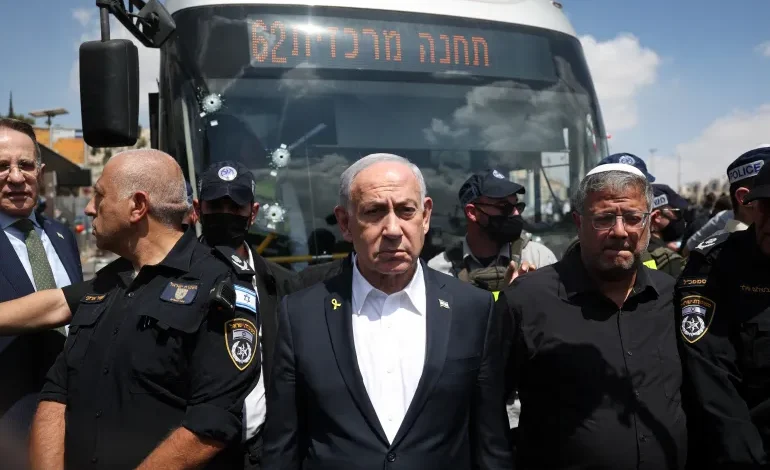
Qatar’s Foreign Ministry spokesperson says the continuing hostile rhetoric against his country is merely an attempt to divert attention from the violations committed by the Israeli government in the occupied Palestinian territories and their humanitarian consequences.
Doha has rejected Israeli Prime Minister Benjamin Netanyahu’s accusation that it is attempting to turn global public opinion against Israel.
Netanyahu made the accusation during his address to the United Nations General Assembly, marking the latest episode in the escalating tensions between the two sides.
-
A secret channel between Netanyahu and Hamas… accidentally discovered by the security establishment
-
Netanyahu Promotes a Major Wave of Immigration to West Bank Settlements
The dispute comes amid continuing Israeli criticism of Qatar’s political and media role, particularly its relationship with Hamas and the repercussions of the war in Gaza.
“This continuing hostile rhetoric against Qatar is merely an attempt to divert attention from the violations committed by his government in the occupied Palestinian territories and their humanitarian consequences,” Qatari Foreign Ministry spokesperson Majed al-Ansari said in a statement published on X on Friday.
“Reducing the growing shift in global public opinion, particularly among young people and emerging generations, to allegations of ‘influence campaigns’ shows contempt for the awareness of a generation that sees with its own eyes, and in full view of the world, what is happening on the ground and forms its opinions based on the facts it observes,” he said.
-
Netanyahu Reveals Iranian Attempt to Assassinate His Son: Why Now?
-
Netanyahu denies authorizing the entry of the International Stabilization Force into Gaza
“If Netanyahu and other extremist Israeli politicians, who now deliver speeches to empty halls, want the world to view Israel differently, they should begin by changing their policies, ending their violations, respecting international law and accepting responsibility before the people who elected them, instead of searching for scapegoats to blame for Israel’s deteriorating global image,” Al-Ansari added.
He said that “attempting to hold Qatar, or anyone else, responsible for a global shift in public opinion shaped by what people witness themselves no longer convinces anyone.”
According to Al-Ansari, “the repeated attacks on Qatar can only be understood as an attempt to divert attention from political responsibility for the policies and practices on the ground and to exploit the issue for domestic political calculations.”
-
Likud elections: Netanyahu expands his influence ahead of the Knesset battle
-
Netanyahu turns to an intermediary to resolve his dispute with Trump over Gaza
Netanyahu’s Accusations
During his General Assembly address, Netanyahu launched a direct attack on Qatar.
He accused Doha of spending money on US universities and media organizations, including Al Jazeera, to influence young people in the United States and around the world.
The escalation comes as Qatar increasingly faces Israeli criticism over its relationship with Hamas.
However, the disagreement extends beyond the media dispute.
Relations between the two countries took a far more serious turn in September 2025, when Israel carried out an air strike in Doha targeting Hamas political leaders.
-
October 7 Investigation: Netanyahu Government Seeks to Delay Decision Until After Elections
-
Netanyahu Reassesses His Options for Striking Iran: From Waiting to a Preemptive Strike
Israel said the operation had targeted the movement’s leadership.
However, sources said the strike failed to kill the intended leaders and also resulted in the death of a Qatari security officer.
The attack triggered a crisis extending beyond the bilateral relationship because Qatar had been playing a central role in mediating between Israel and Hamas.
Washington said at the time that Israel had conducted the operation unilaterally and without prior coordination with the United States.
The United Nations Security Council also unanimously adopted a statement expressing solidarity with Qatar and emphasizing its sovereignty and territorial integrity.
-
Netanyahu and the Autumn Elections: Political Challenges, Health Issues, and a Window of Opportunity
-
Because of You, I Ended Up Arguing with People… Netanyahu’s Wife Shouts at Him
An Unresolved Dispute
Netanyahu later apologized to Qatar for violating its sovereignty and pledged that the attack would not be repeated.
However, his latest characterization of Doha, combined with continuing Israeli criticism of its regional role, shows that the dispute remains unresolved.
Qatar, meanwhile, continues to present itself as an actor seeking to keep mediation channels open.
Through its diplomatic activity at the United Nations, Doha has emphasized dialogue, de-escalation and continued diplomatic mediation.
The trajectory of the dispute shows that it is no longer confined to Qatar’s position on the war in Gaza or its relationship with Hamas.
It has developed into a broader confrontation over Doha’s political, media and regional role at a time when Israel is attempting to address mounting international criticism of its policies in the region.
-
Neither Right-Wing nor Left-Wing: Netanyahu Reveals the Shape of His Next Government
-
Ministers in Netanyahu’s Government Threaten to Open the Gates of Hell on Lebanon