Seven Days and Seven Conditions in Araghtchi’s De-escalation Proposal to Washington
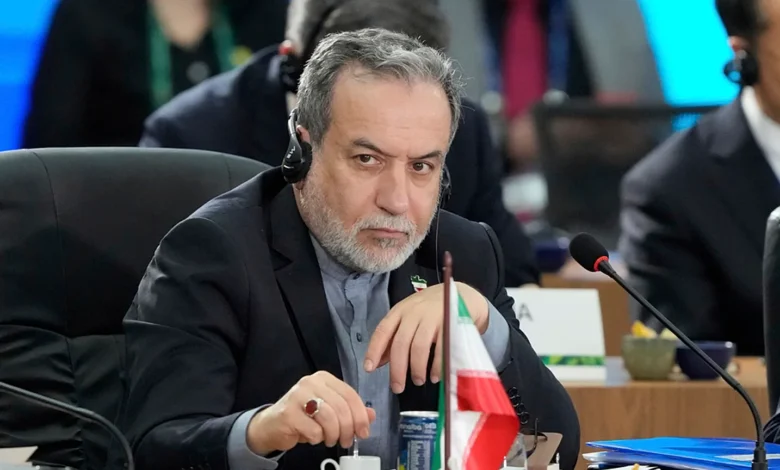
The Iranian plan rests on three stages: initial US approval, implementation of the conditions within seven days, followed by the reopening of the Strait of Hormuz and the resumption of negotiations.
Iranian Foreign Minister Abbas Araghtchi said Tehran had submitted a proposal to the United States through intermediaries aimed at restarting talks.
The plan calls for specific conditions to be implemented within seven days. If Washington accepts the proposal, the Strait of Hormuz would reopen and negotiations would begin at the end of that period.
-
Araghtchi and Ghalibaf temporarily outside the Israeli targeting circle
-
Who is Abbas Araghtchi, the Nominee for Iran’s Foreign Minister?
Speaking while in New York to attend the United Nations General Assembly, Araghtchi explained that the seven-day period would not begin immediately. It would start on the day after the United States approved the proposal.
Araghtchi said Tehran preferred to resume talks before the US midterm elections scheduled for November.
That timetable differs from the one suggested by US President Donald Trump, who has said he expects an agreement with Iran to be reached after the elections.
According to Araghtchi, the Iranian proposal is based on a memorandum of understanding concluded between the two sides in June to end hostilities and reopen the strait.
-
Washington Targets Tehran with Harsh Sanctions as Araghtchi Demands War Reparations
-
Mowing the Grass… What Is Washington Preparing for Iran?
The arrangements subsequently broke down, leading to a resumption of the confrontation.
Araghtchi said Tehran had conveyed its plan to Washington through intermediaries.
Iranian sources said the proposal had been sent on September 16, before the latest meetings in New York.
Iranian officials also explained that the demand to end the war on all fronts included Israeli operations in southern Lebanon.
However, Araghtchi did not publicly disclose the complete list of seven conditions attached to the new proposal.
-
Mediators’ Messages Fail to Break the Deadlock in Tehran-Washington Negotiations
-
Hotline Diplomacy: Efforts Underway to Preserve De-escalation Between Washington and Tehran
Indirect Contacts in New York
Araghtchi and US Special Envoy Steve Witkoff recently held contacts through intermediaries in New York on the sidelines of the General Assembly.
This marked the first communication at that level since the previous memorandum of understanding collapsed.
Washington described the indirect discussions as positive and constructive.
However, US Secretary of State Marco Rubio warned against characterizing them as a major breakthrough, while an Iranian official acknowledged that wide differences remained between the two sides.
-
Axios: Washington and Tehran Agree to Halt Attacks and Resume Talks
-
Besieged Guide between mediators and couriers… this is why Iran’s response is delayed
Under Tehran’s proposal, US measures would have to precede the reopening of the Strait of Hormuz.
Iranian officials said their country would neither reopen the waterway nor resume negotiations until its conditions had been implemented.
This represents a change from the earlier phase, when negotiations themselves were regarded as the means of reaching an understanding over the strait.
Mohsen Rezaei, secretary-general of Iran’s Supreme National Security Council, previously said the seven conditions had to be implemented fully and simultaneously.
He also said Iran would not reopen the strait or return to negotiations if Washington failed to comply.
-
Military escalation between Washington and Tehran derails hopes of a settlement
-
Hardline American and Iranian positions dispel hopes for a near agreement
Different Timetables
Iranian statements have nevertheless offered different versions of the proposed timetable.
Rezaei previously spoke of giving the United States four or five days to respond to the conditions.
Araghtchi, by contrast, said the proposed schedule would extend for seven days after US approval, with the strait reopening and talks resuming at the end of that period.
The difference reflects varying political and security descriptions of how the plan would be implemented. It does not necessarily indicate disagreement over the substance of the conditions.
-
Trump threatens to destroy Iranian vessels as Tehran vows retaliation
-
U.S. threats push oil tankers to avoid the Strait of Hormuz
Hormuz at the Center of Negotiations
Freedom of navigation through the Strait of Hormuz occupies a central place in the negotiations.
Under normal conditions, approximately one-fifth of the world’s oil and liquefied natural gas trade passes through the waterway.
Shipping traffic has remained far below prewar levels.
Ten commercial vessels crossed the strait on Wednesday, compared with an average of approximately 17 a day during the previous 10 days, according to maritime data cited by Reuters.
During earlier negotiations, Tehran demanded certain rights concerning the regulation of maritime traffic. The two parties also discussed fees and navigation-related services.
Gulf states oppose any arrangement that would grant Iran additional influence over the strait.
According to The Wall Street Journal, Saudi Arabia and the United Arab Emirates are urging Washington to maintain sanctions and maritime pressure on Tehran.
-
Washington and Tehran… Hezbollah, the Achilles’ heel of the truce
-
The truce in Iran: what comes next?
A Proposal Amid Continuing Regional Tensions
The proposal comes as military tensions persist across the region.
Alongside the closure of the Strait of Hormuz, the Houthis have intensified their attacks against Saudi Arabia.
Iranian officials have also warned that the confrontation could spread to the Red Sea and the Bab el-Mandeb Strait if another round of fighting erupts.
Tehran links the security of maritime routes to a broader regional settlement.
-
4 mediators and constructive discussions: behind the scenes of the US-Iran talks
-
Intense Israeli airstrikes on Tehran
Any agreement concerning the Strait of Hormuz would therefore also be connected to developments in Yemen and Lebanon.
On the nuclear issue, Araghtchi kept the door open to a return to negotiations.
Iranian President Masoud Pezeshkian also said his country was prepared to continue negotiating over its nuclear program within the framework of international law.
However, Tehran maintains that it will not relinquish its right to peaceful nuclear technology.
Trump, meanwhile, insists that Iran must be prevented from acquiring a nuclear weapon.
-
Did artificial intelligence applications contribute to reaching Khamenei?
-
Iran shuts the door on negotiations with the United States
-
Thirty bombs decided the battle: the final hours in Khamenei’s life