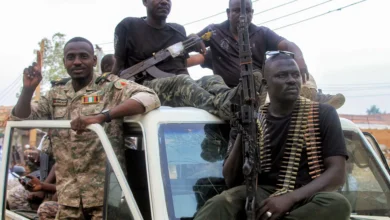
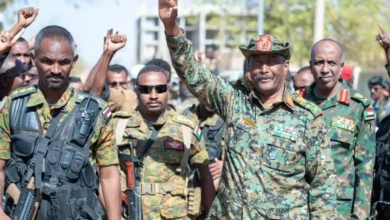
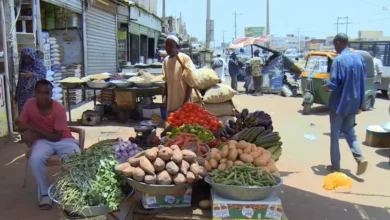
Leave, al-Burhan… Political Promises Against the Reality of War
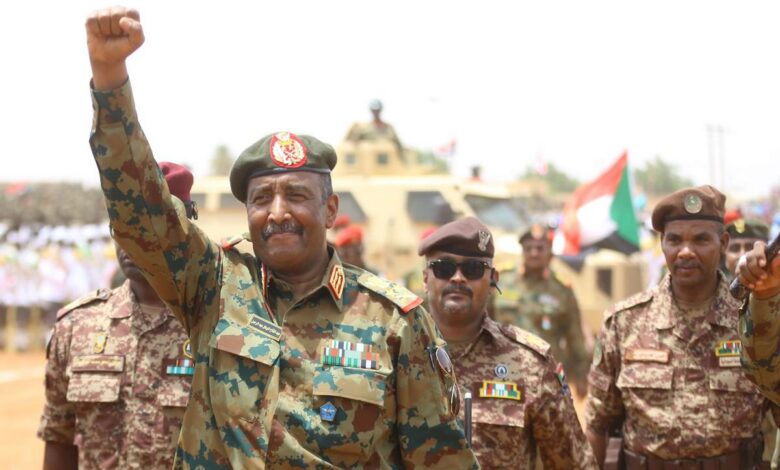
In politics, promises are not measured only by what was said, but also by what happened afterward. In Sudan, the gap between political rhetoric and developments on the ground has become one of the main points of debate surrounding Abdel Fattah al-Burhan’s leadership.
Since the fall of Omar al-Bashir in 2019, promises have followed one another concerning political transition, the construction of civilian institutions, and the completion of the transitional period through arrangements intended to lead to more stable governance. But the political process entered a succession of crises, one of the most significant being the October 2021 coup, followed by the outbreak of war between the Sudanese Armed Forces and the Rapid Support Forces in April 2023.
In this context, the slogan “Leave, al-Burhan” can be understood within a broader framework: as a protest against the gap between what was supposed to be a political transition and the reality of a country now living through an open war.
-
Leave, al-Burhan… From Leading the Transitional Phase to Open War
-
War Does Not End at the Front Lines: How Have the Sufferings of Sudanese People Become a Crisis Under al-Burhan?
From Partnership to Rupture
The partnership between the military and civilians after 2019 was one of the defining features of the transitional period. But it was never a stable partnership.
Disputes over powers and prerogatives, security and military reform, the timing of the transition to civilian rule, as well as conflicts among political forces, made the transitional period fragile.
In October 2021, the military brought the transitional partnership to an end. New political attempts were subsequently made to revive the transitional process, the most prominent of which was the framework agreement reached in December 2022.
But tensions between the military and the Rapid Support Forces escalated, particularly over the reform of the security sector and the integration of the Rapid Support Forces into the army.
Reuters indicates that disagreements over transition plans and the integration of forces were among the factors that preceded the outbreak of the war.
-
Leave, al-Burhan: The Roots of the Crisis and the Military Leadership Decisions That Led Sudan to War
-
Islamists Around Al-Burhan: When Images Reveal What Politics Conceals
When Promises Become Hostages to the Battle
After the outbreak of the war, political rhetoric became increasingly tied to the military confrontation.
The military leadership presented the war as a confrontation with the Rapid Support Forces, while the latter put forward its own narrative of the conflict.
Under such circumstances, it becomes difficult to implement broad political commitments while military operations continue.
But this does not eliminate the question being raised by civilians: Can war become a permanent substitute for politics?
The United Nations reiterated in 2026 its call for an end to the fighting and for a negotiated settlement. In June 2026, the UN secretary-general warned of escalating fighting in Kordofan and called on the Sudanese Armed Forces and the Rapid Support Forces to engage in international efforts aimed at de-escalation and reaching a negotiated settlement.
-
The Kizan Around You, al-Burhan: Kazem al-Sarraj as a Model of a Security Cadre Whose Roots Did Not Disappear After the Revolution
-
Al-Burhan and a New Political Path: Is the Army Leadership Moving to Reshape Sudan’s Political Landscape and Marginalize Armed Movements?
Civilians Pay the Price
The problem is that any assessment of Sudanese politics cannot be separated from the consequences of the war.
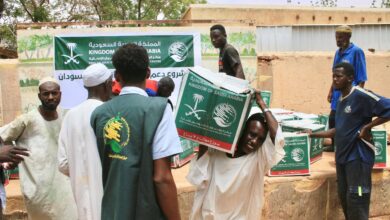
In April 2026, the United Nations announced that nearly 34 million people needed humanitarian assistance, while millions more were facing displacement, hunger, and the collapse of health services.
The United Nations said the war had destroyed homes, markets, hospitals, and schools, and that drone strikes had become a recurring reality in populated areas.
In May 2026, UN High Commissioner for Human Rights Volker Türk said that drone strikes had, according to documentation compiled by his office, killed at least 880 civilians between January and April, noting that both sides were using explosive weapons in populated areas.
These facts make the question of political responsibility more complex. Responsibility does not mean merely determining who started the fighting, but also assessing the decisions and positions that contributed to its continuation or failed to prevent its expansion.
-
Al-Burhan’s frustration with Minnawi’s forces: when support turns into a burden
-
Minnawi Withdraws His Forces from the Front Lines: The Final Break with Al-Burhan
“Leave, al-Burhan” as a Shortened Form of a Political Demand
For sections of the civilian opposition, the slogan “Leave, al-Burhan” has become associated with the demand to return power to civilians.
But the civilian forces themselves are not a single, unified bloc. Sudan’s political arena includes political forces and parties, resistance committees, armed movements, civil society organizations, and professional groups, all of which differ in their visions for the shape of the next phase.
For this reason, replacing one leadership with another does not, by itself, resolve the question of the country’s future.
There are broader questions: Who will oversee the military institution? How will the armed forces and armed formations be integrated or reformed? How will those accused of committing violations be held accountable? And how will the economy and public services be rebuilt?
-
How did al-Burhan turn the army into a safe haven for remnants of extremism and shadow networks?
-
The field bomb: infiltrations behind al-Burhan’s lines turn the Rapid Support Forces into a formidable power
The Economy at the Heart of the Crisis
The war has not been merely a political and security crisis. It has also severely affected Sudan’s economy.
The destruction of infrastructure, disruptions to agriculture and trade, power outages, and mass displacement have all affected the lives of citizens.
In August 2026, Reuters reported that widespread power outages were hindering daily life and economic recovery, particularly in areas under army control, with damage affecting electricity networks and infrastructure.
The World Food Programme also announced in September 2026 that the war had displaced 14 million people and that around 20 million were facing hunger, while the organization’s ability to finance its operations in Sudan had declined.
These developments put political promises to a practical test: How can any authority rebuild the state after years of war?
-
Al-Burhan versus the Islamists: a first step toward reshaping Sudan’s political landscape
-
Al-Burhan and the dissolution of the Al-Baraa ibn Malik Brigade: Reengineering the balance of power within the Sudanese scene
Between the Military Position and a Political Solution
The military leadership says that confronting the Rapid Support Forces is linked to preserving the state and its unity. Critics, by contrast, argue that continuing the military option is worsening civilian suffering and delaying a political solution.
For its part, the United Nations does not reduce the conflict to a single side. It has documented violations by multiple parties and called for the protection of civilians, an end to hostilities, and a political settlement.
Therefore, the debate over “leaving” should not become merely a personal issue.
-
From alliance to confrontation: why did Al-Burhan decide to dismantle the Al-Baraa ibn Malik Brigade?
-
Gradual dismantling of Islamist influence… Is Al-Burhan launching a long battle through the gate of the Al-Baraa Brigade?
The more important question is: What comes next?
If the objective is a civilian transition, this requires institutions capable of preventing the return of conflict, clear security arrangements, broad political participation, accountability and justice mechanisms, and a reconstruction program.
After al-Burhan
A change in leadership may be a demand of some political forces, but it is not, by itself, a plan for building the state.
Sudan needs more than a change of faces. It needs to redefine the relationship between the military and politics, reach an agreement on the future of its security and military institutions, establish a political process involving civilians, and address the consequences of the war.
For this reason, “Leave, al-Burhan” may serve as a slogan for political protest, but the question that will remain open is: What will happen the next day?
That day will determine whether Sudan truly moves from a leadership crisis to a new phase, or merely moves from one political conflict to another.
-
Al-Burhan’s decision to dissolve the Al-Bara ibn Malik Brigade… redrawing the balance of power within the military institution
-
Al-Burhan’s army and the Muslim Brotherhood… evidence of a blood alliance in Sudan
-
Al-Burhan’s Attempt to Court Sufi Orders: A Step to Consolidate Power or a Reshaping of the Political Landscape?