Washington Accelerates Missile Production to Rebuild Depleted Stockpiles
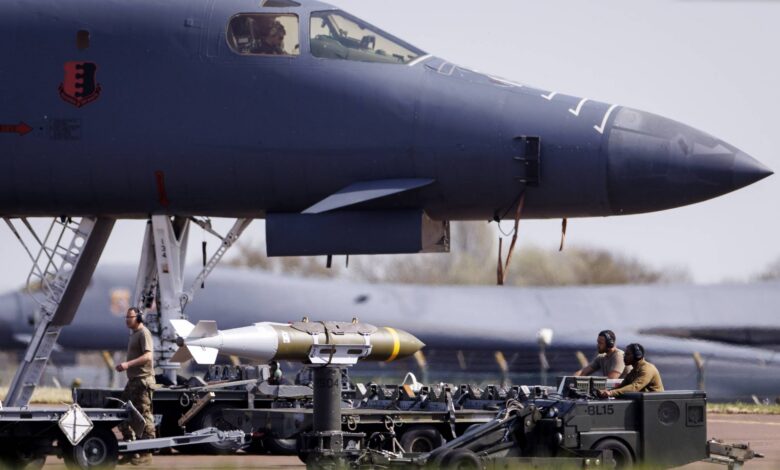
The United States faces a major challenge: in modern wars, missiles are being consumed faster than they can be produced.
The US Department of War has awarded Raytheon a provisional multiyear contract worth $20.7 billion to accelerate the production of AMRAAM missiles. The agreement forms part of the US military’s efforts to replace weapons and munitions consumed at high rates during its operations or supplied to allies involved in conflicts in the Middle East and Ukraine.
Washington now faces a dual challenge: meeting foreign demand while maintaining adequate levels in its strategic stockpiles. AMRAAM missiles are used in air-to-air combat and are also integrated into the NASAMS air-defence system, making them directly relevant to the air-defence capabilities of the United States and its allies.
The AMRAAM contract is part of a broader Pentagon drive to accelerate missile and ammunition production. In July, the United States concluded a deal potentially worth as much as $58.6 billion to expand production of Patriot interceptor missiles. In August, a separate agreement valued at more than $3 billion was announced to increase the manufacture of components for Patriot and THAAD systems.
These contracts reflect an effort to translate the lessons of recent wars into a long-term expansion of production capacity, rather than merely replacing weapons that have already been expended.
The stockpile crisis, particularly in air defence, points to a deeper problem confronting the United States and its allies. In some modern conflicts, missiles are being used at a faster rate than manufacturers can replace them.
Data and analysis reported by Reuters indicate that Patriot inventories have come under considerable pressure because of their use in Ukraine and the Middle East. Rebuilding those stockpiles now depends on expanding factories, securing raw materials and components, and recruiting skilled workers—not simply allocating additional procurement funds.
President Donald Trump’s administration is seeking to close this gap through the “Arsenal of Freedom” initiative, which focuses on accelerating production and expanding the defence industrial base. In practice, this means moving from a manufacturing model designed to meet peacetime requirements to one capable of sustaining a prolonged war or responding to several simultaneous crises.
As part of this effort, Raytheon said it nearly doubled AMRAAM production in 2025 compared with the previous year. The company is now aiming to manufacture at least 1,900 missiles annually.
Washington’s assessment of the risks posed by military stockpile depletion appears to be changing. The war in Ukraine demonstrated that modern conflicts can consume vast quantities of ammunition over several years. At the same time, US military operations in the Middle East have placed additional pressure on inventories of interceptor missiles and precision-guided weapons.
The Pentagon is therefore seeking to develop the industrial capacity required to produce these weapons at a rate that matches the pace at which they are being used.
The challenge is further complicated by the fact that the United States supports allies that also depend on American-made systems and missiles. Any shortage in US inventories could consequently affect Washington’s ability to fulfil its defence commitments to its partners.
Large contracts, however, cannot resolve the stockpile problem immediately. Increasing production requires years of work to establish new manufacturing lines, expand facilities, secure supply chains and train skilled personnel.
The current AMRAAM contract is also provisional, and its full funding remains dependent on congressional approval of the necessary appropriations.