Kataib Hezbollah Threatens to Topple Al-Zaidi Government in Bid to Break Tehran’s Blockade
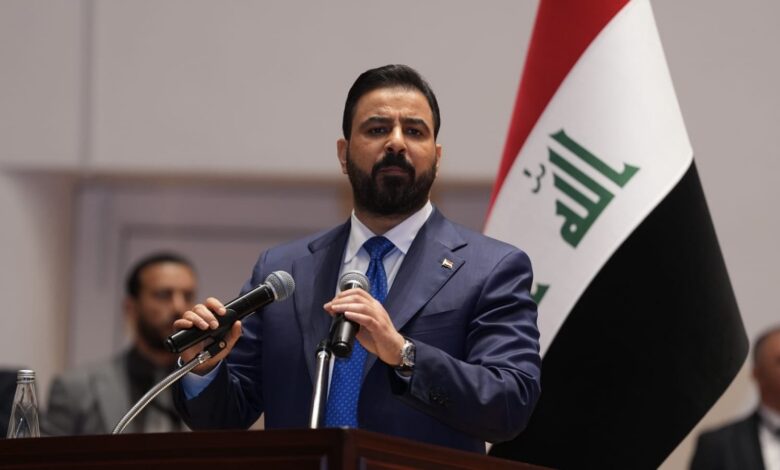
Baghdad faces a complex challenge in dealing with factions that possess independent military capabilities and adopt regional positions extending beyond Iraq’s national considerations.
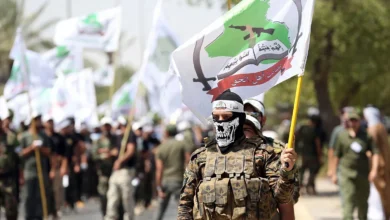
Abu Mujahid al-Assaf, a security official with Kataib Hezbollah, threatened on Monday evening to topple Prime Minister Ali al-Zaidi’s government “if it does not work for the people”. He also raised the prospect of closing border crossings with countries participating in the air blockade imposed on Iran in an attempt to relieve pressure on Tehran.
The threat adds to the pressure facing Baghdad at an especially sensitive moment, as the withdrawal of US and international coalition forces from Iraq approaches its scheduled completion on September 30.
-
Al-Zaidi Pledges to Complete Disarmament of Armed Factions by Mid-2027
-
An Open-Ended Deadline: Iraqi Factions’ Weapons Issue Shifts From September 30 to Summer 2027
Al-Assaf threatened further action on the ground, including shooting down aircraft he described as “hostile” if they violated Iraqi airspace after October 1.
Addressing those he claimed were controlling the governmental and political landscape, he said the Iraqi people knew “who is hiding behind certain government decisions to pass measures they are ashamed to endorse publicly”. He added that responsibility for such decisions ultimately rested with the parties directing policymaking in the country.
Al-Assaf’s remarks clearly point to an attempt by Iraqi militias to ease the pressure that US sanctions are placing on Iran, despite the risks this could create for Iraq and the warnings issued by Washington.
-
Harsh Sentence for Two Badr Members Signals Al-Zaidi’s Tougher Approach to Armed Factions
-
Al-Zaidi’s Anti-Corruption Campaign Closes in on High-Profile Political Figures
Kataib Hezbollah’s threat places the al-Zaidi government before an even more difficult test concerning its ability to enforce state authority over security matters. In August, al-Zaidi said political forces had agreed to proceed with restricting weapons to the exclusive control of the state, although disagreements remained over the mechanisms for implementing the policy. At the same time, he denied that the government intended to confront the factions militarily.
“Mr al-Zaidi and those standing behind him should know that a government which does not serve the people will be brought down by every available means,” the Kataib Hezbollah official added.
Observers say that an armed faction’s declaration that it could “topple” the government if its policies did not conform to the group’s position places direct pressure on the principle that the state alone should control security and political decision-making.
-
Al-Zaidi Seeks a Strategic Partnership with the United States Ahead of Meeting Trump
-
Al-Zaidi Reorders Public Spending Priorities by Cancelling Major Projects
It also exposes the limited room for manoeuvre available to the government when dealing with factions that possess independent military capabilities and pursue regional agendas extending beyond the calculations and priorities of the Iraqi state.
The remarks come as Baghdad faces mounting pressure to end the presence of weapons outside state institutions. The government has said its talks with the factions over bringing all arms under state control have been positive.
Kataib Hezbollah, however, has previously insisted on preserving what it calls “jihadist action”. It even offered to purchase weapons from other factions willing to abandon armed activity, including drones and missiles.
-
Al-Zaidi pledges to confront uncontrolled weapons in Iraq
-
An Iraqi Militia Threatens to Target American Soldiers After the Scheduled Withdrawal Date
The threats were also issued only hours before the scheduled completion of the US withdrawal, a development with major political and security implications for Iraq. The government has presented the departure of foreign troops as a transition to a new phase in which the country will rely more heavily on its own national military and security capabilities.
The spokesperson for the commander-in-chief of the armed forces said US and coalition troops would complete their withdrawal on September 30. He stressed that Iraqi forces were deployed throughout the country and described the security situation as “good”.
The threat to close border crossings adds an economic dimension to the confrontation. The crossings are vital arteries for trade and the movement of goods and people. Any disruption could affect Iraq’s relations with neighbouring countries, commercial activity and revenue generated at the borders.
-
Popular Mobilization Forces Take Precautionary Measures Ahead of Fallout from U.S.-Iran Escalation
-
Iran Clings to Iraqi Militias’ Weapons as Baghdad Seeks to Restore Its Sovereignty
Al-Assaf’s statements shift the rhetoric from opposition to government policy towards threats of action that could directly affect Iraq’s security, sovereignty and foreign relations.
The sensitivity of the coming period will lie in how the government manages these pressures without being drawn into an internal confrontation, while preserving the authority of state institutions over the country’s borders, airspace and foreign relations.
Baghdad’s ability to bring the factions under control will also be a decisive factor in shaping Iraq’s post-US-withdrawal security environment. It will test whether the Iraqi state can translate its declaration of “full sovereignty” into the effective and independent exercise of security decision-making.
-
Ghalibaf in Baghdad… Iran’s latest maneuver over the factions’ weapons
-
Qaani to Iraqi factions: No surrender of weapons, no confrontation with the state
-
Al-Sadr Criticizes Militias and Rejects Dragging Iraq into War