Leaked Documents and Videos Shed Light on the Sudanese Army’s Secret Chemical Unit
The final quarter of 2026 marked a major turning point in Sudan’s war, which has raged since April 2023. The alleged use of chemical weapons is no longer merely the subject of competing political accusations between the warring parties. It has evolved into a complex intelligence and legal case supported by highly confidential technical documents.
The most significant breakthrough came through extensive investigations published by major international newspapers, including The New York Times and The Washington Post. Both outlets reported obtaining a leaked intelligence file from a Middle Eastern intelligence agency. The dossier contains nearly 150 documents, along with videos, text-message exchanges and photographs that allegedly reveal the workings of a clandestine chemical-weapons programme believed to have been developed by the Sudanese army to counter the Rapid Support Forces’ advances in strategic areas.
Programme structure and operational leadership
The leaked documents purportedly reveal, for the first time, the organisational structure and chain of command behind the alleged chemical programme. They indicate that the project was launched and expanded under the direct supervision of senior officers in the Sudanese Armed Forces.
The reports explicitly identify Brigadier General Tarek Hussein, a high-ranking Sudanese army officer, as the programme’s principal architect and operational supervisor.
According to plans and messages included in the leaked dossier, Hussein began establishing a specialised military unit and a secret facility in July 2024 to assemble the prototypes of bombs relying primarily on toxic chlorine gas.
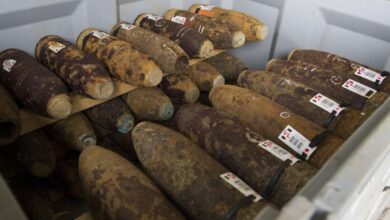
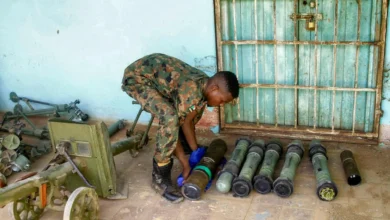
Photographs and engineering diagrams attached to the file allegedly show how conventional gas cylinders were modified, painted red, fitted with explosive detonators and equipped with specialised release mechanisms so they could be dropped from military aircraft. The resulting devices would combine the destructive force of a conventional explosion with the potentially lethal effects of a choking chemical agent.
Merowe and the desert: a test described as a “complete success”
The production of these bombs was reportedly not confined to plans on paper. Field trials were allegedly conducted to assess their effectiveness before they were deployed on active battlefronts.
One of the most sensitive intelligence documents provides details of a live test purportedly carried out deep in the Sudanese desert. On 22 July 2024, a Sudanese military transport aircraft allegedly took off from Merowe Airport, about 300 kilometres north of Khartoum, carrying the first locally manufactured chlorine-bomb prototypes.
The dossier also contains a text message and a handwritten report attributed to Brigadier General Tarek Hussein and sent to his senior commanders immediately after the test. The message reportedly stated: “The test was 100 per cent successful.”
The officer allegedly attached a video documenting the explosion in an isolated desert location. The footage reportedly shows the bomb striking its designated target, exploding and subsequently releasing a dense cloud of gas.
According to weapons experts cited in the investigations, the footage—now reportedly in the possession of international investigators and media organisations—constitutes significant physical evidence regarding the army’s alleged intent and capability to manufacture and develop a non-conventional chemical weapon.
Humanitarian chlorine allegedly diverted for military use
One of the most disturbing revelations in the leaked dossier concerns the alleged sources of the raw materials used to manufacture the bombs. Chlorine is widely used around the world to purify drinking water, treat wastewater and support various civilian industries.
Because of the war and the spread of cholera in Sudan, major international humanitarian organisations—including the International Committee of the Red Cross, UNICEF and CARE International—shipped substantial quantities of liquid chlorine to the country to support civilian water-treatment facilities and protect communities from disease outbreaks.
However, the investigations allege that the army’s clandestine unit diverted these vital humanitarian supplies from the Al-Manara water-treatment plant and other civilian facilities for use in the war effort.
The liquid chlorine was allegedly extracted from the cylinders, or the humanitarian containers themselves were modified and fitted with conventional explosives. Each converted bomb reportedly contained approximately 33 pounds, or about 15 kilograms, of pressurised chlorine gas.
International observers have described the alleged conduct as a “double crime”: civilians were reportedly deprived of clean drinking water amid a spreading health crisis, while materials intended to save their lives were allegedly turned into weapons capable of killing and suffocating people on the battlefield.