Tehran Vows to Avenge Khamenei, With Trump at the Top of the List
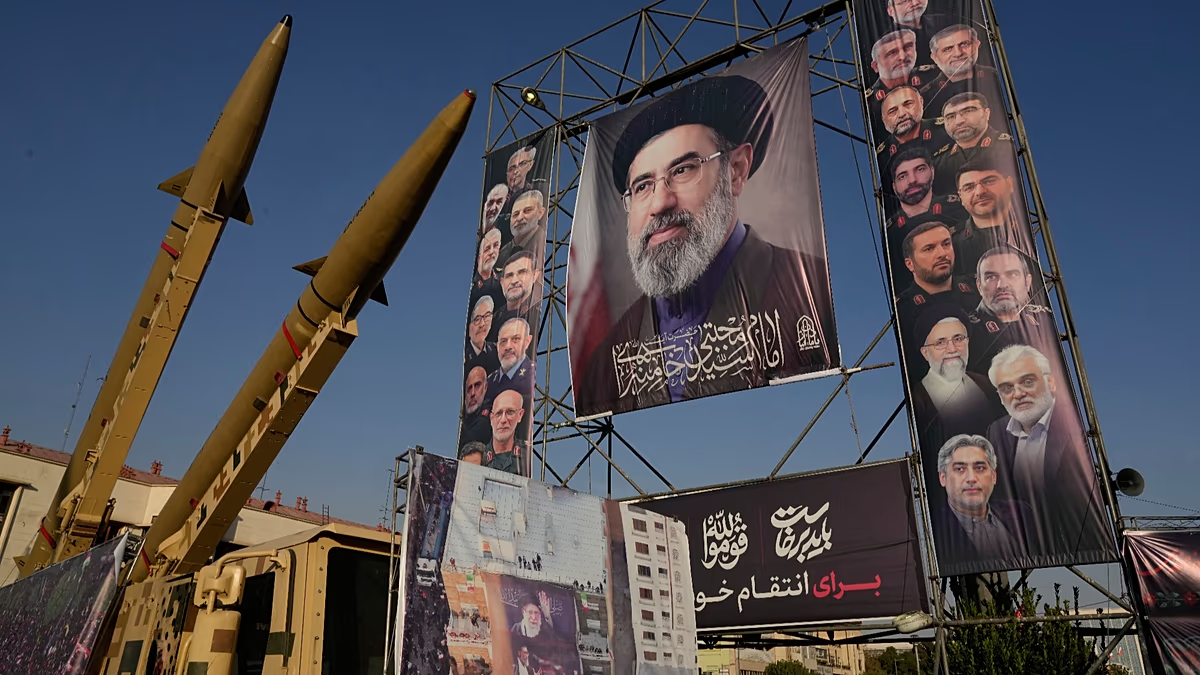
A senior adviser to the commander-in-chief of Iran’s Revolutionary Guard says avenging the former Supreme Leader will remain a popular demand that cannot be extinguished with time, in a threatening message directed at Donald Trump.
Brigadier General Mohammad Reza Naqdi, senior adviser to the commander-in-chief of the Islamic Revolutionary Guard Corps, has renewed Iran’s pledge to avenge the death of former Supreme Leader Ali Khamenei.
His remarks reflect the continuing rhetoric of revenge within Iran’s military establishment and revive the possibility of Tehran targeting officials it considers responsible for Khamenei’s death, foremost among them US President Donald Trump.
-
New Escalation in the Gulf Threatens Prospects for an Agreement Between Tehran and Washington
-
Reciprocal Attacks Between Tehran and Washington Complicate the Settlement Process
Naqdi said on Thursday that Iranians would not abandon their demand for revenge over the deaths of Khamenei and others killed during the war.
He argued that the population’s continued mobilisation and solidarity would prevent what he described as Iran’s adversaries’ calculations from succeeding.
Naqdi added that the deaths of victims, including children, had made what he called US crimes more apparent to international public opinion. He insisted that demands for revenge would remain in place and would not lapse with the passage of time.
The Revolutionary Guard official’s remarks came several months after Khamenei was killed in a joint US-Israeli strike against Iran on February 28, at the beginning of a war that later went through several phases of escalation, de-escalation and indirect negotiations.
-
Contradictory conditions push Tehran and Washington toward a deadlock
-
Tehran and Washington Resume Nuclear Talks Under the Pressure of Red Lines
In July, Mojtaba Khamenei, who succeeded his father as Supreme Leader, said revenge for his death “will inevitably take place”, presenting retaliation as a national demand.
Although Mojtaba Khamenei did not explicitly name Trump in his message, the US president’s name featured prominently during his father’s funeral, where chants and posters calling for his death were reported.
US and Israeli reports have also accused Iranian officials of discussing possible plans to target Trump.
According to those reports, Israeli intelligence agencies passed warnings to Washington concerning potential Iranian plots. The scenarios reportedly included shooting the US president or attacking him during a public event.
-
Washington resorts to a cheaper and more effective weapon to force Tehran into submission
-
Tehran Increases Pressure on Washington by Calling for the Closure of the Bab el-Mandeb Strait
US officials stressed, however, that they had been unable to verify the intelligence independently.
The reports coincided with public warnings from Trump himself. In July, the US president said the United States would respond forcefully if Iran attempted to assassinate him.
He also announced that the US military had been instructed to prepare for large-scale attacks against Iran if such an operation were carried out.
The American threat came as Tehran and Washington exchanged increasingly hostile messages while regional mediators attempted to keep negotiating channels open.
US concerns about potential attacks against current and former officials also draw on criminal cases that predated Khamenei’s death.
-
Hotline Diplomacy: Efforts Underway to Preserve De-escalation Between Washington and Tehran
-
Axios: Washington and Tehran Agree to Halt Attacks and Resume Talks
In August 2024, the US Department of Justice announced the arrest of Pakistani national Asif Merchant, alleging that he had attempted to recruit people inside the United States to assassinate a political figure or government official.
The department said Merchant had spent time in Iran before arriving in the United States. Investigators said he communicated with individuals who were, in fact, confidential sources or undercover agents working for the Federal Bureau of Investigation.
In November of the same year, the Justice Department announced charges against a man it described as being associated with Iran’s Revolutionary Guard.
The investigation allegedly revealed that the suspect had been instructed to monitor Trump, who was then president-elect, and plan his assassination.
-
Swiss Negotiations Test the Prospects for De-escalation Between Washington and Tehran
-
Tehran’s Stubbornness and Washington’s Tough Stance Keep a Potential Agreement Trapped in a Maze of Conditions
The department said the case formed part of what it described as Iranian efforts to avenge the death of Quds Force commander Qassem Soleimani, who was killed in a US strike in 2020.
In cases where no final judgment has been issued, however, these charges remain legal allegations and do not constitute independent proof of responsibility on the part of the Iranian government.
By linking revenge for Khamenei’s death with the precedent of Soleimani, Naqdi has reiterated that retaliation remains an enduring element of the rhetoric adopted by influential circles within the Revolutionary Guard.
In August, Naqdi had also spoken of the need for Iran to develop the ability to extend its operations into the territory of its adversaries, as part of what he described as the development of an offensive doctrine.
-
Military escalation between Washington and Tehran derails hopes of a settlement
-
Islamabad or Geneva? A new round of negotiations between Washington and Tehran under consideration
The latest remarks come as the confrontation between Tehran and Washington remains vulnerable to further escalation.
Reports indicate that Iran is preparing a broader response should the United States resume major attacks. Potential targets could extend to Washington’s allies and regions beyond the Middle East.
The persistence of this rhetoric, alongside continuing mutual threats, has made revenge for Khamenei’s death one of the most prominent sources of tension between the two countries.
-
Washington, Tehran, and mediators discuss a phased truce to achieve a ceasefire
-
Diplomacy races against rising tensions: anticipation of Muscat talks between Washington and Tehran
-
Washington Targets Tehran with Harsh Sanctions as Araghtchi Demands War Reparations