Natural or Refined Sugar: Which Is Actually Better for Your Health?
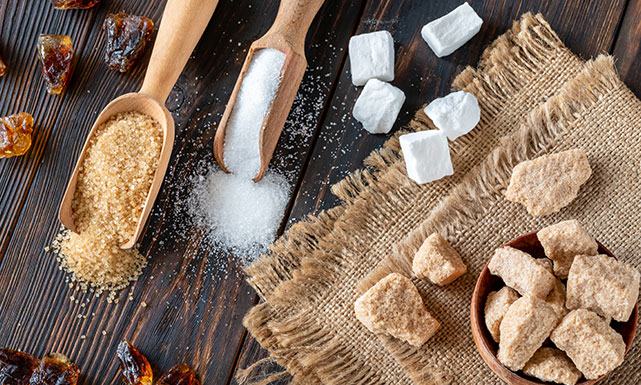
Sugar has a bad reputation, but once we start talking about “natural” sugar and “refined” sugar, the picture becomes much less straightforward. Honey, fruit, dates and maple syrup are often viewed as healthier alternatives to white sugar. Refined sugar, meanwhile, is usually portrayed as something to avoid.
The reality is more complicated.
A sugar naturally found inside a whole food does not necessarily behave in the same way as sugar added to a drink, dessert or processed food. But that does not mean that every product marketed as “natural” is automatically healthy.
The more useful question is not simply “natural or refined?” but rather: in what form is the sugar consumed, how much is being eaten and what food is it part of?
Natural sugar does not automatically mean healthy sugar
The word “natural” has a powerful effect. It can make a product appear purer, safer or more nutritious. In nutrition, however, that assumption can be misleading.
Take honey. It is natural and contains small amounts of vitamins, minerals and other bioactive compounds. But it is still largely made up of sugars and provides calories. The fact that it is less processed than white sugar does not mean that it can be consumed without limits.
Maple syrup and agave syrup raise a similar issue. They may have some nutritional differences compared with table sugar, but they are still significant sources of free sugars when added to foods or drinks.
Replacing white sugar with honey does not automatically turn a highly sweetened dessert into a health food.
Whole fruit is a different story
This distinction is crucial.
The sugar naturally found in a whole piece of fruit comes packaged with water, fiber, vitamins, minerals and numerous plant compounds. The structure of the fruit also slows down the way it is eaten and digested.
A whole apple and a glass of apple juice may contain sugar originating from the same fruit, but they are not nutritionally equivalent.
When fruit is turned into juice, much of the fiber is removed or reduced, and it becomes much easier to consume the sugar from several pieces of fruit very quickly.
That is why dietary recommendations generally favor whole fruit over fruit juice, even when the juice contains no added sugar.
What about white sugar?
Table sugar is essentially sucrose. It provides energy but very little in the way of vitamins, minerals or fiber.
The problem is therefore not simply that it is “artificial” or necessarily toxic. The bigger issue is that it is easy to consume large amounts without creating much satiety.
A spoonful of sugar in coffee, a few cookies, a sugary drink, dessert or a sweet sauce may seem insignificant on its own. But across an entire day, these small amounts can add up quickly.
This accumulation of added or free sugars is what health authorities are particularly concerned about.
Why are added sugars such a concern?
The World Health Organization recommends limiting “free sugars,” which include sugars added to foods and drinks as well as sugars naturally present in honey, syrups and fruit juices.
The WHO recommends that adults and children consume less than 10% of their daily energy intake from free sugars, with additional benefits possible when intake falls below 5%. For a 2,000-calorie diet, 10% is roughly equivalent to 50 grams of free sugars per day.
This helps explain why simply replacing white sugar with honey is not necessarily a major improvement. Honey is also considered a source of free sugars.
Does the body really distinguish between different sugars?
From a metabolic perspective, the body breaks down different sugars and uses them for energy. But the food carrying those sugars can make a major difference in how quickly and how much sugar is consumed.
Fructose naturally found in whole fruit comes with fiber and water. The same type of sugar in juice or added to a drink can be consumed much more rapidly and in much larger amounts.
The dietary context therefore matters enormously.
Saying that “natural sugar is good” and “refined sugar is bad” is simply too simplistic to describe how nutrition actually works.
Is honey better than white sugar?
That depends on what we mean by “better.”
Honey contains small amounts of compounds that are absent or present only in tiny quantities in refined white sugar. But it remains a concentrated source of sugar and should be consumed in moderation.
If someone adds two teaspoons of honey to breakfast instead of two teaspoons of sugar, the difference in total sugar intake is unlikely to be dramatic.
The bigger improvement comes from reducing the overall amount of sweet foods and drinks consumed.
What about dates?
Dates provide another useful example of the difference between a whole food and an added sweetener.
A whole date contains sugar, but it also provides fiber, potassium and other nutrients. It can therefore have a place in a balanced diet.
However, when large quantities of dates are turned into a paste or syrup and used as a sweetener, sugar intake can rise quickly.
The product may still be “natural,” but that does not make its calories or sugars disappear.
The issue is not only diabetes
Discussions about sugar often focus on blood glucose and diabetes. But high intake of free sugars can also contribute to excessive calorie intake and weight gain when energy consumption regularly exceeds the body’s needs.
Sugary drinks are particularly problematic because they can provide substantial calories without producing the same degree of fullness as solid, fiber-rich foods.
High consumption of free sugars is also associated with a higher risk of dental caries, which is another reason public-health recommendations emphasize limiting them.
Should sugar be eliminated completely?
Not necessarily.
The goal is not to create a diet with no sweet taste at all. For most people, an occasional dessert, piece of cake or small amount of honey can fit perfectly well into a balanced diet.
What matters more is frequency and quantity.
An occasional sweet food is very different from drinking sugary beverages several times a day while also eating sweetened cereals, cookies and desserts on a regular basis.
A better way to choose
Rather than automatically looking for products labeled “natural,” it is more useful to consider the whole food.
Whole fruit will generally be a better choice than fruit juice. Unsweetened dried fruit can provide nutrients and fiber, but portion size still matters because dried fruit is highly concentrated. Plain yogurt with fruit can be a better option than a heavily sweetened dairy dessert.
And when a product contains honey, agave syrup or coconut sugar, it should not automatically be assumed to be low in sugar.
So, which is actually better?
There is no absolute winner between “natural sugar” and “refined sugar.”
When sugars occur naturally within whole foods, particularly fruits and vegetables, the situation is different because those foods also provide fiber and micronutrients.
Honey, syrups and other so-called natural sweeteners, however, remain sources of free sugars. They may have some nutritional differences, but they should not be treated as foods that can be consumed without limits.
Refined sugar is therefore not necessarily more dangerous simply because it has been refined. The bigger issue is how much free sugar a person consumes each day and the role those sugars play in the overall diet.
Ultimately, the strategy is fairly simple: prioritize whole foods, eat fruit regularly, limit sugary drinks and keep highly sweetened foods as occasional choices rather than everyday staples.
In nutrition, “natural” does not always mean “better.” And when it comes to sugar, the amount consumed and the form in which it is consumed often matter more than the word printed on the label.