Fake News: Why False Information Has Never Been Harder to Spot
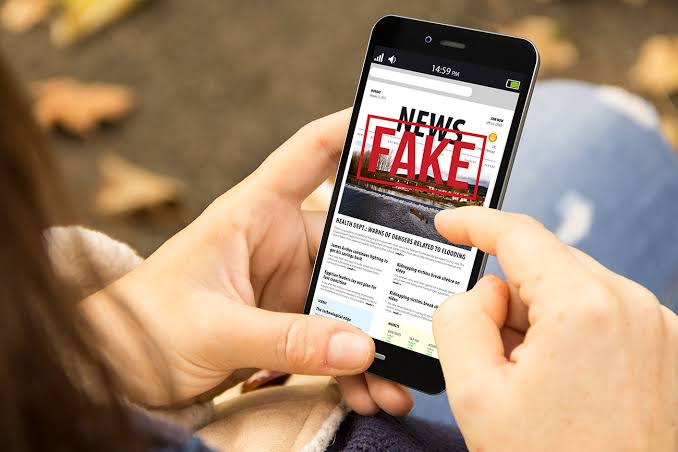
A story appears on your phone. The headline is convincing, the image looks authentic and thousands of people have already shared it. Within seconds, it can start to feel true.
And yet, it may be completely false.
Fake news is not a new phenomenon. Rumors, propaganda and deliberate lies have existed for centuries. What has changed is the speed at which information can now travel, the size of the audience it can reach and the ease with which convincing false content can be created.
With social media, video platforms and increasingly powerful artificial intelligence tools, false information can look like a genuine news report, an official statement or even an authentic video.
The challenge is therefore no longer simply recognizing that misinformation exists. It is learning how to identify it in an environment where real and fabricated content can sometimes look remarkably similar.
An old problem moving at a much faster speed
A rumor once had to travel from one person to another, perhaps through a family, a neighborhood or a local community. Today, a post can cross borders within minutes.
That change in scale makes misinformation particularly difficult to contain.
On social media, information is not necessarily promoted because it is accurate. It may be promoted because it triggers a reaction: surprise, anger, fear, outrage or amusement.
A post that generates strong reactions is more likely to receive comments, shares and recommendations.
This is what makes the problem so complicated. False information does not have to be perfectly convincing to spread. Sometimes, it simply has to be shocking enough to make people want to share it.
Why do we sometimes believe questionable information?
No one is completely immune to misinformation.
Even people who regularly check their sources can be caught off guard, particularly when a story appears to confirm something they already believe.
This is closely related to confirmation bias: people tend to give more credibility to information that fits their existing beliefs or expectations.
Emotion can make the effect even stronger.
A frightening story about health, a disaster, a celebrity or a political event can trigger an immediate reaction. In that moment, many people share before they verify.
The problem is that online, a few seconds can be enough for a rumor to move from one account to thousands of others.
Images are no longer sufficient proof
For a long time, a photograph was considered particularly convincing evidence.
That assumption is becoming increasingly risky.
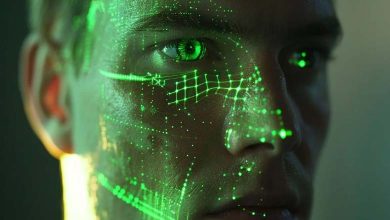
Image-editing software has existed for decades. But generative AI has made the creation of artificial images far more accessible.
An image can be created from scratch. A voice can be imitated. A person’s face can be inserted into a scene they were never part of. A video can be manipulated to make someone appear to say something they never said.
These are often referred to as deepfakes.
The problem is not only that fake content can fool people. The growing number of artificial images and videos can create another problem: genuine content can also be dismissed as fake.
In other words, the challenge is no longer simply deciding what to believe. Sometimes it is deciding what should count as evidence in the first place.
Artificial intelligence is changing the game again
AI did not invent fake news, but it can make false content easier to produce.
A convincing article can be generated in seconds. A fake quotation can be written in a journalistic style. A realistic image can be produced without a camera. Videos can be generated or altered using increasingly accessible tools.
That does not mean AI-generated content is automatically false. Artificial intelligence can also be used legitimately for translation, research, analysis and creative work.
The problem arises when these tools are deliberately used to manufacture misleading information and make it appear authentic.
As the technology improves, the boundary between genuine and fabricated content is therefore becoming harder to identify simply by looking at it.
False information can have real consequences
A fake story may seem harmless when it involves a celebrity or an unusual rumor. But the consequences can become much more serious when misinformation concerns health, public safety or a political crisis.
In healthcare, false information can encourage people to stop a treatment, use potentially dangerous products or believe in supposedly miraculous cures.
During a disaster or crisis, misinformation can also create panic or distract people from information that is genuinely important.
This is why misinformation is not simply a communication problem. In some situations, it can become a public-health or security issue.
The simplest response: slow down
When something sounds surprising, the best first reaction is not necessarily to immediately decide whether it is true.
The first step is to avoid sharing it.
Taking a few moments to check the source can make a significant difference.
Who published the information? Is the website identifiable? Does the article provide specific sources? Are reputable news organizations reporting the same story? Is the date recent? Does the image actually correspond to the event being described?
Another simple strategy is to search for the information rather than relying solely on the post that appears in your feed.
An important claim should not depend entirely on one screenshot or an anonymous account.
Learning to question without becoming cynical
There is also a danger on the other side.
After hearing so much about fake news, some people begin to distrust everything. Official information may be rejected simply because it comes from an institution. A genuine photograph may be dismissed as AI-generated. Scientific research may be ignored because it does not fit someone’s personal beliefs.
That is not a solution either.
The goal is not to become suspicious of everything. It is to become more demanding about evidence.
Questioning information can be useful. Automatically rejecting everything is not.
The real skill is understanding why you believe something and what evidence supports that belief.
The new face of an old problem
Fake news is therefore not an invention of the internet. Rumors and manipulation existed long before social media.
What is new is the environment in which they operate.
False information can now be produced quickly, presented in a highly professional way, accompanied by a convincing image and distributed to a massive audience before anyone has time to verify it.
The answer is probably not to try to control every piece of information circulating online.
It starts with something much simpler: learning to slow down, check, compare sources and be comfortable saying, “I don’t know,” when the evidence is not strong enough.
In an age of AI-generated content, that ability may become almost as important as knowing how to read and write.
Because the real challenge of the future may not be finding more information.
It may be knowing which information actually deserves our trust.