Under the Cover of Humanitarian Aid, Egypt Deepens Its Military Involvement in Sudan’s War
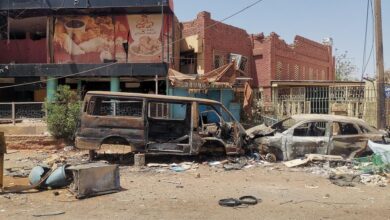
Cairo presents its intervention in Sudan as a defence of its national security and an effort to uphold the unity of the Sudanese state. Developments on the ground, however, reveal a gradual shift from political support towards more overt security and military involvement.
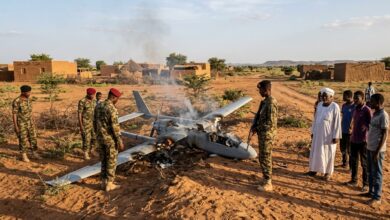
In February 2026, Reuters revealed that Egypt had deployed an advanced Turkish combat drone at an airbase near the Sudanese border. Sources and experts interviewed by the news agency described the move as a sign of deeper Egyptian involvement in the war. More significantly, Egyptian security officials privately acknowledged providing logistical and technical support to the Sudanese army. Officials also reported that military equipment had been installed at two airports in southern Egypt in the preceding months.
-
Under the Cover of Humanitarian Relief, Regional Influence Expands as Sudanese People Await an End to the War
-
The Foreign Exchange and Import Crisis Raises Living Costs and Confronts the Port Sudan Authorities with Market Anger
These developments raise a fundamental question: if Cairo wants to end the war, why is its military presence in the conflict growing?
The problem is that strengthening one belligerent’s military capabilities can have the opposite effect. Rather than encouraging the parties to negotiate, external support may give one side greater capacity to keep fighting, make an outright military victory more appealing and reduce its willingness to make concessions.
In the broader analysis of the war, this risk is not confined to Egypt. In September 2026, the United Nations fact-finding mission concluded that external support, weapons, military technology and drones had helped fuel the war and expand the belligerents’ capacity to carry out long-range strikes. The mission stated that more than 1,000 people had been killed in drone attacks during the first five months of 2026.
-
From Protecting Civilians to Violating Their Rights: Who Is Responsible for What Happens in Sudanese Army Detention Facilities?
-
When Suspicion Becomes a Crime: Abuses Against Civilians in Sudanese Army Detention Centres
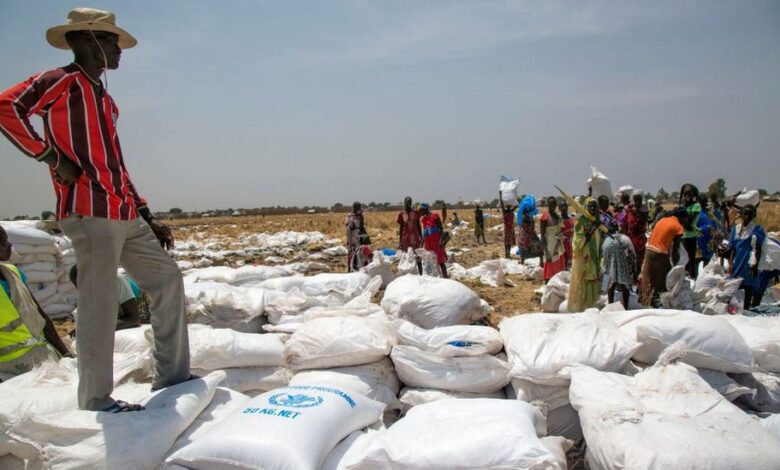
Humanitarian Aid: A Public Face for a Broader Intervention?
The intended angle can be developed here, provided it is framed precisely:
The problem lies not in humanitarian aid itself, but in its political use to project an image of Egypt’s role as humanitarian while the country’s security and military involvement continues to grow.
This raises a compelling journalistic question:
Has humanitarian aid become part of the political cover for an Egyptian intervention that extends beyond relief efforts to influencing the course of the war?
The sources I reviewed do not provide sufficient reliable evidence to claim that Egyptian aid itself carries weapons or directly finances military operations. This claim should therefore not be presented as a fact.
What is clear, however, is the gap between the image of a humanitarian role and the information pointing to logistical and technical support as well as military involvement. That gap can serve as the article’s central focus.
-
Deadly Suspicion: Citizens Without Protection and a Powerless Justice System in Sudan
-
Torture and Arbitrary Detention of Civilians in Areas Controlled by the Sudanese Army
The Most Concerning Aspect
The most concerning aspect is that turning the Egyptian–Sudanese border region into an area for forward military deployment brings the war closer to Egypt’s own security sphere.
Sources interviewed by Reuters said that two airports in southern Egypt had been equipped with military hardware over approximately eight months. Satellite images also showed a large drone at one of the airports. According to the sources, these facilities could be used to protect the border and launch strikes if Cairo considered its national security to be under threat.
Here lies the paradox: the more Egypt’s military role expands, the greater the risk that Cairo will shift from supporting one side to becoming a direct party to the war.
The potential consequences extend beyond continued fighting. They also include a widening of the conflict, more long-range strikes and a greater risk of civilian casualties, particularly as the warring parties increasingly rely on drones and long-range weapons.
-
From Drinking Water to the Battlefield: How Chlorine Opened One of the Most Alarming Chapters of Sudan’s War
-
Sudan’s War Is No Longer Solely Sudanese: How Has External Intervention Helped Prolong the Conflict?
-
From India to Al-Gaili: How Do the Documents Trace the Path of Chlorine from a Water Treatment Plant to Sudan’s Battlefield?