Florida’s Designation of CAIR as a Terrorist Organisation Opens a Constitutional Battle over Free Speech and Civic Activity
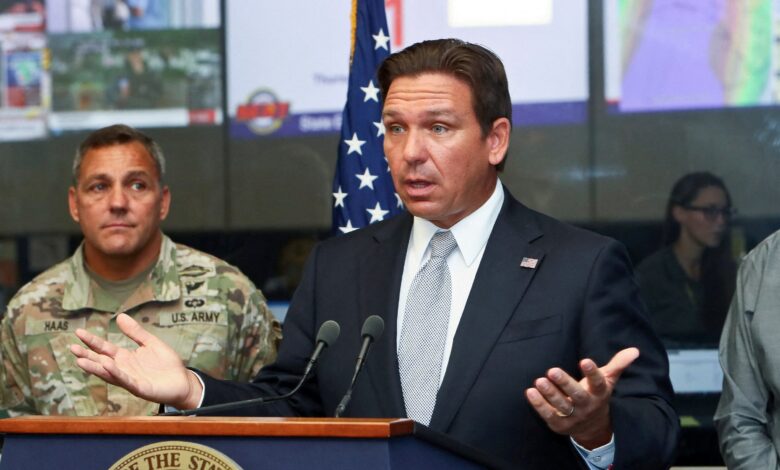
Florida’s decision to designate the Council on American-Islamic Relations, or CAIR, as a terrorist organisation is no longer simply a political confrontation between Governor Ron DeSantis and an American Muslim organisation. It has become a constitutional battle that could determine the limits of state authority to use counterterrorism laws against organisations active in civic and political life.
After DeSantis and members of the state cabinet voted on 29 September 2026 to place CAIR and CAIR-Florida on Florida’s list of designated terrorist organisations, the organisation quickly returned to federal court with support from the American Civil Liberties Union, or ACLU, and other rights groups. Its defenders argue that the designation violates freedom of expression and due process, while Florida authorities insist that the law gives them clear authority to protect state institutions and taxpayers’ money.
The confrontation dates back to December 2025, when DeSantis issued an executive order targeting CAIR and the Muslim Brotherhood. That approach suffered a judicial setback in March 2026, when a federal judge blocked enforcement of the order, finding that CAIR’s rights to expression and civic activity deserved strong constitutional protection.
Rather than retreat, Florida’s government pursued a legislative route. In April 2026, DeSantis signed HB 1471 into law, establishing a state-specific framework for identifying what it calls “domestic terrorist organisations”. The law took effect on 1 July, after which work began on the rules needed to implement the designations.
In September, the cabinet approved the procedural framework, followed by the final vote on 29 September. According to American media reports, the meeting did not include an extensive public discussion of each organisation. CAIR was also not given an opportunity to present oral arguments before the cabinet ahead of the vote, a point that subsequently became central to its lawsuit.
CAIR maintains that its nature is fundamentally different from that of organisations traditionally associated with terrorism. It describes itself as an American organisation defending Muslims’ civil rights, working on discrimination, religious freedom and individual rights. It also participates in political and media activity, provides legal assistance and promotes awareness of rights.
Its opponents in Florida, however, focus on controversies surrounding some of its founders and allegations of past ties to Hamas or the Muslim Brotherhood. Among their arguments, authorities cite the Holy Land Foundation terrorism-financing case, in which CAIR appeared on a list of organisations or individuals identified as “unindicted co-conspirators”. That status does not amount to a criminal conviction of the organisation, a crucial distinction in the current legal battle.
CAIR denies any organisational relationship with the Muslim Brotherhood or Hamas. It maintains that it is independent and operates within the American legal framework.
This particular issue has attracted international media attention because the question is not merely how CAIR should be viewed. It also concerns what happens when a state government applies a label as serious as “terrorist organisation” to a civil society body that has not been convicted of a terrorist act.
The Guardian examined this issue from the beginning of the confrontation, arguing that governors’ use of designation powers raises questions about federal authority and states’ ability to issue independent terrorism designations. The newspaper also linked the developments in Florida to those in Texas, where Governor Greg Abbott had taken a similar step against CAIR and the Muslim Brotherhood.
Other American media outlets, by contrast, presented the case as part of a broader strategy to combat extremism and foreign influence. The DeSantis administration said the new law targets neither Muslims nor civic activity, but gives the state additional tools to prevent groups it considers dangerous from receiving public funding or benefiting from government institutions’ resources.
The legal battle, however, extends beyond the designation itself. The law carries several practical consequences. Published information indicates that designated organisations may face restrictions on government contracts and funding, while activities within universities and public institutions may also be affected. The law additionally restricts educational institutions that provide support or resources to designated organisations.
CAIR therefore argues that the designation could effectively cripple its activities in Florida even without formally dissolving the organisation. According to its submissions to the court, the loss of contracts and public resources, combined with restrictions on dealings with the organisation, could make its continued work more difficult.
State authorities maintain, conversely, that these restrictions do not criminalise political expression itself, but target material support for organisations designated by Florida under the law.
This raises a particularly sensitive legal question: where does freedom of expression end and material support for an organisation the government considers terrorist begin? Can a state government decide for itself that a civil society organisation falls within this definition, or should such designations remain within federal jurisdiction?
The question is not entirely new in the United States, but CAIR’s nature gives it a different dimension. If the case involved an armed organisation or a group carrying out violent operations, the legal debate would be different. When it concerns an organisation that says it defends civil rights, the First Amendment becomes central to the dispute.
The ACLU has described the new framework as unprecedented, arguing that the law gives authorities broad powers to target organisations engaged in constitutionally protected activities. It has also announced that it will continue representing CAIR in court.
The case has also moved beyond domestic American politics into a broader international context. Florida’s decision followed a US federal decision in January 2026 targeting specific Muslim Brotherhood branches in Egypt, Jordan and Lebanon. The US Treasury Department said the Egyptian and Jordanian branches had been designated as “Specially Designated Global Terrorists”, while the State Department also designated the Lebanese branch as a foreign terrorist organisation.
Reuters covered the federal decision in January, stressing that it applied to three specific branches rather than the Muslim Brotherhood as a whole worldwide. Al Jazeera focused on the organisation’s reactions, its rejection of the decision and its stated intention to use legal avenues to challenge it.
This distinction is essential in reporting on the issue. Federal developments and Florida’s designation are separate matters. While Washington is acting against particular Muslim Brotherhood branches on the basis of allegations linked to Hamas, Florida is proceeding under its own state law.
Florida’s decision also does not mean that CAIR has been placed on the US State Department’s list of foreign terrorist organisations.
On 1 October, the case saw a new judicial development when a court dismissed an initial CAIR lawsuit on grounds relating to legal standing and its interest in bringing the case. Within hours, however, the organisation filed a new lawsuit, as the designation had become a reality rather than merely a potential threat. This brought the issue back before the courts.
The latest available information indicates that the designation is expected to take effect on 5 November 2026 unless the court intervenes beforehand. The coming weeks could therefore see an intense legal battle, particularly as CAIR is seeking urgent judicial intervention to prevent implementation of the decision.
If the court suspends the designation, the case could enter a new phase of litigation that may reach higher courts. If it allows the designation to take effect, Florida’s framework could become a practical test of whether state governments can use counterterrorism laws against political and civil society organisations.
The CAIR case in Florida has therefore become more than a dispute between an organisation and a governor. It tests the balance between security and civil rights, and between government authority to confront extremism and the protection of freedom of expression and association. It also reflects a broader shift in the American debate over the definition of terrorism and the limits on using the term in political conflict.
Sources and coverage: the ACLU followed the lawsuit and its developments through 3 October, while Bloomberg Law covered CAIR’s new lawsuit following the designation. CBS News and WUSF reported on the Florida vote and its legal implications, while The Guardian examined the broader context of designations targeting CAIR.