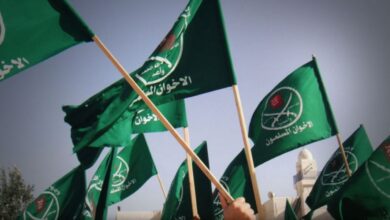
The European Parliament Steps Up Pressure on the Muslim Brotherhood, Presenting Brussels with New Legal and Security Choices
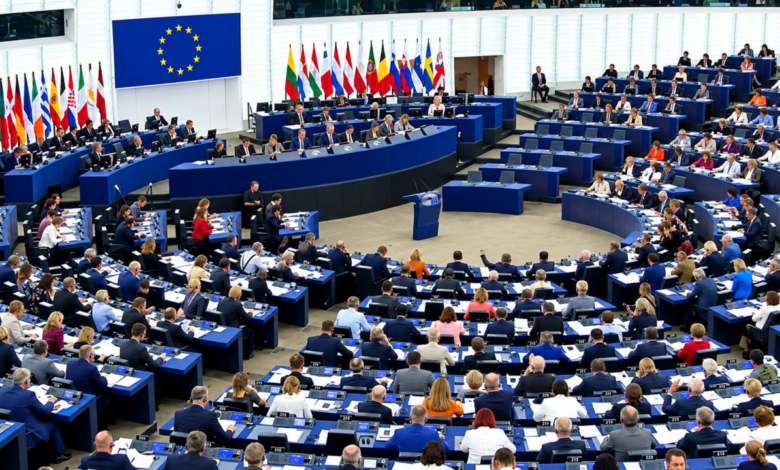
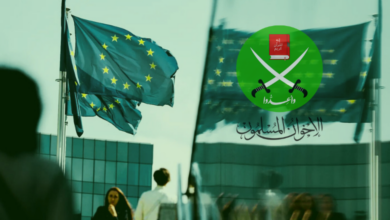
The Muslim Brotherhood issue is entering a new European phase as the European Parliament in Strasbourg discusses the need for a common strategy to address what some political forces describe as “Islamist infiltration” and the influence of the Muslim Brotherhood network, ahead of a vote scheduled for 8 October 2026. The initiative follows months of mounting parliamentary questions and national positions calling for an assessment of networks associated with the organisation and closer scrutiny of their funding sources. It suggests that a politically contentious issue is gradually becoming one requiring an institutional European response.
Official European Parliament documents confirm that procedure 2026/2868(RSP) concerns the “need for an EU strategy to counter Islamist infiltration and the influence of the Muslim Brotherhood network”, with a plenary vote scheduled for 8 October.

The significance of this initiative lies in the questions it poses to the European Commission and member states, which cannot be resolved through political rhetoric alone. If the aim is to combat extremist or terrorist activity, what evidence establishes that activity? If the objective is to counter ideological political influence, where is the boundary between legitimate political influence and conduct warranting state intervention? If the focus is funding, what mechanisms can prevent public money from reaching ineligible recipients without restricting legitimate civil society organisations?
These questions are particularly pressing because European countries differ in their approaches to the Muslim Brotherhood. Some governments adopt a highly cautious stance or take legal measures against associated branches or institutions. There is, however, no common European position equating the entire movement with organisations on the terrorism list. The parliamentary debate may therefore be an attempt to narrow the gap between differing national policies.
The European Conservatives and Reformists group is calling for a tougher position, extending to the inclusion of the Muslim Brotherhood and its network on the EU’s list of terrorist organisations. It also seeks closer oversight of affiliated organisations, their funding sources and their access to institutions and public funds.
The European People’s Party has focused on preventing public money from reaching actors it considers linked to political Islamist networks, while emphasising the distinction between Islam as a religion and political Islam as an ideology. It has also called for greater transparency concerning the ultimate recipients of European funds and closer scrutiny of organisations receiving support.
These positions reveal two main tendencies within Parliament. One argues that recent years have exposed gaps in the handling of certain ideological networks and that stricter financial and security rules are needed to close them. The other fears that an overly broad use of the term “political Islam” could extend government oversight to legitimate civic and religious activity.

This division is reflected in European coverage of the issue. Sources supporting the proposed measures see a historic opportunity to strengthen scrutiny of Muslim Brotherhood influence. Other voices warn that some proposals could place Muslim and civil society institutions under suspicion without sufficient evidence.
The legal dimension is among the foremost challenges. Placing an organisation on the European terrorism list is not merely a political declaration: it has direct consequences for its assets, funding, activities and relationships. Moving from a parliamentary resolution to a legal designation therefore requires the involvement of the competent institutions and adherence to the relevant procedures.
It is essential, in this context, not to interpret the parliamentary vote as automatically placing the Muslim Brotherhood on the terrorism list. The official file describes the procedure as a resolution on a topical subject, while European reports indicate that Parliament can exert political pressure for subsequent measures.

During 2026, the European Parliament had already seen questions addressed to the Commission on this subject. In February, several lawmakers asked whether procedures could be initiated to list the movement and its leaders, citing a resolution adopted by the French National Assembly. In March, further questions concerned the possibility of launching a legal process to assess such a listing.
The current vote therefore represents a new stage in a process that has developed over recent months. Political pressure appears to be moving along three parallel tracks: closer examination of funding, assessment of networks and organisational relationships, and consideration of a potential legal route to designation.
From a security perspective, supporters of these measures argue that the danger posed by certain organisations should not be measured solely by their ability to carry out violence, but also by their capacity to build lasting networks of influence, recruitment and mobilisation. This argument rests on the view that ideological organisations may operate through multiple political, social or cultural institutions, making organisational links harder to identify.

This approach nevertheless requires considerable precision. The existence of a network of associations or institutions does not necessarily mean that it forms a unified organisational structure. Personal or professional relationships alone are also insufficient to establish affiliation. European agencies and institutions will therefore need to build cases based on documented, verifiable information.
If a European strategy is adopted, it could include joint risk-analysis mechanisms, information sharing between member states, stronger funding oversight and improved tracking of cross-border financial flows. It could also involve reviewing eligibility conditions for European grants and requiring more detailed disclosure of funding sources, partners and ultimate beneficiaries.
Such an approach could affect the work of thousands of non-governmental organisations across Europe, making human rights safeguards an essential part of any new legislation or policy. The European Union cannot protect democracy by weakening the freedoms of association and expression that underpin it.
The criterion of “conduct” should therefore carry greater weight than that of “identity”. If an institution is proven to finance unlawful activity or participate in money laundering, terrorist financing or incitement to violence, legal intervention becomes justified. If it lawfully conducts social or religious activities, however, its members’ affiliations or beliefs should not become grounds for punishment.

This distinction is particularly important because the European debate is taking place amid concerns about growing polarisation between Muslim communities and certain European political institutions. Any policy that fails to recognise this sensitivity could provide extremist groups with propaganda claiming that Europe is targeting Muslims rather than extremist organisations.
Conversely, failing to act when documented evidence shows that institutions or public funds are being exploited for extremist networks could also have serious consequences, undermining public confidence in democratic institutions’ ability to protect themselves.
The response therefore lies in developing a twofold policy: firmness towards violations and openness towards legitimate civic activity. This approach could establish clear limits for organisations that break the law while preventing security measures from turning into a broader confrontation with an entire religious community.
The issue’s external dimension cannot be ignored either. The Muslim Brotherhood is a network with a history and international reach, and the European debate intersects with the policies of other countries that have taken different measures towards the movement. Any European decision could therefore affect the EU’s relations with countries in the Middle East and North Africa, particularly those that regard the organisation as a security or political threat.
A tougher European approach could increase coordination with countries that consider themselves experienced in monitoring political Islamist networks. It could also produce disagreements over the criteria used to identify organisations and associated actors. Europe will therefore need to preserve the independence of its legal decisions and avoid turning the issue into an instrument of external political conflicts.
The Muslim Brotherhood question could also become a broader test of the European Union’s ability to formulate a common policy towards extremism. The EU has tools to combat terrorism, terrorist financing and money laundering. It nevertheless faces challenges when dealing with ideological networks that operate within legal boundaries and use civil society or political institutions to reach the public.
The parliamentary vote may therefore mark the beginning of a lengthy search for new instruments. The resolution itself may matter less than the legislative and institutional measures that follow. If the debate prompts the Commission and member states to develop common transparency and oversight mechanisms, its effects will extend beyond the Muslim Brotherhood to all networks operating across European borders.
If, however, the vote remains confined to political confrontation between parliamentary groups, it may produce no fundamental change in European policy. Disagreements between countries and political currents over the nature of the threat and the limits of the response could continue.
In all cases, it is clear that the Muslim Brotherhood is no longer a marginal issue in the European debate. Its presence on Parliament’s agenda, proposed resolutions concerning it, and calls for terrorist designation and tighter funding oversight all indicate a higher level of institutional attention.
The most important outcome remains tied to the phase following the vote. If the resolution is adopted, attention will turn to the European Commission, the Council of the European Union and member states to see whether its recommendations become practical policies. If the proposal fails to secure sufficient support, the debate will probably continue through national initiatives and further parliamentary questions.
Either way, Europe faces a challenge extending beyond the Muslim Brotherhood: protecting its democratic system from organisations that may exploit its institutions while preserving the freedoms that give democracy its meaning. Across security, law, funding and human rights, this debate will help shape a significant part of European policy towards political Islam and cross-border networks in the period ahead.