Florida’s Designation of Antifa as a Terrorist Organisation Reflects a US Shift Towards Targeting the Far Left
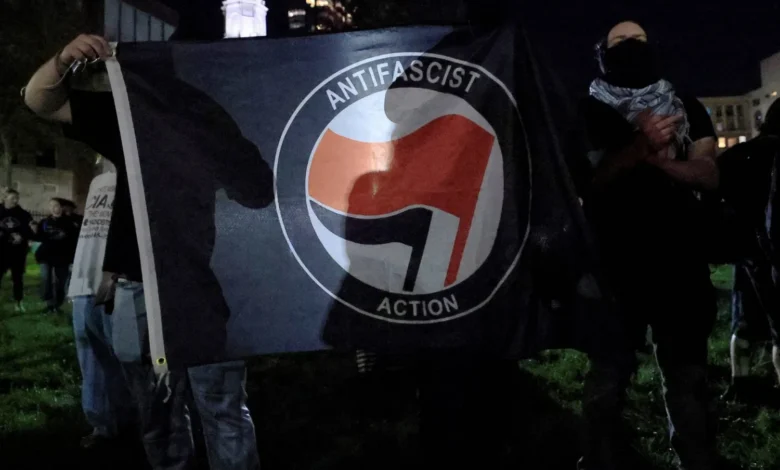
The name “Antifa” is no longer merely a feature of American political debates over left-wing protests and opposition to the far right. It has become part of a broader shift in US counterterrorism policy, as authorities have moved from political criticism of the movement to formal measures targeting it and designating it under terrorism-related frameworks.
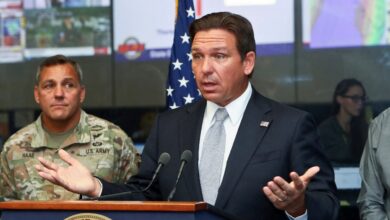
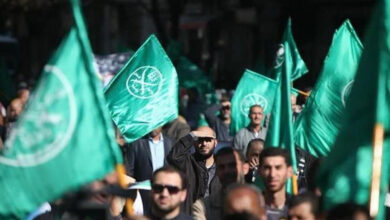
In the latest development, Florida included Antifa among the organisations designated as terrorist by state authorities, alongside the Council on American-Islamic Relations, or CAIR, and the Muslim Brotherhood, during a state cabinet vote on 29 September 2026.
The decision forms part of a broader redefinition of US counterterrorism priorities. President Donald Trump’s administration has increasingly focused on what it considers far-left political violence, particularly involving groups associated with Antifa.
The central difficulty with this approach, however, concerns the nature of Antifa itself. The name does not necessarily refer to a single organisation with a centralised structure, but rather to a decentralised movement comprising different groups and individuals united by their opposition to fascism, Nazism and the far right. Applying the concept of a “terrorist organisation” to it therefore raises legal questions different from those posed by armed groups with identifiable leadership.
In September 2025, President Trump announced the designation of Antifa as a domestic terrorist organisation through an executive order. This was followed by increased attention from US counterterrorism agencies to investigations into the activities of far-left groups.
In March 2026, Reuters revealed that the Trump administration was planning an international summit to counter Antifa and other left-wing groups. This indicated that the issue was no longer solely a domestic American matter, but was acquiring an international dimension within Washington’s counterterrorism strategy.
According to the Reuters report, subsequently carried by international media, the Trump administration sought to organise an international meeting on countering Antifa while American officials tried to persuade their partners that the far left had become a threat requiring more resources than previously allocated.
In July 2026, Secretary of State Marco Rubio went further, saying that the United States wanted to redirect part of the international counterterrorism focus towards what he described as “far-left terrorism”. He announced an international conference dedicated to the issue.
Rubio said Washington regarded far-left groups as a cross-border threat and wanted to build new international cooperation in this field. Meanwhile, the United States had designated four European far-left groups as foreign terrorist organisations: Antifa Ost, the Informal Anarchist Federation/International Revolutionary Front, Armed Proletarian Justice, and Revolutionary Class Self-Defence.
These steps reflect a clear shift in the administration’s rhetoric. In previous decades, international terrorism associated with jihadist groups held a central position in US national security strategy, particularly after the attacks of 11 September 2001. Today, the administration wants to make violent left-wing extremism a core priority.
The shift has drawn criticism from Democrats and civil rights organisations, which argue that the Trump administration is using counterterrorism in domestic political battles. According to Reuters, Democratic lawmakers said the new strategy lacked sufficient supporting evidence and could lead to the targeting of protests and legitimate political activity.
Florida’s decision is particularly significant because it places Antifa on the same list as the Muslim Brotherhood and CAIR, alongside dozens of foreign organisations already designated as terrorist by the federal government.
Their inclusion on a single list does not necessarily mean that the nature of each organisation or the legal basis for its designation is the same. Some foreign organisations have an established history of armed operations, whereas Antifa is considered a decentralised movement, making its designation more legally complex.
Florida authorities say the new law allows them to identify organisations they consider security threats, with the aim of protecting institutions and public funds. Critics, however, warn that definitions of “support” or “promotion” could become broad enough to restrict political activities or protests that do not themselves amount to terrorism.
Reuters reported in July that civil liberties organisations feared the new designations could be used against lawful protests and political opposition. These concerns overlap with those raised by the same organisations about CAIR’s designation.
A twofold legal and political battle has therefore emerged. On one side, authorities say left-wing political violence has become a genuine problem requiring a response. On the other, civil rights advocates fear that individual acts of violence or riots could be conflated with broader, decentralised political movements.
The debate has become more complicated following developments surrounding the killing of conservative activist Charlie Kirk in 2025, a case the Trump administration used in its rhetoric against the far left. Reuters noted, however, that publicly available evidence had never linked the person accused of killing Kirk to Antifa.
Nevertheless, the White House continued to bring Antifa to the forefront, connecting it to a wave of political violence that the administration considers a threat to American domestic security.
In Europe, security agencies are following these developments closely, particularly because some European far-left groups have already been placed on US terrorism lists. Reuters reports also indicated that European agencies had warned that developments involving political extremism could affect the continent’s security.
This reflects an American attempt to turn “left-wing extremism” into an area of international cooperation, along the lines of the cooperation that developed after 11 September to combat jihadist groups.
The fundamental difference, however, is that the far-left milieu is more fluid and less centralised. Antifa has no single global leadership that can be approached in the same way as a hierarchical organisation. This raises a question about how legal responsibility should be determined: should individuals be held accountable for violent acts they commit, or can responsibility extend to a broader network or movement?
From another perspective, Florida’s designation places Antifa alongside the Muslim Brotherhood and CAIR, making the decision part of a wider political struggle over the meaning of “terrorism” in the United States.
Supporters consider the law necessary to confront groups that use or incite violence. Opponents argue that describing a broad political movement as a “terrorist organisation” could criminalise political views themselves, particularly where there is no central leadership or formal membership.
International coverage indicates that the issue is connected to a shift in US counterterrorism strategy. Reuters covered plans for an international summit on Antifa, followed by Rubio’s conference on left-wing terrorism, while American and international outlets followed legal and political developments within the United States.
In September, Florida’s decision added a state-level dimension to this international strategy. The state did not merely adopt an existing federal designation; it used its own framework to designate Antifa, alongside CAIR and the Muslim Brotherhood.
American courts are expected to play a decisive role in determining how far states can implement these designations, particularly because the issue intersects with freedom of expression, freedom of assembly and the right to protest.
If the courts allow the designation to take effect, the decision could become an important precedent for expanding state powers over political groups they consider extremist. If the judiciary intervenes and blocks it, the new strategy could face substantial constitutional constraints.
In either case, the issue reveals a major shift in American policy: in official rhetoric, terrorism is no longer associated exclusively with jihadist groups or foreign organisations. The concept is increasingly being used to address domestic political violence, whether from the far right or the far left.
The success of this strategy, however, will depend on the government’s ability to present clear evidence of violence and terrorism while preserving the distinction between combating violence and criminalising political opposition.
Sources and international coverage: Reuters examined the American shift towards countering the far left, plans for an international summit on Antifa, and Marco Rubio’s conference on “left-wing terrorism”. The Washington Post also followed the redirection of American counterterrorism tools towards domestic targets, while US outlets including CBS News and WUSF covered Antifa’s inclusion on Florida’s list.