Economic Pressure Fuels Domestic Anger Towards the Port Sudan Authorities as the Foreign Exchange Gap Widens

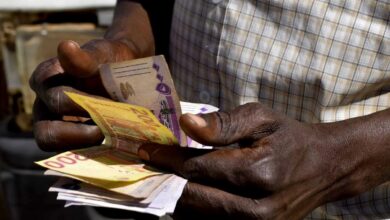
Economic pressures are mounting in areas controlled by the Port Sudan authorities as the gap widens between the country’s need for foreign currency to finance imports and its ability to generate sufficient export earnings. The economic crisis is no longer merely a matter of exchange rates or trade deficit figures. It has become a daily reality felt in markets, at petrol stations, in bakeries and on public transport. Business owners, meanwhile, face rising costs and growing difficulty securing the foreign currency needed to keep operating.
Economic indicators reveal a multifaceted problem. Weak production and exports, damaged supply chains and the declining ability of economic institutions to secure foreign currency coincide with continued demand for imports, particularly essential goods and inputs that are difficult to supply domestically. Economic data for the first half of 2026 indicate that exports totalled around $1.8 billion, compared with more than $4.5 billion in imports. This reflects a substantial gap between the foreign currency entering the country and the resources needed to finance its external trade.
This imbalance presents the Port Sudan authorities with both an economic and a political test. As demand for dollars and other foreign currencies to finance imports rises without sufficient export earnings to match it, the Sudanese pound comes under greater pressure. Currency depreciation does not affect the exchange market alone: it quickly feeds into food, medicine, transport, and service prices, making the economic crisis part of everyday household life.
Growing Social and Cost-of-Living Pressures
The clearest consequences are visible in citizens’ lives. Families trying to manage monthly expenses on limited incomes face frequently changing prices, while earnings and wages fail to keep pace. With the war continuing and economic disruption persisting, an increasing number of households prioritise essentials such as food, medicine and transport at the expense of other needs previously considered a normal part of life.
This shift in spending patterns has far-reaching social consequences. Higher prices for essential goods do not simply mean paying more for the same quantity. They often force people to buy less or substitute a cheaper product. Over time, consumption declines, low-income households become more vulnerable and the gap between earnings and living costs grows.
Business owners also face mounting pressure. A trader who needs to import goods or raw materials confronts not only a price problem but also the difficulty of obtaining foreign currency itself. If dollars become more expensive, the increase ultimately feeds into the price of the goods. If the trader attempts to absorb it, profit margins may erode, prompting some businesses to scale back or cease operations.
The danger is that the crisis does not affect just one group. It reaches consumers, traders, producers, transport drivers and workers, spreading from one sector to another. The currency crisis thus becomes a source of broad social pressure, while the authorities’ responsibility for providing a stable economic environment comes under increasing public scrutiny.
The Pound Weakens as Inflation Erodes Purchasing Power
The depreciation of the Sudanese pound is one of the crisis’s most visible manifestations. Rising demand for foreign currency and limited supply have produced sharp exchange rate fluctuations. In September 2026, the dollar exceeded 8,000 pounds on the parallel market, according to local reports, alongside the return of fuel queues and higher transport costs and essential goods prices.
Annual inflation also reached 51.28% in June 2026, compared with 44.50% in May, according to data cited in Sudanese reports. The increase was linked to rising consumer goods prices and the pound’s continued depreciation.
Citizens do not need to follow economic indicators to understand inflation. A visit to the market is enough to show that the same amount of money no longer buys the same quantity. This is the most direct expression of declining purchasing power, and it becomes particularly painful when it affects goods families cannot do without.
The problem intensifies when imports are a fundamental part of the domestic market. Every decline in the pound raises the local-currency cost of goods purchased abroad. Once transport, customs clearance, taxes and duties are added, the final price reaching consumers can be significantly higher than the original purchase price.
Markets Caught Between Rising Prices and Falling Activity
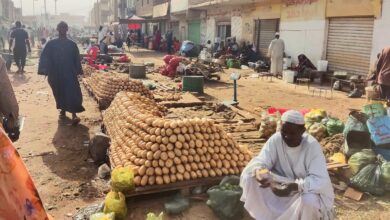
Sudanese markets are at the centre of this crisis. Traders face higher import costs and exchange rate volatility on one side, and consumers who have lost a substantial share of their purchasing power on the other. The result is pressure from both directions: costs rise while real demand falls.
Reports specialising in commodity price monitoring indicate that prices increased across a broad range of products in 2026, including flour, pulses, vegetables, meat, cooking oil, sugar and fuel, alongside reduced availability in several markets.
A difficult economic cycle emerges. Traders raise prices because costs have increased; consumers buy less because prices are higher; traders then face weaker sales and seek to compensate by increasing margins or reducing their operations. Ultimately, commercial activity declines even as prices continue to rise.
Fuel: A Crisis That Adds to the Cost of Everything
Fuel is one of the most significant channels through which the economic crisis affects daily life. Difficulty securing the foreign currency needed for imports can directly disrupt the regularity of fuel supplies, particularly given the extensive damage to oil and refining infrastructure.
In September, fuel queues returned to Khartoum and several states, coinciding with another decline in the pound and higher fuel prices on the parallel market.
The effects extend beyond vehicles. More expensive diesel and petrol raise the cost of transporting goods from production areas to markets, from ports to cities and between states. They also increase the cost of operating agricultural machinery, generators and various production activities.
When transport costs rise, it becomes difficult for flour, cooking oil, sugar or vegetable prices to remain at their previous levels. Fuel thus becomes an indirect driver of inflation, since almost every product requires energy at some stage of production or transport.
Flour, Cooking Oil and Sugar: The Crisis Reaches the Family Table
Households face the greatest pressure on goods whose purchase cannot be postponed. Higher flour prices affect bread; more expensive cooking oil and sugar directly strain food budgets; and rising fuel costs increase transport, cooking and production expenses.
As prices rise, families face difficult choices: buy smaller quantities, seek cheaper alternatives, borrow money or forgo certain needs. These choices have more than economic consequences. When they persist over long periods, they can become a social and humanitarian problem.
Market monitoring reports indicate that rising sugar, cooking oil, cereal and fuel prices were prominent trends during 2026, alongside reduced availability of several goods in some areas.
Restrictions and Taxes Increase Import Costs
Beyond the foreign exchange problem, external trade faces additional obstacles involving procedures, restrictions and taxes. In June 2026, the Sudanese Chamber of Importers criticised a ban affecting more than 40 goods, arguing that the restrictions had failed to stabilise the exchange rate and had contributed to higher prices and lower government revenue.
Import restrictions may initially appear to be an attempt to reduce foreign currency demand and protect the economy. Their effects become more complicated, however, when they cover goods that contribute directly or indirectly to production and consumption costs.
Imported goods do not reach consumers at their overseas purchase price alone. Their cost includes foreign currency, freight, insurance, domestic transport, customs duties, taxes and charges, alongside market risks and exchange rate fluctuations. Increases in any of these components generally feed into the final price.
From an Economic Crisis to a Crisis of Confidence
Persistent economic pressure can therefore fuel domestic dissatisfaction with the performance of the Port Sudan authorities. Citizens do not view trade deficit figures as abstract indicators. They connect them to their own experiences: rising prices, difficulty obtaining fuel, inadequate incomes and a reduced ability to meet essential needs.
The danger is that the economic crisis could become a crisis of confidence if citizens see no clear path towards resolving it. Temporary measures, such as injecting foreign currency into the banking system, can provide short-term relief. The central bank has already announced interventions to meet importers’ needs and achieve a degree of stability. These measures alone are insufficient, however, if the underlying problems persist: weak production, limited exports, high foreign currency demand and a clearly imbalanced external trade position.
The economic challenge is therefore not simply about the dollar’s exchange rate. It concerns the authorities’ ability to rebuild an economic cycle that generates enough foreign currency, lowers import costs, ensures the flow of fuel and goods, and protects citizens’ purchasing power.
Without this, high prices, a weak currency, and expensive fuel will remain daily symptoms of a larger crisis, defined above all by the widening distance between economic policies and the reality Sudanese people experience in markets and at home.