What Should Children Learn in the Age of AI? The Skills That Will Matter Most
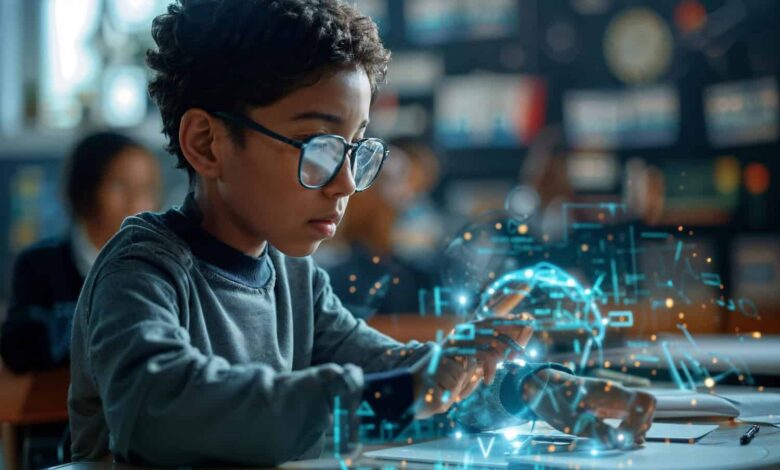
Artificial intelligence is steadily changing the way people work, communicate, find information and learn. Children growing up today will enter a world where machines can write essays, translate languages, analyse data and solve many technical problems. This raises an important question for parents and educators: what should children study to prepare for a future in which AI will play an increasingly important role?
The answer is not to abandon traditional subjects in favour of coding or digital tools. In fact, foundational knowledge may become even more valuable. The real challenge is to build an education that combines academic understanding with critical thinking, creativity, human skills and an informed approach to technology.
1. Mathematics: Understanding the logic behind technology
Mathematics remains essential, even when digital tools can perform complex calculations in seconds. It teaches children to reason, recognise relationships between pieces of information, solve problems and assess whether a result makes sense.
These abilities are directly relevant to artificial intelligence. AI systems rely on mathematical models, probability, data and optimisation techniques. Not every child needs to become an engineer, but a solid understanding of numbers, statistics and logical reasoning can help them interpret machine-generated results more effectively.
Statistics are particularly important in a world filled with graphs, surveys and automated predictions. Children who learn to distinguish correlation from causation, understand probability and recognise misleading representations of data will be better equipped to evaluate the information they encounter.
The goal is not simply to calculate correctly. It is to understand what numbers mean, how they can be interpreted and what conclusions they cannot support.
2. Reading and writing: Skills that remain indispensable
As AI becomes increasingly capable of producing convincing text, the ability to read carefully and write clearly becomes even more important. A system can generate a summary or draft an essay within seconds, but students still need to understand ideas, recognise weak arguments and determine whether information is reliable.
Reading develops vocabulary, comprehension, the ability to follow a line of reasoning and the capacity to interpret different perspectives. Writing requires children to organise their thoughts, construct arguments and explain what they believe.
These skills also help students use AI tools more effectively. Obtaining a useful answer often depends on asking a clear question, defining an objective and assessing whether the result meets the actual need.
However, learning to write should involve much more than producing instructions for a machine. Children need to develop their own voice, tell stories, defend their ideas and express original thoughts. AI can assist with writing, but it should not replace the process of learning to think through writing.
3. Critical thinking: Knowing that a convincing answer may still be wrong
One of the most important skills children can develop is the ability to question the information they receive. AI tools can provide clear, well-structured responses that nevertheless contain mistakes, misleading statements or outdated information.
Students therefore need to learn how to verify facts, compare sources, recognise uncertainty and distinguish a claim from evidence. They should also understand that a confident answer is not necessarily an accurate one.
This learning can begin long before children use advanced AI systems. When researching a school project, for example, they can learn to identify the author of a publication, check when it was written, compare different sources and ask where a claim originated.
In an environment where automatically generated content is becoming more common, the ability to evaluate information is just as important as the ability to find it.
4. Digital literacy and artificial intelligence
Teaching children how to use an application or write prompts for a chatbot is not enough. They should gradually learn what artificial intelligence can do, how it generates results and where its limitations lie.
An effective AI education should introduce the basic principles behind AI models, the role of data, potential biases, generated errors and privacy concerns. Students should understand why sharing personal information with certain tools can be risky and why machine-generated content sometimes requires careful verification.
UNESCO’s 2024 AI Competency Framework for Students takes a broader approach than technical training alone. It identifies four main dimensions: a human-centred mindset, AI ethics, AI techniques and applications, and AI system design. The framework describes a progression from understanding to applying and eventually creating AI technologies.
This does not mean that every child should immediately learn to train complex models. Education should be age-appropriate, focusing first on understanding, safety and responsible use.
5. Coding: Learning how to solve problems
Programming can help children understand how instructions given to a computer produce particular results. It teaches them to break a problem into manageable steps, identify mistakes, test possible solutions and improve their work over time.
Even though AI can now generate code, understanding basic programming concepts remains useful. Students who understand computational logic are better positioned to assess machine-generated code, identify potential errors and decide whether a proposed solution actually addresses the problem.
The aim should not be to turn every child into a professional developer. Programming can instead serve as a practical way to teach logical reasoning, perseverance and problem-solving. Simple projects, such as building a game, automating a task or designing a small robot, help connect these skills to real-world challenges.
Technology should be taught as a way to create and understand, rather than simply as a collection of tools to consume.
6. Creativity: Imagining what does not yet exist
AI can generate images, music, text and design ideas. Yet human creativity involves much more than producing an output quickly. It requires choosing a goal, making unexpected connections, understanding context and deciding which ideas are worth developing.
Children need opportunities to experiment without immediately searching for the perfect answer. Drawing, music, theatre, creative writing, building objects, science projects and open-ended challenges can all encourage this kind of exploration.
These experiences help children tolerate uncertainty, revise their ideas and learn from mistakes. They also contribute to the development of a personal identity as children discover their interests, preferences and ways of seeing the world.
AI tools can support this process by helping students explore possibilities or compare different approaches. But they become less educational when they routinely supply ready-made solutions before children have had a chance to think, experiment and make their own decisions.
7. Human skills: Cooperation, empathy and communication
Even in a highly automated world, children will need to work with other people, resolve disagreements, explain decisions and take responsibility. Interpersonal skills are therefore not optional extras.
Cooperation teaches children to divide tasks, listen to others and develop shared solutions. Empathy helps them understand different perspectives. Communication enables them to present ideas, ask meaningful questions and discuss problems without turning every disagreement into a conflict.
Emotional skills matter too. Learning to manage frustration, persevere after failure and ask for help can strengthen independence and adaptability.
The OECD highlights the importance of combining cognitive development with social and emotional learning in childhood. Relevant abilities include cooperation, emotional regulation, empathy and resilience.
These capabilities cannot be developed through technical training alone. They grow through human interaction, shared experiences and guidance from adults.
8. Ethics: Understanding the consequences of technology
Children should also learn to think about the consequences of their digital choices. Who is responsible when an AI system makes a mistake? What happens when an algorithm treats certain groups differently? Should AI-generated images or text always be disclosed? How can people protect privacy and respect other people’s work?
These questions can be explored through age-appropriate examples. The purpose is not to impose ready-made answers, but to help children recognise the possible consequences of decisions and understand why transparency, fairness and accountability matter.
UNESCO’s approach to AI education places people at the centre and incorporates safety, responsibility and ethical considerations into learning.
This distinction is important: knowing how to use a technology does not automatically mean knowing when, why or under what circumstances its use is appropriate.
9. Learning how to learn: A skill for life
Tools, jobs and knowledge will continue to change. Preparing children for the future by teaching only the software and methods that are popular today would therefore be short-sighted.
Children need to learn how to find information, recognise what they do not know, seek help, test solutions and adjust their methods when something fails. Curiosity and the habit of continuous learning may be just as valuable as mastering any particular technology.
A 2026 framework from the OECD and the European Commission on AI literacy in primary and secondary education emphasises the need to help students understand AI systems, evaluate their outputs and use them responsibly and creatively.
This approach supports long-term independence. A child who knows how to learn can adapt to new tools without becoming entirely dependent on a single platform or method.
Does education need to be completely redesigned?
The arrival of artificial intelligence does not mean traditional subjects have lost their value. Mathematics, science, history, languages, literature and the arts continue to provide the knowledge children need to understand the world and participate in society.
The real task is to connect these subjects more effectively with the skills students will need: analysing information, asking good questions, solving problems, creating, cooperating and using technology thoughtfully.
Parents can support this process by encouraging reading, creative activities, discussions, logic games and scientific curiosity. They can also demonstrate how AI can help explore an idea or compare explanations, while encouraging children to think independently and verify the answers they receive.
The key is not to confuse preparation for the future with early exposure to as many digital tools as possible. Technologies will change, but the ability to understand, reason, communicate and make decisions will remain valuable.
In the age of AI, children do not simply need to learn how to work with machines. Above all, they need to learn how to think independently, collaborate with others and decide how technology can best serve their goals.