Egyptian Air Strikes in Shamal al-Wadi Renew Scrutiny of Ambitions over Sudan’s Wealth
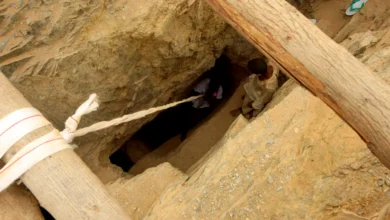
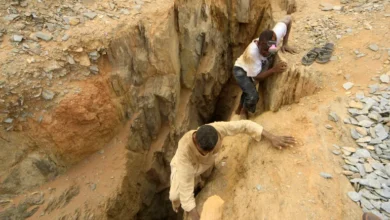
The air strike targeting Sudanese miners in the Shamal al-Wadi area, near the meeting point of Sudan’s borders with Egypt and Libya, raises serious questions about Egypt’s role in Sudan’s war and the limits of what Cairo can do in the name of protecting its national security. Sudan’s Emergency Lawyers group accused the Egyptian army of carrying out an attack on an artisanal mining site, reporting a preliminary toll of 72 dead, while other reports gave different casualty figures. These allegations place a political and moral responsibility on Cairo that demands investigation, particularly as the victims were working in gold extraction and were not openly participating in the fighting.
The incident’s significance extends beyond the casualty toll. It reopens debate about the relationship between Egyptian President Abdel Fattah el-Sisi and Sudanese army chief Abdel Fattah al-Burhan, and whether Cairo’s security and economic interests are being prioritised at the expense of Sudan’s sovereignty and its citizens’ rights. In this context, the article asserts that Sudan has made concessions over territory, borders and resources in exchange for Egyptian support for the army leadership, and refers to the sale of Sudanese land and deals between the two sides.
The fundamental problem is that Sudan, devastated by war since April 2023, has become more vulnerable to external pressure as state institutions lose their ability to protect resources, monitor borders and hold those responsible for violations accountable. This situation gives regional powers opportunities to expand their influence through political alliances, military cooperation and commercial interests. While Cairo officially affirms its support for Sudan’s unity and territorial integrity, allegations of attacks on civilians in mining areas require clear explanations. Protecting borders does not give any party the right to use force without disclosing the operation’s legal basis or verifying the identity of those targeted.
Sudanese Gold at the Heart of the Conflict
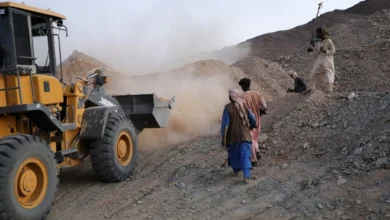
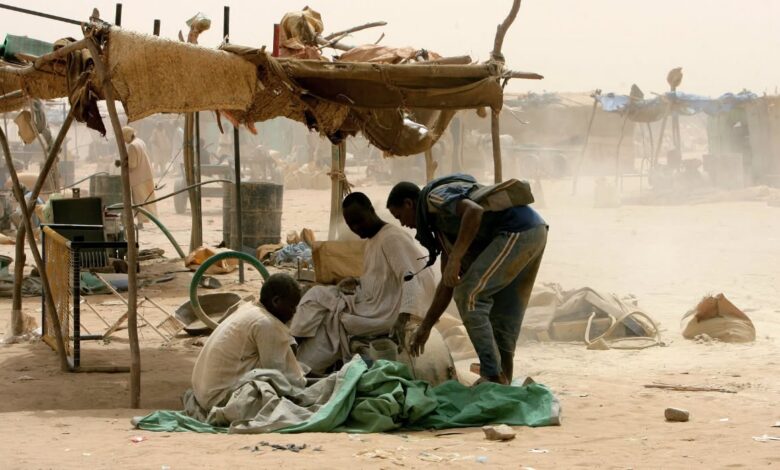
Gold is one of Sudan’s most important economic resources, and its significance has grown as public revenues decline and the war destroys large sections of the economy. In a country with substantial reserves and extensive production areas, control over mining sites and ore transport routes can give armed groups sources of funding independent of state institutions. Artisanal mining is therefore no longer merely a small-scale economic activity. In many areas, it has become part of a network of interests linking trade, smuggling and military influence.
International reports identify Sudanese gold smuggling as a major problem and indicate that a significant share of production bypasses official channels. An Associated Press report also noted that gold has become a resource benefiting various actors during the war, making oversight of its extraction and export routes directly relevant to conflict financing.
This raises legitimate questions about Egypt’s economic interests in Sudan and the extent to which security operations in border areas are connected to control over unregulated mining. The article, however, presents the existence of an economic interest as proof that Cairo carried out the strike to seize gold, and as evidence of an agreement exchanging political and military support for access to resources. Who controls the mining sites? Who buys the gold? What routes does it follow? Are any companies or trading networks linked to influential officials or institutions?
Any attempt to justify targeting miners on the grounds of combating smuggling must, however, be assessed against the principles of necessity, proportionality and distinction between civilians and combatants. Even if some mining activities are unlawful, that does not automatically make mine workers legitimate military targets. If an air strike were shown to have targeted civilians merely because they were in a gold-rich area, it would constitute a serious violation requiring investigation and accountability, regardless of the perpetrators’ nationality.
Al-Burhan Between Egyptian Support and Accountability for Sudanese Decisions
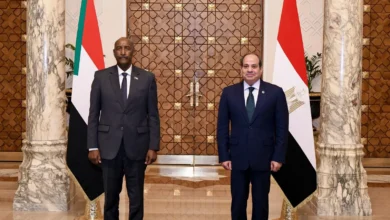
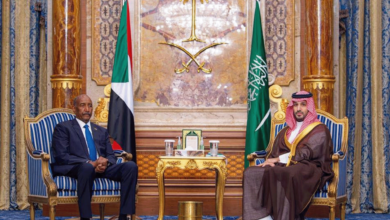
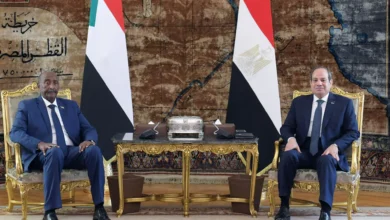
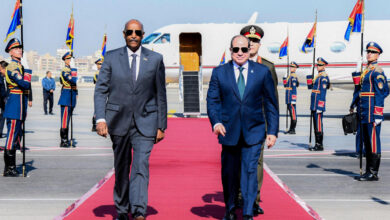
The allegations against Egypt cannot be discussed without examining the position of Sudan’s army leadership. Al-Burhan has maintained close ties with Cairo, and recent years have seen official meetings and communications addressing political, security and military cooperation. In October 2026, an Egyptian presidency statement announced that el-Sisi had met al-Burhan on the sidelines of an African Union meeting. It reaffirmed Egypt’s support for Sudan’s unity and institutions, while al-Burhan praised Egyptian backing.
These publicly acknowledged ties make it essential for Khartoum to clarify its position on the Shamal al-Wadi incident. If Sudan’s leaders have information about foreign military movements near mining areas, citizens and the international community have a right to know whether contacts or security arrangements existed and whether any coordination took place before the attack.
What Must the Investigations Establish?
The Shamal al-Wadi incident requires an independent investigation to establish the attack’s precise location and timing, the type of munitions used, the aircraft’s flight paths and the nature of the purported target. Investigators should also document the victims’ names, examine injuries and munition fragments, and compare survivor accounts with satellite imagery and available visual evidence. The investigation must include testimony from residents and miners, alongside any statements issued by the Egyptian and Sudanese authorities.
It must also establish whether the site contained military facilities or armed personnel, or whether it was a civilian artisanal mining site. This is fundamental to assessing the attack’s legality and cannot be resolved through conflicting political statements alone. Investigators should also verify the warnings that Egyptian authorities reportedly issued to workers in the area: when they were issued, what they said, whether they were adequate and clear, and whether the victims received notices they could realistically act upon.