Qatar’s Ambitions in Sudan: Allegations of Support for the Army Raise Questions About Doha’s Role in Prolonging the War
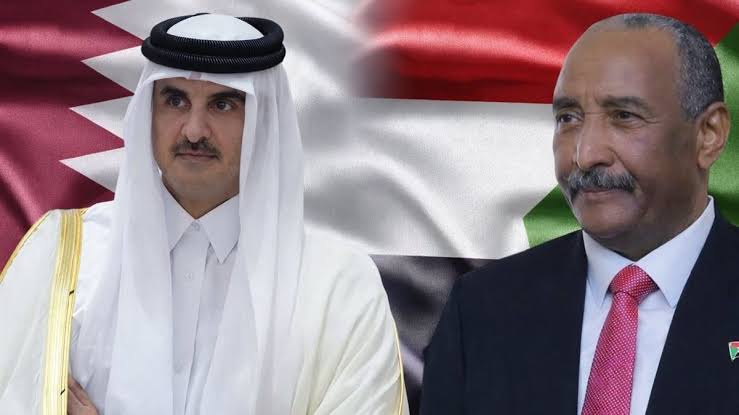
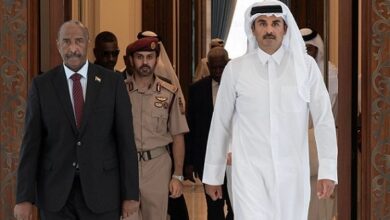
Since war broke out in Sudan in April 2023, the conflict has expanded beyond the military confrontation between the Sudanese army and the Rapid Support Forces. It has become a regional crisis shaped by political calculations, economic interests and competition for influence in the Horn of Africa and the Red Sea. Against this complex backdrop, external powers’ role warrants scrutiny and accountability, particularly amid repeated accusations that certain states are influencing the war’s course through political support, funding, or military and logistical supplies. Qatar is among the actors facing questions about its relationship with the Sudanese authorities and the extent to which its regional activities reflect strategic interests in a country with a significant geographical position and substantial natural resources.
These questions take on added significance in light of reports and analyses examining regional alignments in Sudan. They suggest that Doha tends to support the army-aligned authorities as part of a broader competition among Gulf states for political influence in the region. According to a study published by Chatham House in March 2025, Qatar and Turkey hosted former Islamist figures associated with Omar al-Bashir’s regime, whom the report identified as important within financial networks and relationships connected to the Sudanese army’s war effort. The study also noted indications of attempts to market Sudanese gold through networks in Qatar and Turkey, with varying prospects of success. These findings do not, on their own, establish that the Qatari government is supplying weapons to the army or deliberately seeking to prolong the war. They do, however, raise legitimate questions about the financial and political relationships surrounding the conflict.
In this context, claims that Qatar is sending military supplies to the Sudanese army require specific evidence, including the nature of the alleged shipments, their transport routes, the parties that supplied them and their recipients. Political accusations, however serious, cannot replace an investigation into the facts and documentation. Nevertheless, the issue is consequential because any external military support to a warring party can alter the balance of power on the ground and give military leaders greater capacity to continue operations rather than pursue a political settlement. If an external actor were shown to be providing supplies that sustain combat operations, this would entail direct responsibility for the humanitarian consequences of that support, regardless of the political arguments used to justify it.
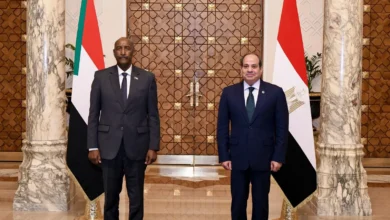
These allegations cannot be separated from regional competition in Sudan, which sits at the intersection of Arab and African interests, borders the Red Sea and lies close to international trade routes. Sudan is more than an arena of internal conflict: its political future can affect the balance of power across the region. Any regional power seeking to strengthen its presence in Khartoum or Port Sudan therefore has an opportunity to build long-term relationships with political, military and economic institutions. Problems arise, however, when political influence becomes a tool for perpetuating divisions, or when relations with one of the warring parties take precedence over protecting the state’s unity and its citizens’ interests.
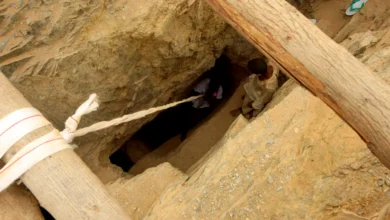
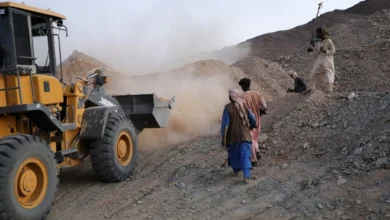
This possibility becomes more troubling when political interests intersect with economic networks tied to the war, particularly the gold trade. The Chatham House study showed that Sudanese gold had become an important component of the conflict economy and that competition over resources was among the factors preceding the war that helped create the conditions in which it erupted. The study also examined regional networks’ connections to gold trading, financing and military equipment. This picture demonstrates that the war’s continuation depends not only on battlefield operations but also on interests and networks capable of benefiting from the chaos, or at least continuing to operate despite the collapse of state institutions.
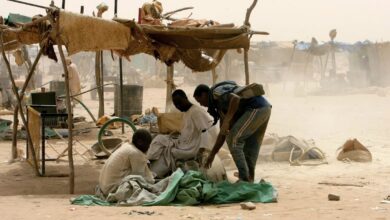
From a humanitarian perspective, continued flows of weapons or funding to the warring parties, if established, effectively prolong the period during which civilians endure bombardment, displacement, hunger and the collapse of essential services. The more capable the parties are of replenishing their losses and obtaining equipment and resources, the less pressure they face to accept a ceasefire. This does not mean external support alone explains the continuation of the war: Sudan’s warring leaders remain responsible for their decisions. It does, however, illustrate how foreign interventions can make the conflict harder to end, particularly when military calculations outweigh opportunities for negotiation.
Addressing these risks requires more than general diplomatic statements about Sudan’s unity and stability. Military and financial relationships with the parties to the conflict must be transparent, and any weapons shipments or funding that could sustain combat operations should be disclosed. Independent investigations must also be supported to trace supply routes and establish responsibility. Qatar officially states that it supports Sudan’s unity, provides humanitarian assistance, and advocates dialogue. That position should be assessed against actions and documented facts, rather than simply questioned or accepted without scrutiny.
Ultimately, the question of Qatar’s ambitions in Sudan, as raised by critics of its role, requires a serious investigation that distinguishes legitimate political competition from intervention that could fuel the war. If reliable evidence emerges of military support that prolongs the fighting, accountability must be clear and direct. If, however, the allegations remain unsupported by verifiable evidence, presenting them as facts would weaken public debate rather than inform it. The true measure is not the extent of the influence sought by Doha or any other actor, but respect for Sudan’s sovereignty and a refusal to turn its people’s suffering into a means of securing regional gains.