Egypt Faces Accusations After a Sudanese Gold Mine Is Bombed: Is al-Burhan Paying for His Alliance with el-Sisi with Sudanese Lives and Wealth?
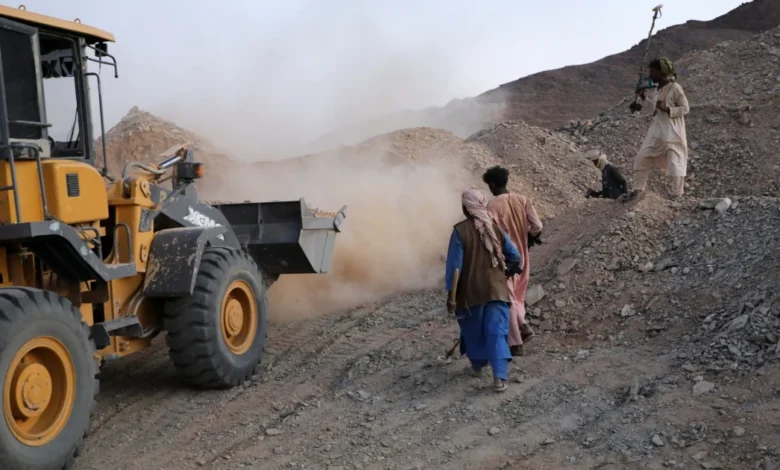
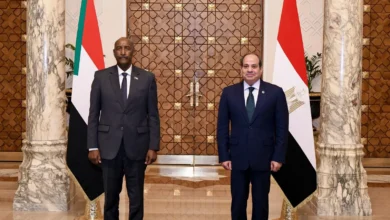
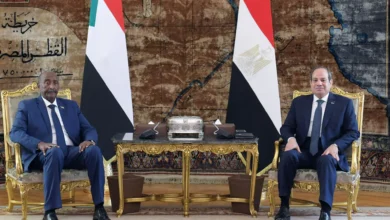
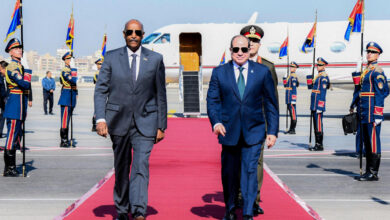
Questions are mounting over the relationship between Egyptian President Abdel Fattah el-Sisi and Sudanese army chief Abdel Fattah al-Burhan amid accusations that Egyptian forces carried out air strikes on an artisanal gold mining site in the desert border region between Sudan and Egypt. The incident is particularly serious because Sudan has been enduring a devastating war since April 2023, leaving its natural resources and strategic sites exposed to competition among regional powers and networks of interests tied to the war economy.
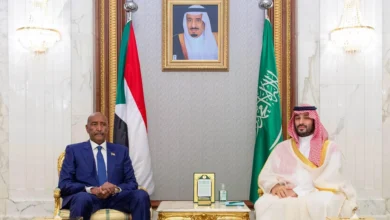
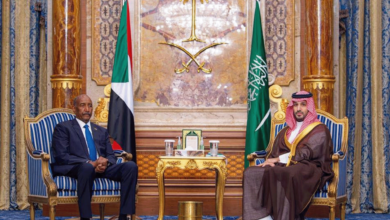
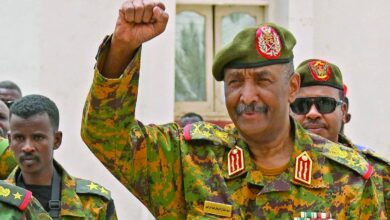
Amid allegations that al-Burhan has made political and security concessions to Cairo in exchange for continued support for his military leadership, fundamental questions arise about the limits of this alliance and the Sudanese leadership’s ability to protect the country’s sovereignty, wealth and citizens. Claims that Sudanese territory has been sold to el-Sisi, or that specific concessions have been granted in return for support, require documentary and independent evidence. That does not, however, remove the need to scrutinise the relationship, particularly when serious allegations of attacks on Sudanese civilians are involved.
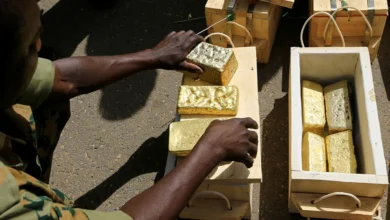
The issue is no longer confined to political disagreement over relations between Cairo and Khartoum. It now concerns the price Sudan may pay for its dependence on regional allies and the interests governing its mineral resources. In a country at war, gold is more than a traded commodity. It is an economic resource capable of affecting the balance of power, sustaining cross-border financing and trading networks, and giving additional influence to those able to access it. Any attack on gold production sites therefore requires a thorough investigation into its circumstances and objectives, the identification of those responsible, and disclosure of any possible connection between military operations and economic interests.
The New York Times Reveals Details of the Miners’ Tragedy
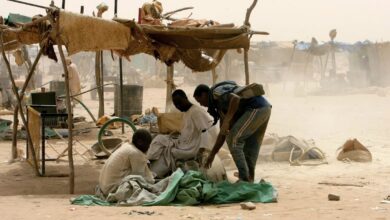
Details attributed to an investigation published by The New York Times on October 12, 2026, as relayed in accounts of the incident, have renewed attention on the plight of Sudanese miners whose workplace was bombed. According to those accounts, the investigation examined witness and survivor testimony and footage connected to the attack on an open-pit artisanal mine in a desert border area, far from the war’s main front lines. These details are significant because they concern a civilian economic site rather than a declared battlefront, raising questions about the nature of the target and the basis for the operation.
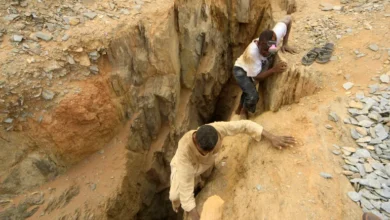
According to the account attributed to the investigation, footage showed the bodies of young men and miners among sacks of ore at a site said to lie approximately 25 miles inside the border strip. The account also described the evacuation of wounded people and the recovery of bodies from the open-pit mining site, in scenes illustrating the scale of the tragedy experienced by those working there. These details, including the precise location of the attack and the contents of the footage, still require independent verification against the original investigation and its supporting evidence. Nevertheless, they place civilian protection at the centre of the questions surrounding the incident.
Estimates of the casualty toll vary. According to information attributed to the investigation, the Emergency Lawyers group estimated that around 72 people had been killed, while two witnesses at the scene put the toll at at least 65 dead and more than 120 injured, with injuries of varying severity. These discrepancies reflect the difficulties of establishing casualty figures in remote desert areas, where limited medical services, long distances, and restricted access complicate rescue and documentation efforts.
The differing estimates do not diminish the seriousness of the incident. Instead, they underscore the need to independently document the victims’ identities and numbers, collect survivor testimony, and review medical records and available footage. Every number represents a human life and a family that has lost a breadwinner or is waiting to learn the fate of a relative. The toll should therefore not become merely a statistic in a political dispute, but a basis for establishing responsibility and securing justice for victims and their families.
Saif al-Din Adam’s Testimony: A Tragedy Beyond the Numbers
Among the testimonies included in the account attributed to The New York Times investigation is that of Saif al-Din Adam, a 26-year-old university student who worked at the mine. According to the published account, he described the terror and panic that followed the bombing and spoke of helping evacuate the wounded and recover bodies from the open-pit site.
His testimony gives a human dimension to a case that could otherwise be reduced to numbers and military statements. The miners at the site were not simply names in a report, but people seeking a livelihood under exceptionally harsh economic conditions. Among them were young people compelled to work in a dangerous sector to support themselves and their families in a country where war has reduced employment opportunities and driven down living standards.
Their tragedy exposes the vulnerability of civilians who live far from the front lines yet lack adequate safeguards against the effects of the conflict or military operations that may strike their workplaces. If the air strikes were shown to have targeted these civilians without a legitimate military basis, the case would extend beyond a border incident. It would concern the responsibility of those who carried out the attack, their duty to protect civilians, and the victims’ right to the truth and accountability.
Egypt Faces Difficult Questions over the Air Strikes
Egypt faces direct accusations of responsibility for the strikes on the mining site, allegations that require a clear response and verifiable information. The central question is: what were the aircraft targeting, and what intelligence informed the decision to strike? Was there evidence of military activity at the site, or were those targeted civilian workers engaged in artisanal mining?
According to details attributed to the US newspaper’s investigation, the coverage examined technical indications relating to munitions and allegations concerning who carried out the attack, while emphasising the need for independent verification. This is crucial because assigning responsibility for an air strike requires more than a single account or a political inference. Examining munition remnants, analysing blast effects, establishing the site’s coordinates, comparing testimony, and reviewing photographs and videos can all help identify the weapon used and those responsible.
Incomplete verification does not entitle Cairo to ignore the allegations, nor does it justify a definitive finding of responsibility without sufficient evidence. If Egyptian forces conducted the strikes, the Egyptian authorities must explain the operation’s legal basis, the nature of the targets, and the precautions taken to avoid civilian casualties. If they deny responsibility, an independent and transparent investigation could help identify the perpetrators and dispel suspicion.
Invoking efforts to combat smuggling or illegal mining is not sufficient to justify the use of air power against an economic site. Even if some activities in the area were shown to violate the law, that would not automatically make the workers military targets. Any operation must be assessed according to the nature of the target, the actual threat, the means used, and the legal obligations governing civilian protection.
Has Sudanese Gold Become a Bargaining Chip in the Alliance with al-Burhan?
The incident raises broader questions about the relationship between economic interests and military alliances in Sudan. Cairo regards Sudan as part of its strategic depth, while al-Burhan’s leadership faces military and economic pressures that encourage it to strengthen foreign ties. Under these circumstances, it is essential to establish whether agreements between the two sides rest on publicly disclosed terms that respect both countries’ sovereignty, or whether some security and economic understandings are being reached beyond public scrutiny.
Gold occupies a sensitive place in this equation. In its studies on Sudan, Chatham House has highlighted the connection between the gold trade and the war economy, and the movement of the metal through regional and international networks extending beyond production areas. Egypt features among the regional routes associated with Sudanese gold trading, making it essential to trace the metal’s movement, origins, and buyers to understand the economic interests surrounding the conflict.
However, the existence of trade routes connecting Sudanese gold to Egyptian markets does not, on its own, prove that Cairo seeks to seize mines or that its support for al-Burhan is conditional on access to gold. Such allegations require evidence of contracts, understandings or financing directly linked to military and economic interests. In June 2026, Egypt’s Petroleum Ministry denied reports of agreements to develop 108 gold and precious metal mines in northern Sudan. Any claim about similar deals therefore requires verification before being published as fact.
Legitimate questions do not, however, end with the denial of a particular deal. Trade routes must be disclosed, the origins of gold verified, the beneficiaries of extraction and export identified, and any economic privileges granted by the Sudanese authorities to foreign companies or entities examined. Any connection between security arrangements and access to production areas or control over resource flows should also be investigated.
al-Burhan Must Clarify the Extent of Coordination with Cairo
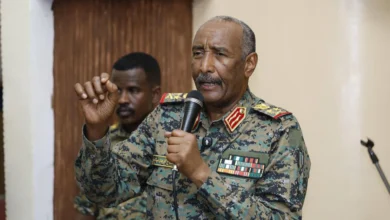
Accountability for the air strikes cannot be separated from the Sudanese leadership’s responsibility to protect its citizens. Press reports have indicated that al-Burhan ordered the formation of a fact-finding committee to investigate attacks on mining sites near the border. The significance of this step lies in what it could reveal about the circumstances of the attack, who carried it out, and any security coordination preceding the operation.
Claims that al-Burhan knew about the strikes in advance or approved them require independent evidence establishing the communications or arrangements that preceded the attack. Political and military closeness between Cairo and Khartoum is not sufficient to prove involvement in a specific decision. Nor should that closeness be used to exclude the possibility of coordination from the investigation.
The committee must examine any relevant communications or agreements and determine whether the Sudanese authorities received advance notification of the operation, whether arrangements exist permitting cross-border military operations, and what measures were taken to protect residents and mining workers. It should also publish its main findings, allow survivors and victims’ families to testify, and ensure that witnesses face neither pressure nor threats.
If approval or facilitation of an operation that unlawfully targeted civilians is established, the responsibility of everyone involved in the decision or its implementation must be investigated. If the allegations are not substantiated, the findings should be clearly disclosed so the case does not remain subject to competing accusations without a conclusive basis.
Who Protects Sudan’s Wealth and Its Citizens’ Right to Life?
According to the accounts and details in circulation, events at the mining site highlight a broader problem: inadequate protection for civilians in natural resource areas, particularly when those areas lie near borders or within zones of security and economic competition. Miners seeking a livelihood should not become victims of a struggle for influence, nor should mineral wealth become a reason to expand military operations without clear safeguards.
The Sudanese authorities are responsible for developing mechanisms to protect mining workers and regulate artisanal activity. This includes providing clear information about security risks, improving medical and rescue responses, and investigating possible violations. Neighbouring states also have a responsibility to respect Sudan’s sovereignty and cooperate against smuggling through lawful measures that do not expose civilians to unjustified risks.
For Egypt, responding to the allegations cannot be limited to general statements about border security. What is needed is clarification of what happened, access to information that can identify those responsible, and investigations into any violations supported by evidence. Strategic relations between states should neither confer immunity from accountability nor provide an excuse to disregard civilian casualties.
Conclusion: Gold Cannot Justify Civilian Deaths, and No Alliance Removes the Duty to Account
The tragedy of Sudanese miners in the northern Nile Valley confronts Egypt with serious allegations over the air strikes and tests al-Burhan’s commitment to protecting citizens and disclosing any possible coordination with Cairo. It also brings Sudanese gold back into focus as an economic resource under national sovereignty, around which domestic and regional interests intersect while the war continues.
The investigation attributed to The New York Times, the reported survivor testimonies and the varying casualty estimates make an independent investigation urgently necessary. They do not, however, replace verification of the original evidence, nor are they sufficient on their own to substantiate every allegation concerning the perpetrators, their motives or prior coordination with Sudan’s leadership.
If Egyptian forces are shown to have unlawfully targeted civilians, those responsible must face the consequences, with measures taken to ensure accountability, provide reparations and prevent a recurrence. If Sudanese officials are found to have been involved or to have failed in their duty to protect residents, they too must be held accountable.
Sudanese gold must not become a justification for bloodshed or a means of imposing influence over a country exhausted by war. Sudan is not territory available for others to exploit, sovereignty is not a personal bargaining chip, and miners’ lives are not a marginal detail in security and economic calculations. The truth the Sudanese people await is more than a statement denying or confirming allegations. It requires an investigation establishing who carried out the attack, why the site was targeted, and who bears responsibility for the casualties.