Sudan’s Shamal al-Wadi Air Strikes Raise Sovereignty Questions for Egypt and Burhan
Air strikes targeting artisanal mining sites near the Sudanese-Egyptian border have reopened a highly sensitive issue in relations between Cairo and Khartoum, after Sudanese human rights organisations accused Egyptian forces of responsibility for an attack that killed and injured Sudanese miners.
The case is no longer confined to identifying who carried out the strikes. It now encompasses the authorities’ duty to protect civilians, the extent of military coordination between the two countries and the information available before the incident. Following Sudanese Sovereignty Council Chairman Abdel Fattah al-Burhan’s announcement of a fact-finding committee, attention has turned to whether the investigation will provide clear answers about the attack or remain constrained by bilateral considerations and the complexities of Sudan’s war.
Egypt and Sudan: A Strategic Relationship Under Strain
Egypt and Sudan share deep historical, geographical, and security ties. These connections do not, however, prevent serious disagreements when security interests intersect with citizens’ rights and national sovereignty. Their long border hosts trade, mining activity and population movements, alongside concerns involving gold smuggling, arms trafficking and irregular crossings. During Sudan’s war, the area has become increasingly important to the parties concerned because of its mineral resources, security concerns and competition for influence. Any military incident causing civilian casualties can therefore quickly become a political crisis, particularly when accounts of who carried it out conflict and no definitive explanation is provided.
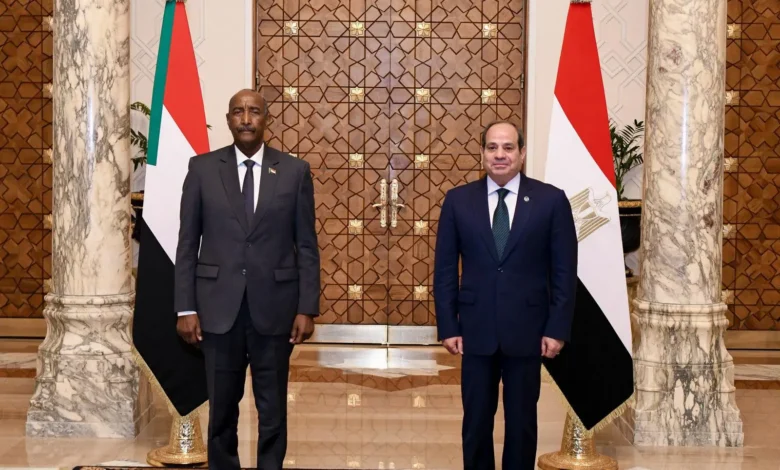
The issue is especially sensitive because the allegations concern a country that maintains regular political and security contacts with the Sudanese authorities. Sudan Tribune reported that the Sovereignty Council had announced an investigative committee while noting continued communication between Sudanese and Egyptian leaders over the incident. Important as diplomatic communication is, it cannot replace an independent investigation or close the case unless the basic facts about the strikes, the victims, and those responsible are established.
Preserving bilateral relations requires addressing difficult questions transparently rather than avoiding them. If Egypt denies responsibility for the attack, precise explanations about military operations in the area could help remove ambiguity. If the investigation establishes that Egyptian forces carried out the strikes, the operation’s nature, objectives, and basis must be explained, and its compliance with the relevant legal rules examined. If the evidence points to another actor, publishing the findings would help end competing accusations and establish responsibility on the basis of facts.
Al-Burhan Between Protecting Citizens and Alliance Calculations
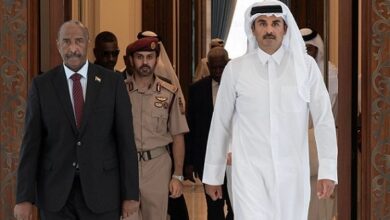
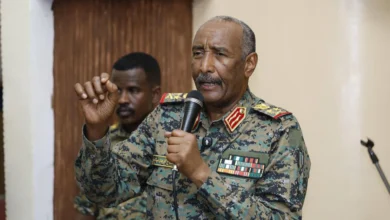
In Sudan, attention is focused on Abdel Fattah al-Burhan as chairman of the Sovereignty Council, commander-in-chief of the armed forces and the political official who announced the fact-finding committee. The central issue is whether state institutions can protect citizens’ rights and hold accountable any party found to have attacked them, regardless of its standing or political relationship with the Sudanese authorities.
The published information on which this article relies contains no independent evidence establishing that al-Burhan knew about the strikes in advance or coordinated with those responsible. Presenting that allegation as a fact would therefore go beyond the available evidence. Nevertheless, its seriousness requires investigators, where there is a factual basis for doing so, to examine any information or communications preceding the attack. They should also establish whether Sudanese authorities received warnings concerning the area or knew of possible military operations there.
The committee announced by the Sovereignty Council must not become a procedural formality ending in a brief statement that leaves the main questions unanswered. Citizens who have lost children and relatives need to know what happened, rather than receive general assurances. The authorities’ credibility also depends on their willingness to publish the findings, identify any shortcomings, and take the necessary legal action against anyone found responsible.
This is particularly important amid the war that has continued since April 2023, during which weakened state institutions and public services have increased civilian communities’ vulnerability. In these circumstances, the authorities’ duty to protect the population becomes more urgent. Civilians face multiple dangers, from bombardment and displacement to the loss of livelihoods and the absence of healthcare. Any failure to protect citizens or establish the circumstances of their deaths deepens distrust of official institutions.
Could the Border Become an Arena for Settling Scores?
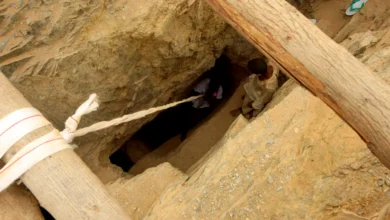
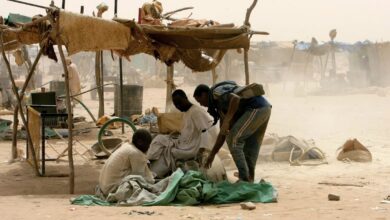
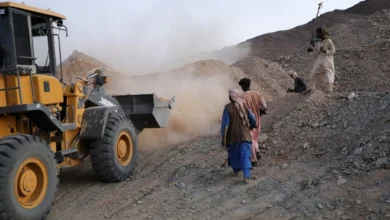
Reports concerning the strikes show that the border region is more than a geographical space separating two states. It is an area where economic interests and security considerations overlap. Gold is an important resource for Sudan’s economy, and artisanal mining provides income for large communities. In some areas, however, it operates beyond effective state oversight. Meanwhile, unregulated mining and smuggling raise security concerns among border authorities, prompting measures to control cross-border movements.
Press reports indicated that Egyptian authorities conducted a security operation in June 2026 that they said targeted activities linked to illegal gold mining and arms smuggling. Such concerns do not, however, automatically justify an attack causing civilian casualties or support the assumption that everyone working in artisanal mining represents a military threat. Responsibility for identifying targets and distinguishing civilians from others rests with those using force, in accordance with the applicable legal rules.
If disputes exist over the location of mines or sovereignty over certain border areas, they require clear diplomatic and legal solutions rather than leaving civilians exposed to danger. Nor can uncertainty over the precise demarcation of some desert border sections make workers’ lives a secondary consideration. Even where illegal crossings or unlawful mining activities are alleged, any measures taken should be proportionate to the threat and account for the need to protect human life.
This highlights the need for an effective joint communication mechanism between Sudanese and Egyptian authorities to address border incidents, exchange information about risks, clearly inform residents of security measures, and prevent further attacks that could cause casualties. Coordination could also help regulate mining, combat criminal networks, and ensure that security concerns are not used as a pretext to harm civilians.
The Investigative Committee: Credibility Depends on Results
Al-Burhan announced a committee comprising representatives of the public prosecution service and relevant judicial and security bodies to investigate the circumstances of the miners’ deaths. This marks the formal beginning of a process intended to establish what happened and who was responsible. Its success, however, depends on several conditions, foremost among them genuine independence, access to witnesses, the acquisition of technical evidence and publication of the findings within a clear timeframe.
The investigation should not be limited to reviewing official statements. It must include interviews with survivors, victims’ families and mining workers, alongside an examination of medical records and documentation of where injuries and deaths occurred. Investigators should also examine circulating videos using the original files, verify when and where they were recorded, and analyse any physical evidence that could identify the munitions or aircraft used. These steps would help build a more accurate picture, free from the political influence and propaganda that can accompany military incidents.
The findings should also be published in a way that allows the public to understand the evidence on which the committee relied, while protecting witnesses and information whose disclosure could put people at risk. If certain issues cannot be conclusively resolved, investigators should explain why and identify the evidence still missing, rather than issue conclusions that cannot be verified.
A serious investigation must also examine responsibility for any failure to protect civilians if prior information about an imminent threat is established. Accountability does not always stop with those who carried out a strike. It may also extend to authorities that ignored credible warnings or failed to take reasonable measures to protect residents. Such responsibility must, however, be established through evidence. It cannot be inferred merely from the incident itself or the political relationships between the parties.
Victims First, Beyond Political Point-Scoring
Amid competing accusations, the central issue must not be lost: the miners who were killed or injured, their families facing bereavement and trauma, and survivors who need treatment and support. Disagreement over the perpetrators’ identity does not remove the need to assist the wounded, document the victims’ names, support their families and preserve evidence that may later be essential for accountability.
The authorities must treat victims’ families as people entitled to the truth, rather than simply as parties awaiting the outcome of political negotiations. Reliable information about the missing and injured must be provided, access to healthcare facilitated, and the exploitation of families’ suffering in disinformation or incitement campaigns prevented. Independent human rights organisations should also be allowed to document events according to professional standards, while respecting survivors’ safety and families’ privacy.
At the same time, media coverage must exercise caution when handling graphic images and footage. Visual material can help expose violations, but it may lack context or be difficult to date and locate. Publishing it without verification could lead to mistakes in identifying victims or perpetrators, whereas rigorous documentation can help build a stronger and more credible case.
After the Strikes: A Test for Egyptian-Sudanese Relations
The handling of the Shamal al-Wadi incident will depend largely on the authorities’ ability to move beyond political statements towards establishing the facts. The case confronts Egypt with allegations against its forces and requires Sudanese authorities to demonstrate that they can protect their citizens and investigate their deaths independently and transparently. Neither side can achieve lasting stability by ignoring residents’ concerns or treating human losses as an incidental cost of security measures.
Respect for sovereignty is inseparable from protecting human life. Combating smuggling and illegal mining does not mean suspending basic civilian safeguards. If the investigation establishes violations, its findings must be followed by accountability, reparations and measures to prevent recurrence. If responsibility on the part of the accused actor is not established, the evidence explaining that conclusion should be published to end unsupported allegations and return the discussion to the facts.
Ultimately, the fact-finding committee will not have fulfilled its mandate merely by concluding its meetings or preparing an internal report. It will do so only when it provides credible answers about who carried out the attack, the circumstances of the operation, the casualty toll, and any failures to protect civilians. Until then, the case remains open to investigation, and the families of Sudanese miners continue to await a truth that should not be subject to alliance calculations or political pressure.