The Shamal al-Wadi Miners’ Massacre: Egypt Faces Allegations as Investigations Seek Answers over Air Strikes
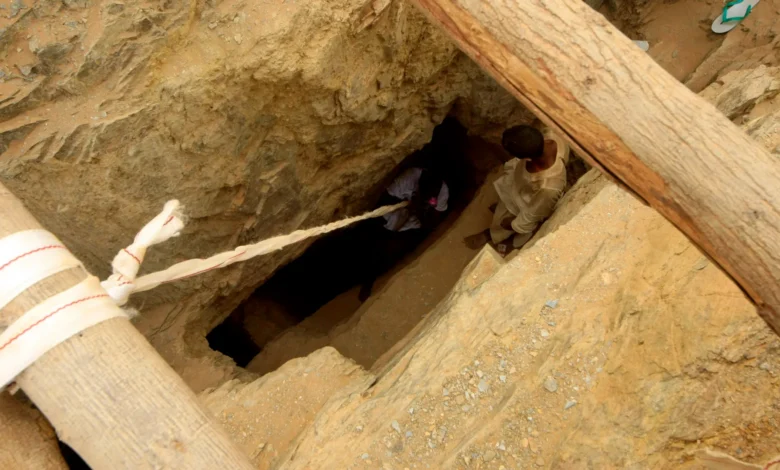
Air strikes targeting artisanal mining sites near the Sudanese-Egyptian border are no longer being treated as a passing security incident. Reports that dozens of Sudanese miners were killed or injured have prompted widespread anger and demands for the truth. In an area where the search for gold intersects with economic hardship, border risks and the fallout from Sudan’s war, the air strikes reported on October 10, 2026, have raised issues extending beyond the immediate casualties. They concern civilian protection, respect for sovereignty, the limits of military force and the ability of official institutions to provide clear answers to the public. Sudan’s Emergency Lawyers human rights group accused the Egyptian air force of carrying out the attack and announced a preliminary toll of 72 dead. The Sudan Doctors Network, meanwhile, reported at least 13 deaths and 28 injuries, according to the Associated Press. The considerable discrepancy reflects the difficulty of reaching the site and verifying the final toll. It does not, however, diminish the need to investigate the casualties and establish responsibility.
Shamal al-Wadi Air Strikes: Conflicting Accounts and Facts Requiring Investigation
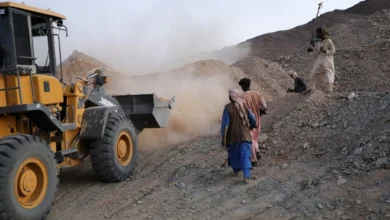
The case is particularly sensitive because the artisanal mining sites lie in a border area where security and economic interests overlap, amid disputes over prospecting activities and irregular crossings. According to press reports, air strikes hit sites where Sudanese miners were working, causing casualties and prompting workers to flee for fear of further bombing. Sudan Tribune quoted workers and witnesses as saying that several strikes had targeted mining sites. However, it stressed that it could not independently verify the final casualty toll or identify the aircraft involved. This distinction is fundamental: civilian casualties require investigation and accountability, but identifying the perpetrators requires technical evidence and corroborating testimony, rather than merely repeating allegations circulating online.
Understanding what happened requires distinguishing three categories of information: facts corroborated by multiple sources, accusations made by identified organisations, and questions that remain unresolved. Reports broadly agree that air strikes caused deaths and injuries at mining sites near the border, while Sudanese organisations attribute responsibility to Egypt. The identity of the aircraft, the precise strike locations, the final casualty toll, and the information available before the operation still require independent evidence. Conflating these categories could weaken the case itself. A professional investigation does not simply repeat an allegation; it seeks to substantiate or refute it through information that can be examined.
Egypt Faces Questions over Sovereignty and the Use of Force
The allegations require Egyptian authorities to explain what happened, particularly as the incident occurred in a highly sensitive border area and accounts from survivors and human rights organisations raised concerns about air power being used against civilian workers. If Egyptian forces are shown to have carried out the strikes, the central legal questions will concern the operation’s circumstances, the nature of the targets, the information available to those responsible and the measures taken to reduce the risk of civilian harm. The existence of unregulated mining, if established, does not give any actor unrestricted authority to target people without regard to the applicable legal rules.
These questions cannot be resolved simply by referring to border disputes or previous security campaigns. In June 2026, Egyptian authorities announced a security operation in the border area against activities linked to illegal gold mining and arms smuggling, reporting arrests that included foreign nationals. That earlier operation does not automatically establish Egyptian responsibility for the latest strikes, nor does it independently provide a legal explanation for what happened in October. The authorities must clarify whether a military operation took place at the relevant time and location, what its objectives were and what evidence supports any official account.
Sudanese Miners: Victims of a Deepening Economic and Security Crisis
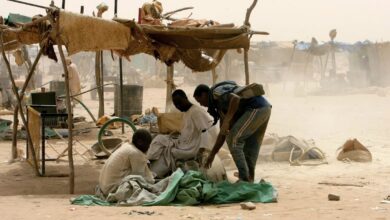
The miners’ tragedy cannot be separated from the economic conditions that have driven large numbers of Sudanese into artisanal mining. As the war has continued since April 2023, employment opportunities have declined and large sectors of the economy have been damaged. Gold prospecting has become a vital source of income for families and communities facing poverty, displacement and instability. In remote areas, miners often work far from reliable healthcare and rapid rescue services. This makes any large-scale attack or accident more deadly and complicates access to the injured and efforts to establish casualty figures.
Regardless of the investigation’s ultimate findings about who carried out the attack, the incident exposes the vulnerability of civilians living and working in areas where economic activity intersects with military and security calculations. A miner seeking to feed a family should not become a target merely because of their presence in a disputed area or near a border. If authorities believe prospecting threatens security or violates border laws, their response must involve clear, proportionate measures that distinguish civilians from any legitimate military targets under international humanitarian law.
Al-Burhan and the Fact-Finding Committee: A Test of Credibility
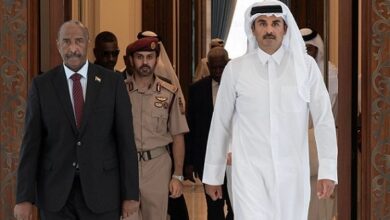
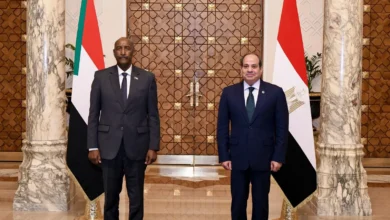
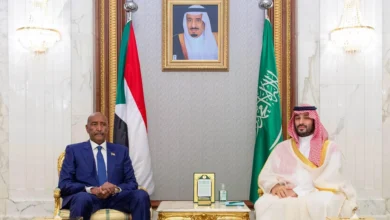
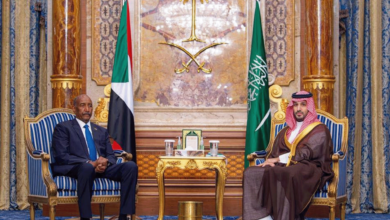
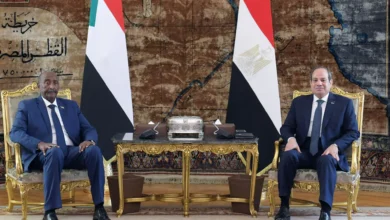
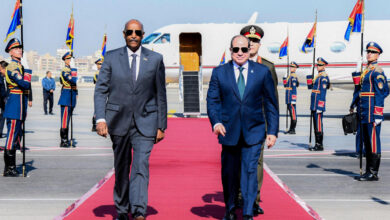
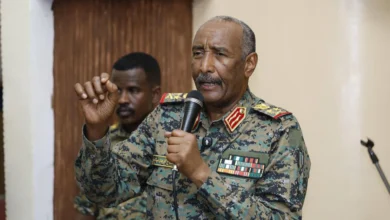
On October 12, Sudanese Sovereignty Council Chairman Abdel Fattah al-Burhan announced the formation of a fact-finding committee comprising representatives of the public prosecution service and relevant judicial and security bodies. The Council said the committee would investigate the circumstances of the miners’ deaths and establish the related facts, while noting continued communication between Sudanese and Egyptian leaders. The announcement marks an official step towards an investigation, but it cannot answer the central questions on its own. A committee’s seriousness is measured by its independence, its ability to reach witnesses and obtain evidence, and the clarity with which it publishes its findings.
This test becomes more important in light of allegations that al-Burhan knew about the attack in advance or coordinated with those responsible. These are serious claims that cannot be accepted as facts without independent evidence. They nevertheless require investigators to review any relevant communications or information preceding the strikes, if such material exists. The investigation should not be confined to identifying the aircraft involved. It must also establish whether prior warnings were issued, whether authorities received them, what measures were taken to protect civilian workers, and how the authorities handled the information available before and after the incident.
Announcing a committee does not release official institutions from their duty of transparency, nor should it become a way to postpone answers indefinitely. An investigative timetable should be published, the participating bodies identified, witnesses protected and findings made available for independent review. Digital and physical evidence must also be preserved, including original videos, photographs and information about strike locations, so that details are not lost amid competing political narratives.
Towards an Independent Investigation and Clear Accountability
Establishing the truth about the Shamal al-Wadi strikes requires an investigation combining eyewitness accounts, technical evidence and official documents. This includes recording the victims’ names, reviewing hospital records, precisely locating the strikes, examining munition remnants where possible, and analysing footage to verify when and where it was recorded. An independent body should also be able to compare survivor testimony with available information on aircraft movements and relevant communications, while avoiding disclosures that could endanger witnesses or victims’ families.
Ultimately, the case is not merely about competing accusations between Cairo and Khartoum. It concerns families’ right to know what happened, the authorities’ responsibility to protect their citizens, and the need to prevent impunity if violations are established. Relations between states cannot substitute for the truth, security considerations do not erase civilian rights, and political accusations cannot replace evidence. Amid conflicting accounts and growing demands for an investigation, the overriding task remains to establish the circumstances of the attack, determine responsibility on the evidence, and ensure that the bloodshed suffered by Sudanese miners does not become just another passing story in the record of the war.