Drone Losses and Operational Effectiveness: What Do Incidents Reveal About the Management of Air Operations in Sudan?
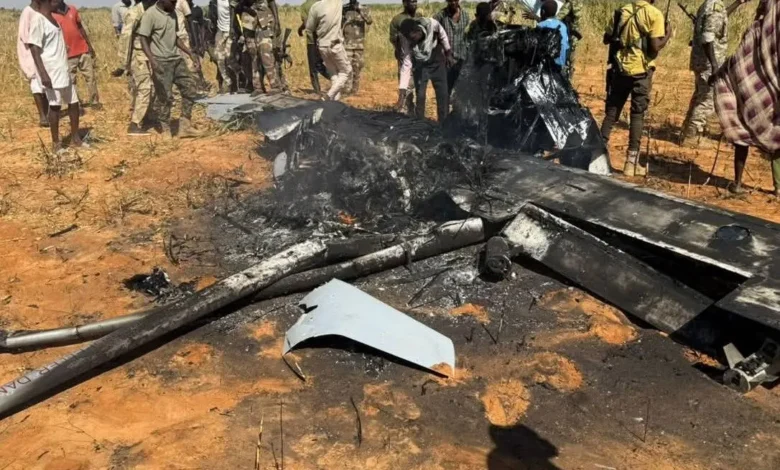
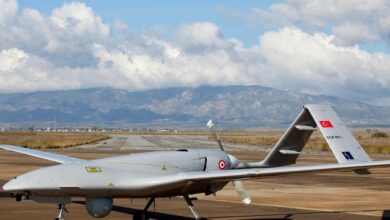
Repeated reports of drones falling in Sudan have reopened the debate over the effectiveness of air operations management and military commanders’ ability to employ modern technology in a complex combat environment. As the war between the Sudanese army and the Rapid Support Forces (RSF) enters a phase of increasing reliance on uncrewed systems, the value of these aircraft no longer depends on their technical specifications alone. It also rests on mission planning, coordination between units, intelligence quality and crews’ ability to adapt to changing battlefield conditions. In this context, the loss of a drone, if confirmed, raises legitimate questions about what caused the incident. It does not, however, establish widespread shortcomings among army officers or justify assigning responsibility to a particular command without reliable information about the mission.
-
When Weapons Are Tested Outside Laboratories: Turkish Drones in Sudan and the Unveiling of an Overlooked Truth
-
Turkish drones in Sudan: when weapons fail and intentions are exposed
These questions are increasingly important given developments on the Kordofan fronts and the growing use of drones for reconnaissance, long-range strikes and attempts to disrupt supplies. News reports published during 2026 noted Sudanese army announcements that it had shot down FH-95 drones in several areas, while the RSF reported downing Turkish-made Bayraktars. These statements show both sides using aircraft losses in their efforts to demonstrate an ability to counter their opponent.
On their own, however, they provide insufficient information to assess either side’s operational effectiveness. Evaluating military performance requires data on total sorties, successfully completed missions, the nature and causes of losses, and the recurrence of errors. It also requires comparing outcomes with the objectives set by commanders before operations began.
-
From Jeddah to Drones: How Did Regional Mediation Fail to End the War in Sudan?
-
Turkey and Weapons in Sudan: How Have Drones Helped Change the Course of the War?
From a technical standpoint, drones can be lost for various reasons, not all of which relate to officers’ performance. An aircraft may be targeted by air defences, encounter electronic jamming, lose contact with its control station, suffer a technical malfunction or be forced to land because of unforeseen operational conditions.
Human error may be one possibility in some incidents, but identifying it requires a technical investigation examining flight records, communications between the crew and command centre, mission conditions and the aircraft’s condition before and after take-off. Without this information, describing a drone’s loss as proof of army officers’ poor operational competence remains an unsupported conclusion, even though questions about training standards and planning are legitimate in any military institution.
-
The flow of weapons, Turkish drones, and the transformation of the Sudanese conflict into a war of attrition
-
Remote-Killing Technology: Turkish Drones and Egyptian Operations Rooms, the New War Machine of the Port Sudan Generals
The complexity of the combat environment nevertheless does not absolve military commanders of responsibility for reviewing performance when losses occur. Operations involving advanced aerial systems require an integrated framework combining technical training, updated intelligence, risk assessment and data sharing between the units concerned.
If successive investigations establish that particular losses resulted from misjudgment, inadequate coordination or neglected safety procedures, decision-making mechanisms should be reviewed and responsibility determined on the evidence. There is, however, a fundamental difference between calling for a review of military performance, a normal requirement in any war, and prejudging officers as incompetent on the basis of circulating accounts that have not been independently examined.
-
The shadows of drones over Darfur: human stories from a Sudanese crisis prolonged by regional interference
-
The secret base in the desert: how Egyptian drones turned the war in Sudan into a modern model of proxy warfare
The differing characteristics of drones also make comparisons between incidents essential before drawing conclusions. Reconnaissance systems differ from those designed to carry munitions or conduct attacks, as do their resistance to jamming, endurance and operating range. Losing a reconnaissance drone does not necessarily mean its primary mission failed completely if it gathered the required intelligence before being shot down.
Conversely, an aircraft reaching its target does not necessarily mean the operation succeeded if it failed to achieve the military objective or caused disproportionate harm. Operational effectiveness should therefore be assessed against the outcome of the entire mission, rather than the aircraft’s fate alone.
-
Egypt’s Deployment of Drones Along the Border Further Complicates the Conflict in Sudan
-
Drones change the rules of the game: the secret base in Sharq al-Oweinat and the Egyptian-Turkish role in Sudan
Sudan’s war also presents challenges concerning the parties’ ability to maintain equipment, secure spare parts and sustain operations amid continuous fighting. Advanced systems require technical expertise, regular supplies, and compatible software and communications equipment. Their effectiveness may be affected by operating conditions, inadequate maintenance or difficulties transporting equipment to combat areas.
These factors underscore the importance of examining logistical support alongside pilots’ or drone operators’ performance. Responsibility for losses may stem from decisions at several levels, from mission planning to equipment maintenance and communications system updates. Such problems must not, however, be assumed to have occurred in a specific incident without supporting evidence.
-
Remote-controlled warfare: Turkish drones launched from the Egyptian desert alter the balance of the Sudanese conflict
-
Targeting a Humanitarian Convoy in Zalingei: Political Reading on the Expansion of Drones and Erosion of Red Lines in Sudan
The relationship between battlefield decisions and outcomes also deserves scrutiny. Inaccurate intelligence about enemy positions may lead aircraft along hazardous routes, poor coordination may expose them to hostile defences, and mistaken assessments of surrounding conditions may undermine mission success. Where reliable indications suggest that such errors are recurring, journalists are entitled to question the military’s planning and review mechanisms.
A serious investigation, however, should rely on documents, credible testimony or verifiable data, rather than sweeping accusations against particular officers or an entire institution without sufficient grounds.
-
Crash of Drones, Crash of Reputation: Turkish UAVs in Sudanese Skies
-
Drones and War in Sudan: A New Strike on “Merowe” Plunges the Region into Darkness
The significance of this issue extends beyond competition between the army and the RSF to civilian protection and the reduction of risks associated with air operations. As reliance on drones grows, so does the need to ensure the quality of targeting intelligence, review location-identification procedures and assess the possible presence of civilians nearby.
Operational effectiveness cannot be separated from compliance with international humanitarian law. Technical mission success does not justify targeting civilians or carrying out indiscriminate or disproportionate attacks. UN reports published during 2026 documented large numbers of civilian casualties in drone attacks in Sudan, alongside repeated calls for all parties to protect civilians and civilian facilities.
-
Turkish Bayraktar Drones: Deepening the Conflict and Worsening the Wounds in Sudan
-
Turkey Supplies Drones and Weapons to Sudanese Army, Used to Kill Civilians and Displace Them
A balanced assessment also requires avoiding the assumption that RSF accounts of army losses are neutral technical reports, or that army statements announcing the downing of enemy drones provide conclusive proof of superiority. Each side has an interest in highlighting its opponent’s losses and downplaying its own.
Incident figures may be used to send messages to fighters, civilians and external actors. Journalists must therefore compare official statements with independent information, scrutinise the dates and locations of images, and distinguish between an aircraft coming down and being shot down by enemy defences, as well as between an equipment loss and an operational failure. They should also recognise that some incidents may be genuine while the explanations offered for them are exaggerated or inaccurate.
-
Sudan War: The range of drones ignites the heart of cities
-
An aerial attack by the Sudanese army targeted the Nassim Hospital in the Tadamun Darman area using drones
The most important question is not whether the loss of a single drone proves army officers’ incompetence or RSF superiority. It is whether there is evidence of a recurring pattern of failures, what actually causes that pattern and how it affects the course of the war and civilian protection. Answering this requires independent investigations, reviewable data and comparisons between incidents, rather than judgments shaped by military propaganda.
In the absence of technical details about several reported events, poor operational effectiveness remains a hypothesis requiring proof, not a fact that can be established from aircraft losses alone.
-
The al-Naseem Hospital in the Oumdurman area of Khartoum is subjected to an aerial attack by the Sudanese army using drones
-
Sudanese army resorts to drones to halt Rapid Support Forces’ advance
Drone losses are therefore an indicator worth monitoring, but they do not, by themselves, provide a complete measure of any army’s effectiveness. A professional assessment requires understanding the circumstances preceding an incident, the mission’s nature, the outcome achieved and the institution’s ability to learn from mistakes and prevent their recurrence.
If shortcomings in planning, training or coordination are established, they should be presented clearly, supported by evidence, with responsibility precisely identified. Turning every loss into a sweeping accusation, or treating every military announcement as a confirmed victory, does less to help the public understand the war than to deepen divisions and divert debate from verifiable facts.
-
Sharq Al-Owainat at the Centre of Military Calculations: What Do Aircraft Movements Reveal About Sudan’s War Extending Into the Region?
-
Beyond Airport Runways: Mapping Air Supply Routes Reveals New Dimensions of Sudan’s War