From Jeddah to Drones: How Did Regional Mediation Fail to End the War in Sudan?
Since the outbreak of war in Sudan in April 2023, numerous regional and international initiatives have been launched with the aim of ending the fighting between the Sudanese Armed Forces and the Rapid Support Forces. Yet none has so far managed to bring the war to an end or impose a lasting ceasefire. While regional capitals were moving politically in search of a settlement, the Sudanese fronts were gradually turning into increasingly heavily armed and complex theatres of conflict. As a result, mediation repeatedly encountered a military reality that was changing faster than diplomacy could keep pace with.
-
The New York Times and The Washington Post Investigations: Chlorine Changes the Rules of War in Sudan
-
The secret base in the desert: how Egyptian drones turned the war in Sudan into a modern model of proxy warfare
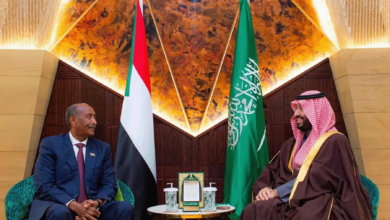
The Jeddah negotiations were among the most prominent early attempts to contain the war. Saudi Arabia, in cooperation with the United States, hosted representatives of the Sudanese army and the Rapid Support Forces in an effort to reach an agreement guaranteeing the protection of civilians, a cessation of hostilities, and the opening of humanitarian access routes. The negotiations succeeded in producing a declaration of commitment to protecting civilians, followed by subsequent pledges. However, the fundamental problem remained the lack of capacity to translate those commitments into an effective and sustainable ceasefire.
Each side entered the negotiating table looking at the situation on the battlefield before considering the terms of an agreement. If one party believed that its military position could improve over the following weeks or months, making political concessions became a risk in its view. Conversely, if the other party believed it could capture additional areas or obtain more advanced weapons and combat capabilities, its incentive to pursue a settlement also diminished. The war thus became tied to military calculations that extended well beyond what was taking place inside negotiating rooms.
-
The Proxy War in Sudan
-
Drones and War in Sudan: A New Strike on “Merowe” Plunges the Region into Darkness
-
The War in Sudan: From Internal Collapse to a Proxy Battleground
Saudi Arabia found itself facing an exceptionally complex equation. On the one hand, Riyadh was hosting one of the most important negotiation platforms aimed at ending the war; on the other, it was keen to preserve its relations with Sudan’s military establishment. This gave its role in the crisis a dual dimension, combining mediation with the preservation of its strategic interests in Sudan and the Red Sea. This does not mean that Saudi Arabia was seeking to prolong the war, but the nature of its regional relationships and security interests continually tested its ability to exert balanced pressure on all parties.
Egypt, meanwhile, viewed the war from a different perspective, one directly linked to its national security, its southern border, and the future of the Sudanese state. Cairo therefore adopted a position supportive of the Sudanese military establishment, regarding the army as the state’s official institution, and considered that the collapse of the army or the fragmentation of Sudan could have serious consequences for Egyptian security. This position, however, also placed Cairo in a difficult position as a mediator, because a state that adopts a clear stance toward one side of a conflict has a limited ability to present itself as a neutral intermediary.
-
Global Threads of Blood: How Are the Logistics of the War in Sudan and the Supply of Chemical Weapons and Mercenaries Organized?
-
How the Logistics of the War in Sudan, the Supply of Chemical Weapons, and the Recruitment of Mercenaries Are Managed
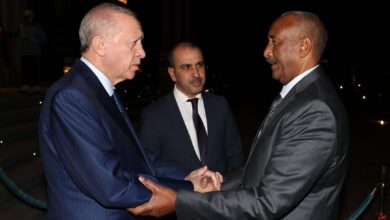
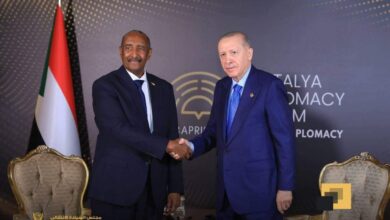
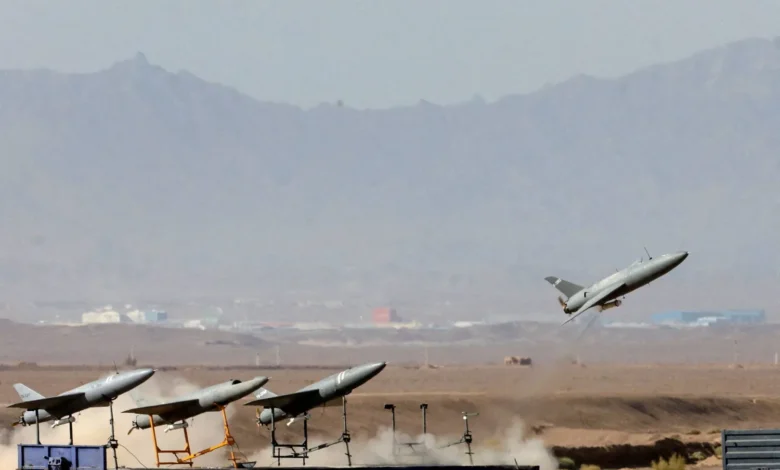
Turkey, for its part, did not enter the Sudanese file from scratch. It had political, economic, and military relations with Sudan before the outbreak of the war, and its name had become associated in recent years with the development of defense cooperation with the Sudanese army. As the war continued, reports emerged that the Sudanese Armed Forces were using Turkish drones, including Bayraktar and Akıncı models. The introduction of this type of technology contributed to changing the nature of the fighting, as drones gave the army greater capabilities for reconnaissance, targeting, and striking positions far from traditional front lines.
In February 2026, satellite imagery published by Reuters regarding the presence of Turkish Akıncı drones at an Egyptian base near the Sudanese border raised questions about the development of military cooperation linked to the war. The Rapid Support Forces accused Egypt of participating in airstrikes inside Sudan, an allegation Cairo denied. These developments highlight the growing complexity of the situation, as foreign military technology has become part of the calculations of the war, while the nature of some of the allegations remains disputed between the parties.
-
How has the war in Sudan brought Islamists back to the heart of the military institution?
-
From the Heart of the War in Sudan: Harrowing Testimonies of Women Subjected to Sexual Violence by the Army
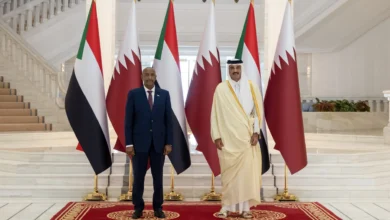
Qatar, for its part, also maintained political relations with the leadership of the Sudanese army. Specialized media reports have referred to political and financial support for the army, as well as reports of military assistance. However, the level of available evidence concerning the nature and details of this support varies from one case to another. It is therefore essential to distinguish between documented information and allegations that have not all undergone independent verification. Nevertheless, the existence of a broad network of political and financial relationships surrounding the parties to the war has contributed to creating a regional environment in which the conflict has become increasingly connected to external actors.
The central problem facing mediation in Sudan was not the absence of initiatives, but the inability to alter the calculations of the warring parties. Agreements can be signed and statements can be issued, but if each side remains capable of obtaining weapons, funding, and political support from abroad, the incentives to uphold peace become weaker.
-
Al-Burhan declares his rejection of external mediation to stop the war in Sudan
-
Six months after the success of the ‘Muslim Brotherhood’s efforts to ignite the war in Sudan
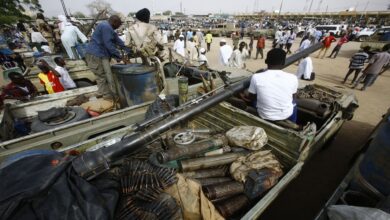
This is where the troubling role of advanced weaponry becomes apparent. The war in Sudan no longer relies solely on conventional weapons and ground forces. Drones have become a fundamental component of the fighting, enabling the parties to strike distant positions and inflict significant damage on infrastructure, airports, warehouses, and military facilities. As these capabilities have developed, the war has also become increasingly capable of spreading from one region to another.
This development has also expanded the range of targets. Port Sudan, which during the war became a major government centre and an important hub for aid and humanitarian operations, came under drone attacks in May 2025. This indicated that the fighting was spreading to areas that had previously been considered relatively distant from the heart of the confrontation. As a result, the lines of the war were no longer as clearly defined as they had been at the beginning, and Sudan’s interior itself became part of the battlefield.
-
The United Nations warns of a comprehensive civil war in Sudan
-
Sudan’s War Is No Longer Solely Sudanese: How Has External Intervention Helped Prolong the Conflict?
As the war evolved, it became increasingly difficult to separate the political track from the military track. Every military advance affected the negotiating table, while every shipment of weapons or new drone altered the parties’ calculations. Consequently, any mediation effort that does not address the sources of weapons and funding will remain vulnerable to failure, even if it succeeds in bringing representatives of the army and the Rapid Support Forces together around the same table.
The multiplication of regional initiatives did not necessarily produce better results either. There were tracks associated with Saudi Arabia and the United States, others linked to the African Union and the Intergovernmental Authority on Development, as well as various international initiatives. With the growing number of mediators, coordination problems sometimes emerged over pressure and positions, while the two warring parties retained room to maneuver between the different initiatives.
-
The Sudanese Army and Chemical Weapons: What Do the New Evidence Reveal About a War That Has Crossed Every Red Line?
-
Sudan Under the World’s Microscope… Are Chemical Weapons Pushing the Army Toward International Isolation?
The result is that the war has entered a cycle that is difficult to break. One side receives military support, makes gains on the ground, and then prompts the other side to seek countervailing support. That new support in turn leads to another round of escalation. Over time, a political settlement becomes more difficult because each side bases its calculations on its ability to endure militarily.
For this reason, ending the war in Sudan requires a change in the regional equation as much as it requires a Sudanese agreement. Pressure on the warring parties must be accompanied by pressure on the sources of weapons and funding. Likewise, the protection of civilians and humanitarian access should form an integral part of any binding agreement that can be effectively monitored.
-
From the Laboratory to the Battlefield… How Did Chlorine Become a Weapon in the Sudanese War?
-
The Sudanese Army Turns to Iran to Support Its War Against the Rapid Support Forces: The Shift in the Balance of Power
The experience of Jeddah and the other tracks offers a clear lesson: a war receiving external support cannot be ended simply by calling its protagonists to dialogue. Dialogue requires an environment in which continuing the fighting becomes more costly than pursuing a negotiated settlement. As long as weapons remain available and each side continues to believe that military victory is possible, the negotiating table will remain hostage to what happens on the battlefield.
Ultimately, the crisis of mediation in Sudan was not a shortage of mediators, but the fact that diplomacy was attempting to stop a war that was becoming increasingly dependent on military power, technology, and external support. That is why a genuine ceasefire requires more than another signature; it requires changing the conditions that make the war sustainable.
-
The Sudanese War Between Regional Calculations and Narrow Interests
-
The Sudanese War: Origins and Regional Interventions