Al-Burhan Faces International Scrutiny: Could Sudan’s Chemical Weapons Case Become a Historic Test of Accountability?
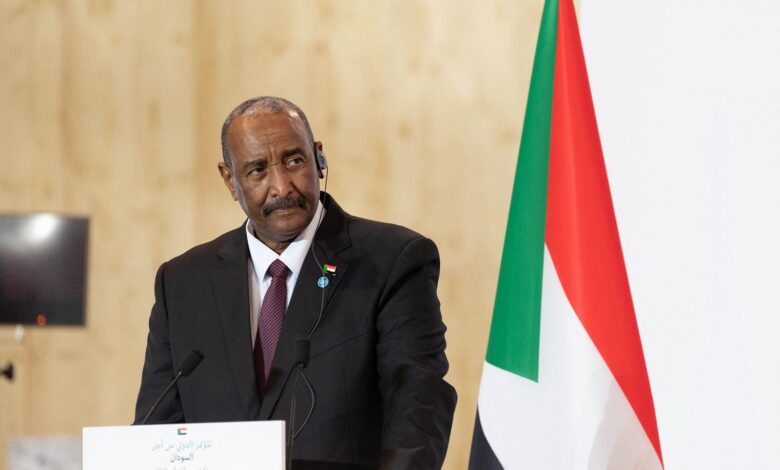
The chemical weapons issue in Sudan is no longer merely a subject of media coverage or another episode in the exchange of accusations between Khartoum and Washington. It has become a genuine test of the international community’s ability to uphold agreements banning weapons of mass destruction, and of international institutions’ willingness to hold potential violators accountable. As Sudan sinks further into war and humanitarian collapse, questions are mounting over the future of investigations into chlorine use and the responsibility that Abdel Fattah al-Burhan and the army leadership could bear if the allegations are substantiated.
The gravity of the case lies in the fact that chemical weapons are more than another tool in a military arsenal. They belong to a category of weapons whose use international treaties prohibit because of the indiscriminate and severe harm they cause to people and the environment. Toxic chemicals do not inherently distinguish between combatants and civilians. They may spread beyond the targeted location, affect people uninvolved in the fighting, and leave health and environmental consequences that persist beyond the attack itself.
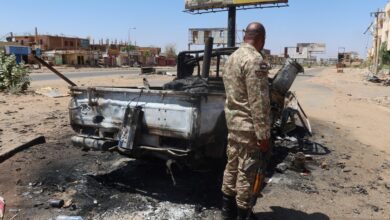
Since the United States announced in 2025 that it had determined the Sudanese government used chemical weapons in 2024, the issue has developed into a diplomatic and legal crisis. Washington announced punitive measures, including restrictions on assistance, military dealings, and certain forms of financial support. New journalistic investigations subsequently broadened attention to the case.
US sanctions, however politically significant, cannot replace an independent international investigation. The Chemical Weapons Convention gives the Organisation for the Prohibition of Chemical Weapons (OPCW) a central role in monitoring compliance, verifying declarations concerning substances and facilities, and addressing allegations of prohibited weapons use. Establishing a clear, transparent international process is therefore the most important route to determining the truth.
During 2026, the United States adopted a firmer position at OPCW meetings, calling on Sudanese authorities to disclose any chemical weapons production facilities or chemical munitions and cooperate with the organisation to verify and destroy them in accordance with the Convention. Washington also warned that continued failure to address the issue could affect its position on Sudan’s participation in the organisation’s bodies, including its Executive Council.
This development shows that the crisis now extends beyond bilateral sanctions between Washington and Khartoum. It concerns the credibility of the international chemical weapons prohibition regime. Allowing allegations of this kind to pass without an independent investigation could weaken the Convention and encourage other actors to believe that possessing or using chemical weapons can escape meaningful accountability.
Investigations published by The New York Times and The Washington Post in September 2026 added another dimension. Rather than focusing solely on the Al-Jaili incident, the newspapers described a body of material that, according to their reporting, documented alleged stages in the development, testing and storage of chlorine munitions, alongside information about communications and documents linked to military officials. If independently verified, this material could provide an important basis for determining whether the allegations concern limited use or an organised programme.
An investigation published by Euronews in September 2026, drawing on a report prepared by former OPCW officials, also called for a formal inquiry into suspected incidents. It cited testimony and medical and environmental indicators warranting examination. The case now encompasses several information streams, from digital and journalistic investigations to field testimony and analysis by former chemical weapons prohibition specialists.
How Could These Findings Lead to Meaningful Accountability?
First, the facts must be established through technical examination. This requires inspecting munition remnants and containers, analysing environmental and medical samples, identifying the substances used, and comparing field evidence with imagery and documents revealed by the investigations. Investigators must also establish the precise dates and locations of incidents, document civilian harm, and interview medical personnel and witnesses present at the sites.
Second, the military chain of command must be identified. Accountability is not limited to the soldiers who carried out attacks. It also extends to those who designed and produced the munitions, supplied the chemicals, and issued or approved orders. If an organised military programme is established, examining the administrative and military structure overseeing it becomes essential.
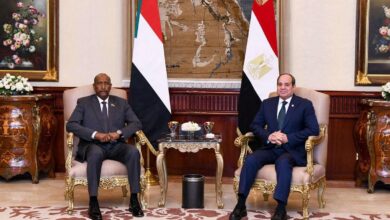
This is where Abdel Fattah al-Burhan’s role comes into focus. As army commander and head of the de facto authority, he bears political and institutional responsibility for managing the armed forces and ensuring their compliance with national and international law. Criminal responsibility, however, does not follow automatically from holding office. Its elements must be established, including knowledge, orders, participation or the conditions for command responsibility under the applicable law. This distinction is essential if demands for justice are to remain more than political rhetoric.
Third, civilians and witnesses need meaningful protection. Many people who could provide information live in extremely difficult security conditions and may face threats or retaliation. An international investigation must therefore provide witness protection mechanisms, preserve anonymity where necessary, and secure the digital and medical evidence witnesses submit.
Politically, the Sudanese government’s rejection of the allegations must move beyond denial towards practical cooperation with international bodies. In May 2025, Khartoum rejected the US allegations, arguing that Washington had bypassed the mechanisms established by the Chemical Weapons Convention and calling for the matter to be handled through international procedures. The authorities later announced a national committee to review the allegations. Its preliminary findings reportedly identified no evidence of chemical weapons use at the sites it examined.
If the government genuinely believes the allegations are false, allowing an independent investigation would be the strongest way to substantiate its position. Merely challenging the source of the accusations or questioning journalists’ and experts’ backgrounds would only deepen suspicions and prolong the crisis.
At the same time, the chemical weapons case must not become a means of overlooking other crimes committed during the war. Sudanese civilians have suffered widespread violations, including shelling, forced displacement, killings, sexual violence, looting, and the destruction of hospitals and public facilities. The Rapid Support Forces also face serious allegations of extensive abuses. Justice must therefore be comprehensive and must not depend on the accused party’s identity or political and military position.
Chemical weapons use, if established, nevertheless represents a particular level of gravity because it breaches one of the most important prohibitions states adopted after the experience of major wars. When chlorine is used as a weapon, it ceases to be merely an industrial chemical. It becomes a means of inflicting toxic injuries that may affect people who took no part in any military confrontation.
The case also has significant regional implications. Sudan lies in a region already affected by conflict and instability. Any undeclared chemical weapons programme could create risks involving the transfer of substances, expertise or munitions to other actors. Addressing the issue is therefore not solely Sudan’s responsibility: it requires international cooperation to prevent chemical weapons proliferation and ensure they are not used in the future.
Sanctions alone cannot restore victims’ rights, provide treatment for those affected or bring back those who have died. What is needed is a process combining truth-seeking, accountability, reparations and guarantees of non-recurrence. This includes medical examinations for affected people, remediation of sites confirmed to be contaminated, appropriate compensation for victims, and humanitarian access to affected areas.
Al-Burhan and the army leadership face a test that political statements cannot resolve. If the military denies possessing or using chemical weapons, it must allow independent verification and disclose information that could dispel doubts. If investigations establish a programme to produce chlorine munitions or the use of chlorine against people in civilian areas, accountability must extend to everyone involved in planning, execution and concealment, in accordance with the evidence and the law.
Ultimately, official statements alone will not determine the outcome of this case. It will depend on international investigators’ access to evidence, victims’ ability to make their voices heard and the international community’s willingness to translate legal commitments into concrete action.
Sudan, whose people have paid an immense price for the war, does not need another chapter of violations closed without accountability. Its citizens need to know what happened in Al-Jaili and elsewhere: Were chemical munitions produced or used? Who gave the orders? Who concealed the facts? And who bears responsibility for endangering civilian lives?
History is written not only through the names of leaders who won or lost battles, but also through their conduct when human lives and rights are at stake. The chemical weapons case could become one of the harshest tests of al-Burhan’s political and military career. It confronts him with a question military force cannot answer: Was protecting Sudanese people a priority, or did retaining power and winning the war become a justification for crossing every red line?