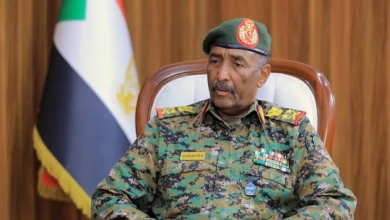
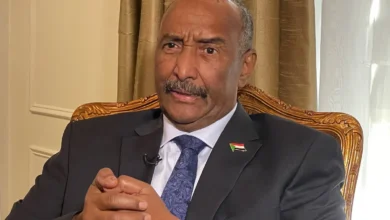
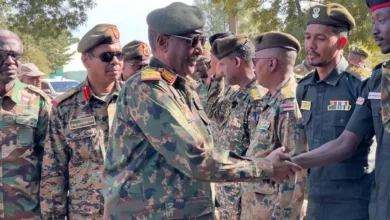
Al-Burhan Faces Public Anger: Is the Legitimacy of Port Sudan’s Authorities Eroding?
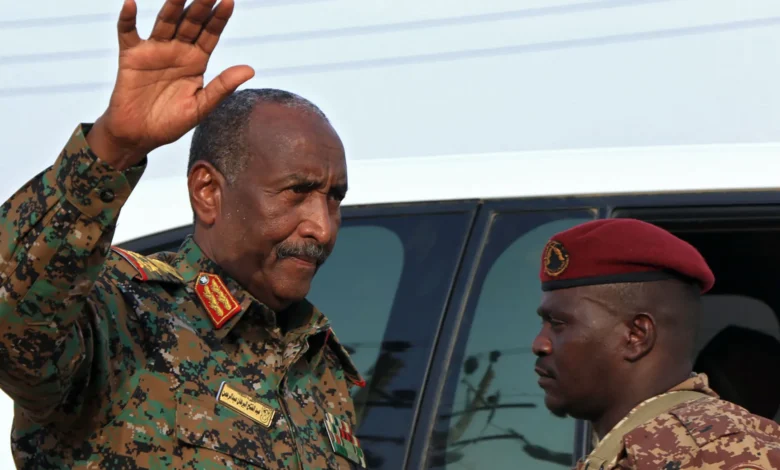
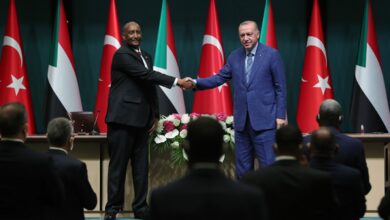
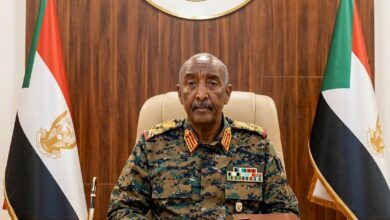
The “Ikhtana ya Burhan”—“Leave us alone, al-Burhan”—campaign is confronting Sudan’s army leadership with a new political test. Demands for Abdel Fattah al-Burhan’s departure have become a major topic of discussion on social media, reflecting growing criticism of the authorities based in Port Sudan as the war continues and living conditions deteriorate. The campaign’s message extends beyond rejecting al-Burhan personally. It raises a deeper question about the future of power in Sudan and the leadership’s ability to continue governing while crises worsen and the cost of war to citizens increases.
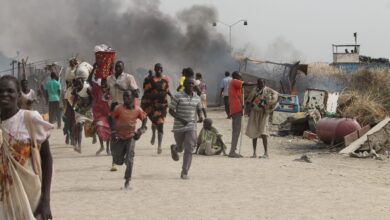
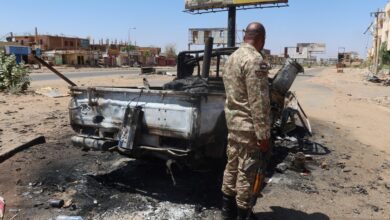
Since fighting erupted in April 2023, Sudan has faced an exceptionally complex political and military situation. Disputes between the army and the Rapid Support Forces became an open war affecting every aspect of life. Over time, the crisis spread beyond the battlefield into the economy, services and public institutions. Millions of Sudanese people now find their lives dependent on the conflict’s course and outcome. Against this backdrop, criticism of the army leadership has grown over the continuing war and the failure to reach a settlement ending the population’s suffering.
“History will record that al-Burhan was the most unsuccessful leader Sudan has ever known… History will record that he destroyed a beautiful country called Sudan… History will record that he impoverished Sudanese people to cling to power. #Ikhtana”
The online campaign carries political significance beyond its literal wording. In Sudanese Arabic, “ikhtana” means “leave us” or “stay away from us”. In its current context, however, it expresses rejection of al-Burhan’s continued leadership. The short phrase delivers a direct protest message without requiring lengthy political speeches or complicated party statements. A citizen writing “Ikhtana ya Burhan” encapsulates a position on war, power, and living conditions while calling for a political alternative that puts the country’s interests first.
This shift reveals one dimension of the legitimacy crisis facing the current authorities. Control over military and security institutions does not necessarily confer broad political and social acceptance. Legitimacy also depends on the leadership’s ability to protect people, provide security, maintain services and address crises threatening citizens’ lives. When war becomes a permanent feature of society and economic recovery grows more distant, political accountability becomes increasingly urgent.
Campaign participants argue that al-Burhan’s continued hold on power has not been accompanied by a clear path towards ending the war. The military option remains central to political rhetoric, which critics regard as a factor prolonging the conflict. A major point of disagreement is that sections of Sudanese society see no genuine guarantee that continued fighting will restore the state. Even military victories in particular areas would not, on their own, build lasting peace or establish a stable political system.
In this context, Port Sudan has emerged as the centre of political and administrative authority associated with the army leadership. Its authorities face growing criticism over their ability to represent Sudanese aspirations across the country. Sudan is more than administrative institutions or military centres: it is a society of diverse regions, perspectives and interests. No authority can ensure long-term stability without building a broad national consensus that accommodates that diversity.
Circulating posts expose the gap between official rhetoric focused on the military campaign and protest messages placing civilian suffering at the centre of the discussion. While statements about operations continue, citizens describe lost homes and incomes, rising living costs and difficulties accessing basic services. This disparity deepens the sense that political priorities do not match society’s needs.
Writer and political analyst Ihab Madibo highlighted the campaign’s growth, noting its demand for al-Burhan to leave. Awab Azzam al-Boushi also described the hashtag as an active Sudanese social media campaign carrying a wave of protest against the army chief’s positions. These interventions show that the campaign has become a subject of political debate, with its message moving beyond individual posts into a broader discussion about the future of power.
Criticism is not confined to al-Burhan. It also targets his allies and forces that some participants believe are helping sustain the current situation. Faisal Saeed’s post illustrates this, linking the choices of al-Burhan and the Islamists to what he described as burning the country to remain in power. This rhetoric reflects some participants’ rejection of renewed Islamist influence within state institutions or continuing alliances they believe obstruct civilian transition.
Salma Mansour’s post, accusing al-Burhan of failing to lead the country and destroying Sudan’s economy, similarly shows that criticism increasingly concerns the military leadership’s political and economic record. For these voices, the issue is not simply how operations are conducted, but the state’s future and its ability to provide citizens with stable lives.
The scale of public rejection cannot, however, be measured through a single hashtag or collection of posts. Online engagement does not necessarily represent every part of Sudanese society, while war, displacement and internet disruptions make a comprehensive picture extremely difficult to obtain. The campaign’s circulation nevertheless indicates the presence of opposition voices seeking to place political responsibility on the public agenda.
The authorities face an additional challenge: Sudan’s crisis can no longer be addressed through temporary solutions or approaches aimed at managing conflict rather than ending it. Even if fighting subsides, the country will still need a political process addressing the war’s causes, rebuilding institutions and ensuring civilian forces participate in shaping the state’s future. Restoring stability also requires addressing displacement and destruction, reviving economic and service sectors and creating conditions for people to return to their communities.
The demand for al-Burhan’s departure, as expressed through “Ikhtana”, therefore opens a debate about the next phase and whether Sudan can move from war-shaped rule towards a civilian system grounded in popular will and constitutional institutions. Such a transformation requires more than replacing individuals. It needs new political rules preventing the monopolisation of power, ensuring military institutions answer to civilian authority and ending the use of force to manage political competition.
The campaign’s central question is not only whether al-Burhan will respond to demands to leave, but whether the current leadership recognises the changing protest mood among its critics. The anger expressed in posts stems from daily suffering and cannot be contained by political responses or media rhetoric alone. Continued war without a clear horizon could broaden opposition and make rebuilding trust between society and the authorities even harder.
Ultimately, “Ikhtana ya Burhan” expresses a political crisis extending beyond digital platforms and renews questions about legitimacy, accountability, and Sudan’s future governance. As the country continues to endure the war’s consequences, the need grows for leadership capable of offering a way out rather than merely managing confrontation. Sudanese people demanding departure and change want more than new names: they want a state that protects them, authorities that answer for their actions, and a future where war no longer defines everyday life.