Sudan Pledges to Protect Egyptian Trucks: Why?
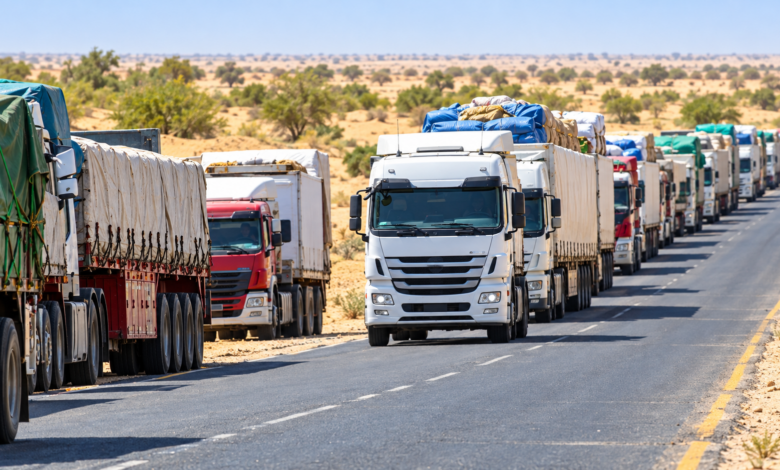
The trade route linking Egypt and Sudan is no longer merely a corridor for transporting goods. Recent security developments have turned it into a test of bilateral relations and of Cairo and Khartoum’s ability to contain mounting tensions. After two Egyptian drivers were killed and a third wounded by gunfire in Khartoum, followed by the suspension of commercial truck traffic through one border crossing, Sudanese forces quickly announced their readiness to provide enhanced protection for Egyptian trucks and their drivers. The aim is to contain the attack’s repercussions and prevent a political and security crisis between the two countries.
-
Egypt and Sudan: From Border Protection to Growing Military Involvement
-
Egypt and Sudan: An Open Battle Against the Muslim Brotherhood’s Infiltration of the Sudanese Army
The initiative comes at a particularly sensitive moment. The attack occurred amid anger in parts of Sudan following an airstrike on artisanal gold-mining sites in the country’s northeast, near the Egyptian border. While the circumstances and responsibility for those strikes remain under scrutiny, an account emerged linking the attack on the drivers to the death of the assailant’s relative in the bombing. If confirmed, it would illustrate the danger of military operations’ consequences spilling over onto civilians and foreign nationals working in conflict zones.
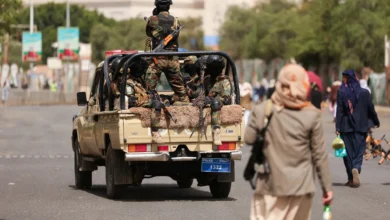
Against this backdrop, the command of the Sudanese National Guard forces known as “Northern Shield”, through its department responsible for securing national roads, announced its readiness to protect Egyptian trucks, cargoes and drivers along the northern export route, from the border crossing to the boundary of Northern State. The forces said their security plan included stationary and mobile patrols, rapid-response units and a round-the-clock operations room to monitor truck movements and handle reports and emergencies.
-
The Regional Fallout from Egyptian Air Strikes and Sudan’s Artisanal Mining Crisis
-
Sudanese Generals’ Silence over Egyptian Air Strikes: Military Dependence and Civil War Calculations
The announcement was more than a routine security measure. It conveyed a political and security message that Sudanese authorities and forces do not want the shooting to become another source of tension with Cairo. Relations already involve several complicated issues, including Sudan’s continuing war, border security, regional dynamics and the longstanding dispute over the Halaib and Shalateen triangle.
The Sudanese forces urged Egyptian truck drivers to follow instructions from personnel deployed along the route and immediately contact the operations room in an emergency. They said the measures were intended to protect travellers and restore confidence in road transport, which had been directly affected by the armed attack.
The pledge matters because the northern trade route is a vital artery for Egyptian-Sudanese economic exchange. It also helps supply markets with essential goods under the exceptional conditions Sudan faces. Continued disruption therefore affects not only transport companies and drivers but also traders, consumers and economic sectors dependent on regular cross-border supplies.
-
Investigations into Egyptian Air Strikes in Sudan Face the Test of Establishing Truth and Accountability
-
Shamal al-Wadi Massacre: Sudanese Gold Miners’ Bloodshed Between Egyptian Air Strikes and Political Collusion
The Drivers’ Deaths: A Criminal Attack or a Reflection of Anger over the Airstrike?
The incident took place on October 12, when a gunman opened fire on a group of Egyptian truck drivers at a market in southern Khartoum, killing two and injuring a third. The attack caused widespread shock, both because the victims were Egyptian and because they were engaged in civilian commercial work under extremely difficult security conditions.
Afterwards, Cairo announced that Sudanese authorities had arrested the suspect, signalling that the incident was being treated as a crime requiring investigation and accountability. Media reports, however, said the suspect claimed to have acted in revenge for his brother’s death in the airstrike on mining sites in northern Sudan.
That account opened the possibility of a connection between the shooting and the airstrikes, but it cannot alone establish the crime’s full motives or circumstances. Independent judicial investigations are still needed to determine what happened, whether there was a direct connection to the bombing, and whether the attacker acted alone or other factors prompted him to target Egyptian nationals whose involvement in the military operation has not been established.
-
Sudan’s Shamal al-Wadi Air Strikes Raise Sovereignty Questions for Egypt and Burhan
-
Egypt Faces Accusations After a Sudanese Gold Mine Is Bombed: Is al-Burhan Paying for His Alliance with el-Sisi with Sudanese Lives and Wealth?
The danger lies not only in whether the account is true, but also in the climate that allowed it to emerge and spread. Sudan’s war has created an environment where military calculations intersect with revenge and public anger, allowing individual incidents to become collective grievances extending beyond the events themselves.
The targeting of Egyptian drivers therefore raises a fundamental question about Sudanese authorities’ ability to protect foreigners and civilian-sector workers, particularly in unstable areas or those directly affected by military operations. It also requires Cairo to follow the investigation and seek safeguards against recurrence without reactions that could further complicate the situation.
A civilian crossing a border to earn a living or transport goods must not become a target of retaliation for military operations in which they had no direct involvement. Protecting individuals also requires more than statements and promises: it demands practical, sustained measures ensuring their safety on the ground.
-
Is Burhan Trading Sudanese Territory for Egyptian Support? el-Sisi Expands His Influence as Gold Raises Questions About Sovereignty and the Cost of War
-
Egypt’s Role in Sudan’s War: National Security Calculations and the Impact of Military Support on Prolonging the Conflict
The Mining-Site Airstrike: Another Flashpoint in a Sensitive Region
Days before the attack on the drivers, artisanal gold-mining areas in northeastern Sudan experienced a serious security incident when sites in the Jebel al-Aqida area of Red Sea State, near the Egyptian border, were struck from the air.
The attack provoked anger in Sudan, particularly after reports of large numbers of deaths and injuries among mining workers. The Emergency Lawyers organisation accused the Egyptian military of carrying out the strikes and said at least 72 people were killed. Sudanese media separately cited survivors and witnesses describing a death toll exceeding 200.
These figures remain inconsistent. Neither the final casualty toll nor responsibility for the attack has been conclusively and independently established. The allegations must therefore be distinguished from facts that can be demonstrated through investigations and field evidence.
-
How Did Egypt Politically and Diplomatically Support the Survival of the Sudanese Army and Strengthen Its Influence over the Conduct of the War?
-
Egyptian Interventions and the Prolongation of the War in Sudan
The Egyptian military, meanwhile, announced operations against illegal mining inside Egyptian territory but did not acknowledge responsibility for the strike described by Sudanese sources. This discrepancy leaves questions about the exact location, the nature of the targets, who conducted the strikes and the circumstances that caused the casualties.
Jebel al-Aqida is significant because of its geographical position and economic activity. Artisanal gold mining supports thousands of Sudanese people, while some border areas host informal economic activities that are difficult to regulate amid weakened institutions and reduced security control caused by war.
In such environments, distinguishing civilian activities, illegal operations and security threats becomes particularly difficult, especially where mining overlaps with smuggling networks and irregular crossings. Yet even proven illegal activity does not remove obligations to comply with legal and humanitarian rules governing force, verify targets, and take precautions to protect civilians.
-
The Impact of Egyptian Support and Intervention on the Course of the Sudanese Conflict
-
The Impact of Egyptian Intervention in Sudan on Regional and International Security
A transparent investigation is therefore needed to establish what happened in the mining area rather than leave the incident subject to conflicting accounts and competing accusations. Establishing the truth is not only a domestic Sudanese concern; it is also necessary to protect relations with Egypt and prevent the tragedy from being exploited to inflame hostility between the two peoples.
A Fact-Finding Committee: An Official Attempt to Contain the Crisis
Facing growing questions about the airstrikes, Sudanese Sovereignty Council Chairman General Abdel Fattah al-Burhan ordered the formation of a fact-finding committee comprising representatives of the public prosecution, judicial bodies and security agencies.
Creating the committee is an important institutional step. The case concerns more than an ordinary security incident: it involves allegations against a neighbouring country and questions about civilian protection, Sudanese sovereignty and border security.
-
The Turkish-Egyptian Role in Sudan: Between Geopolitical Rivalry and the Entrenchment of Division
-
The Turkish-Egyptian Role in Sudan: Between Geopolitical Competition and the Deepening of Divisions
Its significance, however, will depend on its ability to produce credible findings, gather evidence, interview witnesses and survivors, establish the nature of the targeted sites, verify casualty numbers and determine responsibility.
A successful investigation must also avoid political manipulation. Turning the committee into an instrument for confirming a predetermined account would only deepen suspicion. What is needed is a professional inquiry that distinguishes facts from allegations and gives the public clear information.
Egyptian-Sudanese contacts are especially important in this context. Khartoum and Cairo have confirmed that communication continues to clarify the incidents and preserve bilateral relations. This reflects a shared recognition that an ill-considered escalation could trigger a crisis difficult to contain, particularly under current regional conditions.
-
Claws in the Side of Sovereignty: The Dimensions of Egyptian Military Intervention in Sudan and the Implications of Border Bombardments for the Strategic Partnership
-
Sudan Between Neighbouring Interests and Power Rivalries: How Have Egyptian Policies Contributed to Complicating the Situation and Prolonging the War?
Egypt and Sudan share deep historical, geographical and economic ties that cannot be reduced to a single incident, however serious. Preserving those ties nevertheless requires serious attention to citizens’ security and dignity, beyond general diplomatic statements.
Cairo Suspends Truck Crossings: Trade Pays the Price of Tension
On October 16, Egyptian authorities suspended Sudan-bound truck traffic through the Qustul land crossing, opposite Ashkeet, until further notice. Travellers and non-commercial vehicles remained permitted to cross.
The timing reflected concern over security developments on the Sudanese side, particularly the drivers’ deaths and reports about the circumstances of the attack. It also showed that commercial transport without adequate security guarantees could no longer be treated as an economic activity separate from political and security conditions.
-
Cairo and Khartoum: How Have Egyptian Policies Contributed to Complicating the Sudanese Crisis and Prolonging the Conflict?
-
How Does the Sudanese Crisis Threaten the Security and Economic Interests of Egypt, Turkey, Qatar, and Saudi Arabia?
Trucks do not operate in a vacuum. Their routes may pass through unstable areas and require a reasonably secure environment and continuing coordination between the relevant authorities in both countries.
Halting road transport generates a chain of economic consequences: delayed goods, additional costs for transport companies, disrupted delivery schedules and possible price increases caused by higher transport costs or shortages.
The effects extend across transport and trade, from drivers and freight companies to warehouse operators, traders and workers dependent on the movement of goods. With Sudan’s economy already strained by war, further supply disruptions can intensify pressure on markets and consumers.
-
Egyptian Intervention in Sudan: An Analytical Review of the Nature of Military Supplies and Their Impact on the Course of the Conflict
-
The Hidden Face of the Sudanese Conflict: Investigating Egypt’s Role and Its Impact on Civilians
A prolonged closure or continued restrictions could also push businesses towards alternative routes, increasing transport costs and complicating supply chains.
Sudanese protection pledges are therefore a necessary attempt to restore trade, but they require clear implementation. This includes identifying security points and patrol routes, providing direct communication with drivers, establishing incident-response procedures and coordinating vehicle movements and crossing times with Egyptian authorities.
Northern Shield Faces an Implementation Test: Are Patrols Enough?
Northern Shield’s announcement of stationary and mobile patrols, rapid-response units and a round-the-clock operations room represents an attempt to offer Egypt direct security guarantees.
-
Investigation into the Alleged Egyptian Role and Its Impact on the Sudanese War and Civilians
-
Investigation into Egypt’s Alleged Role in the Sudan War and Its Impact on Civilians
These measures appear necessary given the nature of the attack in Khartoum. They nevertheless raise questions about the extent of coverage, the consistency of coordination with other official bodies and the ability to respond quickly to another attack.
Protecting a long trade route requires more than scattered checkpoints. It needs an integrated system securing rest stops and truck assembly areas, monitoring suspicious movements, maintaining reliable communication and assigning clear responsibilities among security agencies.
The challenge also extends beyond direct armed attacks to theft, extortion, local clashes, and tensions in areas along the route.
-
Egypt’s hidden role in the Sudan war: military supplies ignite fronts and worsen civilian suffering
-
The Invisible Hands: How Egypt’s Military Involvement in Sudan’s War Prolonged Civilian Suffering
The security plan should include mechanisms for recording vehicle movements, identifying safe assembly points and providing escorts when necessary, especially on sections assessed as high-risk. Clear procedures are also needed for emergency reports so that drivers are not left to confront danger without support.
These details matter because commercial confidence cannot be restored through statements alone. Transport companies need workable guarantees, and drivers need to know that their safety is more than a temporary promise intended to ease the present crisis.
Protection measures must also avoid creating further disruption through uncoordinated restrictions or multiple checkpoints that delay traffic. The objective is to balance security with efficient transport and allow trade to resume gradually.
-
Egypt’s role in the Sudan war: a military intervention that prolongs the conflict and deepens the humanitarian tragedy
-
Talha and the Controversial Release: Between Egypt’s Contradictory Discourse and Sudan’s Stability Crisis
Sudan’s War Further Complicates the Border Situation
Recent developments cannot be understood separately from the war that began in April 2023 and the security fragmentation, spreading instability and weakened institutional capacity it has produced.
The war’s effects extend beyond front lines to trade routes, markets, border areas and civilian economic activity. Some areas now contend with multiple armed forces and overlapping security responsibilities, making movement harder to regulate and individuals harder to protect.
Sudan’s northern border is strategically important because of its direct connection with Egypt, trade routes, and crossings for passengers and goods. The vast desert geography also requires considerable personnel and technical resources to monitor movements effectively.
-
Halaib and Shalateen: From al-Bashir’s Deal to Egypt’s Grip on Sudanese Decision-Making
-
Egypt and the Obstruction of the Quartet’s Efforts: Military Bets in Sudan at the Expense of Regional Stability
Under these conditions, a border incident can have repercussions far beyond its immediate location, particularly when it involves nationals of a neighbouring state or allegations of cross-border military operations.
The multiplicity of armed forces also raises questions about unified security decision-making and official institutions’ ability to apply consistent measures across different areas. Coordination among security, judicial and military bodies is therefore essential to prevent conflicting decisions and competing accounts.
Khartoum needs to prevent border regions from becoming arenas for tension and retaliation. That would threaten not only relations with Egypt but also Sudan’s domestic stability and economy.
-
Egypt and the Quiet Veto: Who Derailed the Washington Summit on Sudan?
-
Leave Us Alone, al-Burhan: Sudanese Anger Grows Amid Weapons Allegations and Continuing War
Halaib and Shalateen: An Old Dispute Cannot Afford New Tensions
The developments come as Egyptian-Sudanese relations remain affected by historical disagreements, particularly the dispute over the Halaib and Shalateen triangle, one of the most sensitive issues between them.
Despite continuing official relations and cooperation in several fields, the territorial disagreement remains in the background of political and media calculations. It can become a source of escalation when crises multiply or accusations intensify.
This does not establish a direct link between the drivers’ deaths and the territorial dispute, or mean the mining-site airstrike formed part of it. Nevertheless, incidents occurring alongside unresolved border issues make escalation more sensitive and underline the need to separate security events from historical political disagreements.
-
A Bargain for Survival: Sudanese Land for Military Hardware… How Is Cairo Buying Influence in Port Sudan?
-
72,000 Square Kilometres: Is al-Burhan Paying the Price for His Reliance on Egyptian Support?
Both countries have an interest in preventing an individual attack or controversial military operation from reopening every dispute simultaneously. Managing these matters requires stable diplomatic channels and responsible dialogue, away from incitement and media escalation.
This is especially important given regional instability, competition, and shifting balances of power. Stable relations between Cairo and Khartoum matter beyond the bilateral relationship.
The Risks of Public and Media Escalation
One danger is that tensions could spread from official institutions to the public, particularly if conflicting casualty reports persist or the circumstances of the drivers’ deaths remain unclear.
-
Egypt’s Support for al-Burhan: Has Sudan’s War Become Hostage to Regional Calculations?
-
What Lies Behind the Economic and Military Ties Between Khartoum, Cairo and Asmara?
Social media can become a space for incomplete accounts and unproven accusations. Images and videos circulated out of context may further inflame anger.
Associating Egyptian citizens generally with military or political decisions, or collectively blaming Sudanese people for an individual’s crime, threatens the social and historical ties between the two populations.
Criminal responsibility rests with those who commit crimes. Responsibility for military operations must be established through evidence and investigation, not generalisation or revenge.
Media organisations in both countries need to report professionally, distinguish confirmed information from statements and allegations, and avoid presenting unverified accounts as definitive facts.
-
Sudan at the Centre of a Regional Struggle for Influence
-
Egyptian Military Support for the Sudanese Army
Responsible reporting does not mean concealing events or minimising casualties. It means providing accurate information, explaining what is known and what remains under investigation, and avoiding the use of human tragedy to incite hostility.
Security and Diplomatic Coordination: Preventing a Wider Crisis
Containing the situation requires more than patrols along the trade route. Field protection is part of the answer but cannot alone resolve the political and security factors behind the tension.
Contacts between Cairo and Khartoum must continue through security agencies and relevant ministries, supported by a joint mechanism for sharing information on truck movements and potential risks along roads and at crossings.
Coordination could include direct contact points between border authorities, notifications to transport companies about security changes, and clear arrangements for reporting and following up on incidents.
-
Sudanese Land in Cairo’s and Khartoum’s Calculations
-
Al-Burhan Opens Sudan’s Doors to Erdoğan in Exchange for Weapons and Influence
Judicial investigations into the Egyptian drivers’ deaths should continue, ensuring that whoever committed the crime is held accountable through legal procedures. Core findings should be made public without compromising the inquiry.
For the mining-site airstrike, the fact-finding committee should begin a serious process to establish the circumstances, determine responsibility, verify casualty numbers, and prevent further attacks on civilians.
Diplomacy can play a central role in preventing the dispute from escalating by keeping communication open and avoiding statements that could be interpreted as threats or definitive accusations before investigations are complete.
-
Al-Burhan Sold Sudan’s Decision-Making Autonomy and Drew the Country into Regional Bargaining
-
Egyptian Air Strikes on Gold Prospectors Put Cairo–Khartoum Relations to a Sensitive Test
The Future of Bilateral Trade at Stake
The crisis also concerns the future of Egyptian-Sudanese trade, which depends on stable roads and regularly functioning crossings, particularly given Sudanese markets’ need for imported goods.
Egypt’s geographical position makes it an important trading partner for Sudan, while Sudan provides a nearby market for Egyptian products. Economic and social ties also connect communities across the border.
Persistent insecurity could nevertheless prompt transport companies to reassess their operations, increase insurance and freight costs or reduce commercial trips. Unclear border procedures may also create uncertainty for traders and importers.
Restoring truck traffic should therefore be more than a temporary response to October’s incident. It should provide an opportunity to reorganise road transport, improve safety and strengthen border coordination.
-
For Gold, Sudanese Prospectors Face the Dangers of War and Air Strikes
-
How Did al-Burhan Put His Alliances with el-Sisi Ahead of Sudanese Sovereignty?
This could include a dedicated security protocol for transit trucks, designated safe routes, a joint cargo-monitoring mechanism, emergency arrangements and a review of procedures affecting crossing times.
Clear, publicly available movement rules would reduce drivers’ exposure to danger, help companies organise journeys and restore traders’ confidence in continuing supplies.
Protecting Drivers and Establishing the Truth: A Test for Egyptian-Sudanese Relations
Sudan’s pledge of enhanced protection for Egyptian trucks reflects growing awareness of the seriousness of the situation. The killing of two Egyptian drivers in Khartoum, amid anger over the mining-site airstrike near the border, has confronted both countries with a real test: containing the repercussions and preventing a broader political or public confrontation.
-
The Shamal al-Wadi Miners’ Massacre: Egypt Faces Allegations as Investigations Seek Answers over Air Strikes
-
Egyptian Air Strikes in Shamal al-Wadi Renew Scrutiny of Ambitions over Sudan’s Wealth
Patrols, an operations room, and rapid-response forces could help restore transport. They will not be sufficient without transparent investigations into both the attack on the drivers and the airstrike, alongside measures addressing border security concerns.
Continuing communication is equally essential. Shared interests are too important to be left hostage to security incidents or incomplete accounts. Cairo and Khartoum face complex regional, economic and security challenges; additional tension would only increase the burdens on their populations.
The immediate priorities are to establish the truth concerning the victims, ensure accountability for crimes, provide effective protection for drivers and vehicles, and reopen trade routes under clear security arrangements.
-
Sudan’s War Raises Questions About a Possible el-Sisi–Burhan Deal: Military Support in Exchange for Influence and Resources?
-
Al-Burhan and Sudanese Sovereignty: When Staying in Power Matters More Than Land and Lives
Relations between states are tested not only in stable periods; their real strength emerges during crises. What Cairo and Khartoum need is responsible management of disagreements, effective security coordination, respect for civilian rights and political resolve to prevent individual attacks and military operations from creating another rupture between two countries and peoples connected by geography, history, and shared interests.
-
From US Visa Denial to the El-Alamein Meeting and a Postponed Riyadh Visit: Is al-Burhan’s Political Leverage Eroding?
-
Sixteen Flights in Seventeen Days: A Surge Towards Port Sudan Raises Questions About the Cost of Military Supplies in Sudan’s War
-
Sudan’s War Is No Longer Solely Sudanese: How Has External Intervention Helped Prolong the Conflict?