Al-Burhan’s Corruption and the Sale of Sudan’s Wealth: Are Gold Concessions Being Exchanged for Military Deals?
Sudan possesses some of Africa’s most significant mineral wealth. Gold ranks among the resources that should have formed a cornerstone of the national economy, provided a major source of foreign currency, and helped finance development and infrastructure reconstruction. Yet Sudan’s reality reveals a painful paradox: the country produces gold and attracts foreign companies while its currency depreciates, services deteriorate, and millions of citizens struggle to obtain food and medicine. This contrast raises a crucial question about how the Port Sudan authorities award prospecting and exploration rights, and how much the public treasury benefits from those concessions.
Claims that foreign companies are receiving gold prospecting rights in exchange for weapons or military equipment warrant an independent investigation, given the risks of tying natural resources to security and military deals. Not every investment agreement with a foreign company can be treated as an arms deal. Nor should such an accusation be presented as fact without documents, contracts, and reliable information. Sudanese people are nevertheless entitled to demand disclosure of the agreements concluded by the authorities, the actual returns secured by the state and the beneficiaries of those contracts.
Gold is not an ordinary commodity that can be disposed of without regard for national interests. It is a sovereign resource tied to the rights of present and future generations. When a government grants a foreign company the right to exploit extensive areas of land or extract substantial quantities of minerals, it is making decisions about an economic asset belonging to the Sudanese people. Such agreements must therefore follow clear rules covering fair competition, the state’s share, environmental protection and disclosure of company shareholders and beneficial owners.
International reports have exposed deep imbalances in Sudan’s gold sector. A Chatham House report published in March 2025 described an expanding presence of domestic, foreign and jointly owned companies. It also noted that several companies had failed to fulfil their commitments to develop industrial mining. Some had instead turned to processing artisanal mining waste, an activity capable of generating profits without delivering the development benefits expected from industrial investment. The report also documented the overlap of military and political interests in gold extraction and trading.
These findings are particularly significant when examining relations between military institutions and foreign companies. Investigations by the Organized Crime and Corruption Reporting Project, or OCCRP, uncovered documents concerning links between Aswar, a company associated with Sudanese military intelligence, and a network of Russian companies connected to the Wagner Group. The investigations examined agreements involving payments, logistical services, and arrangements related to arms supplies and flight operations. They also revealed concessions granted to Meroe Gold under former President Omar al-Bashir, including exemptions from state equity participation in certain mining arrangements. These historical findings do not automatically establish that a similar deal exists under al-Burhan. They do, however, illustrate how military and commercial interests can become intertwined in the gold sector when oversight is absent.
One of the greatest dangers facing a wartime economy is that natural resources become a means of sustaining conflict rather than helping save society. When gold revenues enter financial networks that are not subject to audit, it becomes difficult to determine whether the money reaches the state budget, private companies or influential actors. The problem becomes more complex when contracts are secret, their details remain unpublished, or the bodies regulating the sector overlap with those benefiting from it.
The UN Panel of Experts’ report on Sudan, published in January 2024, reveals the scale of disruption affecting the gold trade during the war. It noted that a regulatory vacuum and weak control over the sector had helped smuggling networks expand. According to the information presented in the report, more than half of the gold extracted in Sudan was not passing through official channels. It also documented changes in smuggling routes after the war began, demonstrating that weak oversight causes revenue losses while creating opportunities to use gold to finance parties to the conflict.
In September 2025, controversy arose over an announced agreement with an Egyptian company called Deep Metals. Reportedly worth more than $277 million, it covered exploration and production at sites across several Sudanese states. The Ministry of Minerals subsequently denied signing the agreement, although the Sudan News Agency had reported its signing. The episode highlights a serious problem with the clarity of official information: how can the public establish the facts about an investment agreement of this scale when official statements contradict each other over whether it exists at all?
Conflicting information on such a significant matter cannot be dismissed as a mere communications problem. It undermines trust in state institutions and raises questions about how agreements are prepared, reviewed and announced. If the agreement was signed, citizens have a right to know its terms, value, concession locations and the state’s share of profits, taxes and fees. If it was not signed, they have a right to know why its signing was reported and who supplied that information.
Allegations that mining rights are being exchanged for weapons should form part of a broader investigation examining military and investment contracts together. Any connection between exceptional concessions and the supply of equipment or security and logistical services should be investigated. Payment terms, recipients of funds, companies’ beneficial ownership and any intermediaries involved in negotiations must also be examined. Non-cash consideration can take various forms in international agreements, but its existence cannot be assumed without evidence.
The Port Sudan authorities bear primary responsibility for ending this uncertainty. Contracts involving substantial national wealth should not remain hidden from citizens while the government cites the need for resources to meet military expenditure and economic obligations. If the authorities maintain that foreign investments serve the country’s interests, they must provide figures demonstrating that claim.
Awarding concessions must not become a means of rewarding companies linked to centres of power. Competition should be open to investors offering the strongest technical and financial proposals while ensuring that Sudan receives a fair share of production and profits. The monopolisation of mining areas and the issuance of overlapping licences must be prevented. Companies’ environmental and social obligations should be defined, and they should be required to submit regular reports on actual production.
Above all, mining companies benefiting from government concessions must undergo independent audits. Their beneficial owners should be disclosed, financial transfers reviewed, and export quantities and values published. An open national database of mining contracts should also allow journalists, researchers and citizens to identify who extracts the gold, the areas in which they operate and the revenue accruing to the state.
Sudan’s wealth must not be held hostage to closed-door arrangements, military interests or undisclosed commercial relationships. Sudanese people paying for the war with their lives and livelihoods should not discover that the gold extracted from their land brings them only greater poverty and deteriorating conditions.
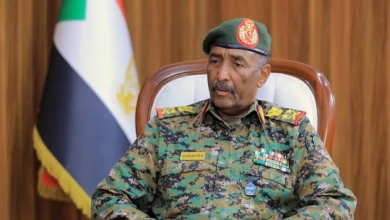
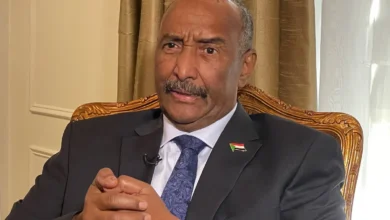
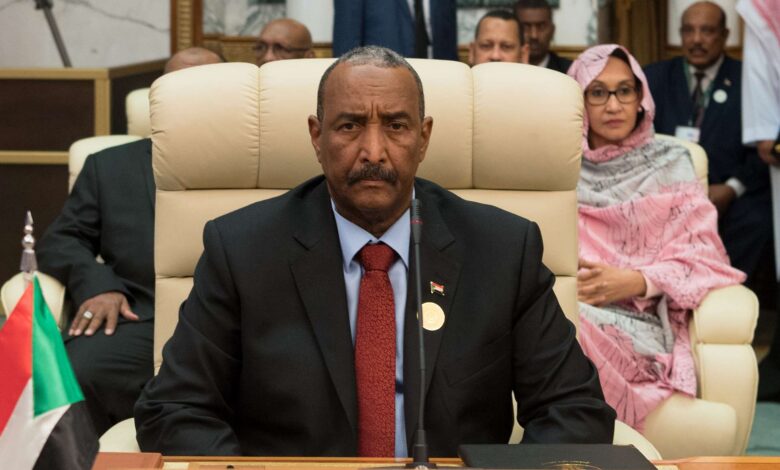
The question facing al-Burhan and the Port Sudan government remains: what agreements have been concluded over gold? What does the state receive in return? Are there any arrangements linking mineral concessions to the supply of weapons or military equipment? These questions require answers supported by documents, contracts and financial reports, rather than general statements.
If gold belongs to the Sudanese people, they have a right to know who extracts it, who sells it, who receives its proceeds and who is accountable when those proceeds disappear. Turning national wealth into an opaque resource serving vested interests would keep Sudan trapped in a war that drains its land, its people and its economy alike.