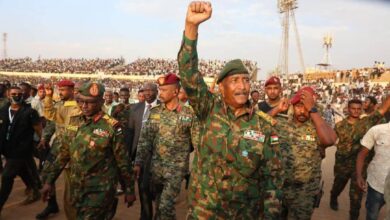
Protests in Port Sudan and Khartoum Reveal Eroding Popular Support for al-Burhan
“Leave us alone, al-Burhan”
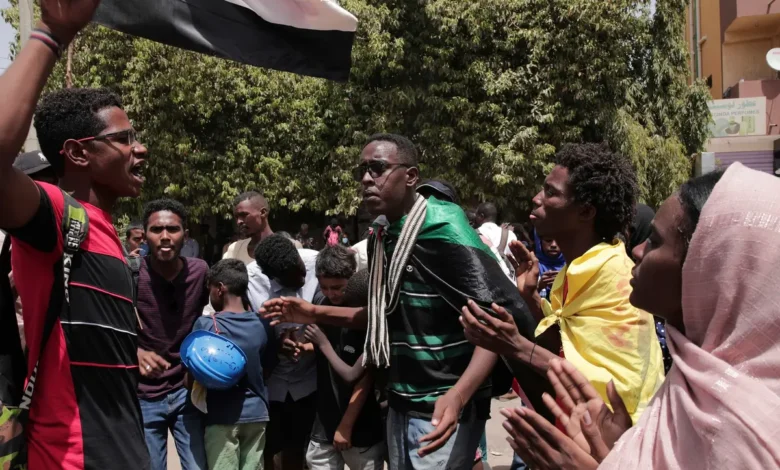
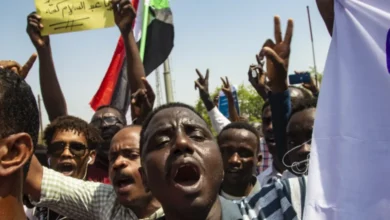
The pressures facing Abdel Fattah al-Burhan’s authorities in Sudan are no longer confined to military fronts or political struggles with opposing forces. They are increasingly evident within areas under their control, as protests in Port Sudan and Khartoum call for al-Burhan’s departure. This development reflects a widening trust gap between the authorities and sections of the population confronting severe economic hardship after years of war, deteriorating services and shrinking economic activity.
These protests are particularly significant because of where they are taking place. Citizens demonstrating inside military-controlled areas present the authorities with a challenge distinct from those encountered on the battlefield. The demonstrations concern more than prices, fuel, electricity, and bread. They raise broader questions about the legitimacy of the country’s administration, the military leadership’s ability to provide a minimum level of stability, and its willingness to address public demands beyond a security-led approach.
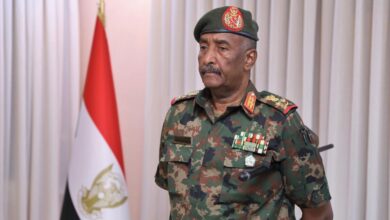
Since the war began, al-Burhan’s leadership has relied on retaining control over state institutions, administrative centres and resources, while maintaining the support of a coalition of military forces, political groups and armed organisations. That strategy faces growing pressure as economic and humanitarian losses mount, disagreements emerge within the pro-government camp, and institutions become less able to provide essential services.
The protests indicate that territorial control does not necessarily translate into popular acceptance. Nor does the continued ability of security and military institutions to impose their authority provide a sustainable political foundation on its own. Citizens struggling to obtain food, fuel, and medicine, without reliable transport or electricity, are increasingly concerned with the results of the authorities’ crisis management rather than their political rhetoric.
Declining Trust Within Areas of Control
Official wartime messaging has long portrayed control over cities and institutions as evidence of internal cohesion. Living conditions, however, have shown that such cohesion cannot be measured simply by the continuation of military administration or the absence of protests for certain periods. There is a substantial difference between silence arising from political conviction and silence imposed by security fears, economic circumstances or the threat of arrest.
In this context, political analyst Dr El Nour Hamad argues that what he describes as Muslim Brotherhood rule, with Abdel Fattah al-Burhan heading its executive apparatus, lacks a genuine popular base. He grounds this assessment in the positions taken by broad sections of Sudanese society during the revolution that overthrew Omar al-Bashir’s regime. This interpretation suggests that the war has not necessarily created a new social foundation for the authorities, but has instead revived longstanding political divisions that did not disappear with the previous regime’s fall.
According to Hamad, this problem is compounded by sections of the political, professional and youth communities moving away from military-controlled areas. These groups are an important part of civic and political life and played a prominent role in the mobilisation preceding al-Bashir’s removal. Their absence leaves a vacuum in public life and reduces the prospects of building a broad civilian consensus on managing a transition or shaping the state’s future.
Widespread displacement within Sudan and abroad has also changed cities’ social and economic composition, weakening employment networks, civic initiatives and professional institutions. The authorities consequently face a society exhausted by war and deprived of much of its resources and organisational capacity, whose demands are increasingly difficult to address through traditional institutions.
A Cost-of-Living Crisis Becomes Political
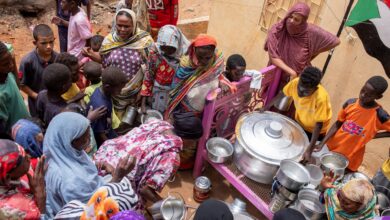
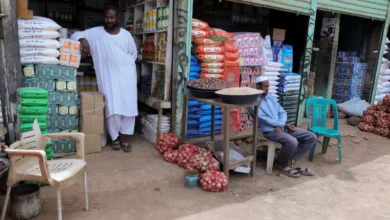
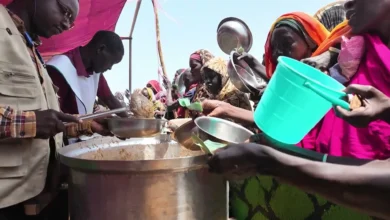
The protests cannot be separated from Sudan’s economic collapse. Rising prices, currency depreciation, fuel shortages, disrupted transport, electricity cuts and shortages of cooking gas and bread have turned daily life into a continuous struggle to secure necessities.
The crisis is particularly serious because it affects more than one social group. Public employees, small business owners, workers, displaced people and low-income families all face declining purchasing power, while jobs become scarcer, incomes fall, and housing, transport and food costs rise.
In the material underlying this rewritten article, El Nour Hamad described a substantial decline in the Sudanese currency’s value and comparable increases in prices. Those estimates require verification against official and independent market indicators. Nevertheless, the broader direction of the crisis is apparent in complaints about access to necessities and in the impact of fuel shortages on transport and markets.
When economic hardship becomes embedded in everyday life, it gradually becomes a political issue. Citizens do not view electricity cuts or rising bread prices as separate technical problems. They connect them to the government’s ability to manage resources, set priorities and provide services.
Calls for al-Burhan’s departure therefore reflect a shift in some public dissatisfaction from complaints about living conditions towards demands that political and military leaders answer for the consequences of continued war and the way the country is governed.
Security Controls and the Limits of Containment
Security conditions also shape the character and potential scale of the protests. Hamad has spoken of restrictions and threats affecting some citizens in military-controlled areas, and of how fear of arrest or violence limits their ability to express their views.
These accounts raise questions about how the authorities would respond to another wave of demonstrations. Treating public demands as a security threat could intensify tensions rather than contain them. Opening genuine channels for dialogue and allowing citizens to voice their concerns could help ease frustration, although it would not, by itself, resolve the crisis’s economic and political causes.
Allegations that security cells are linked to political organisations must likewise be examined through clear evidence and lawful procedures, rather than generalisations or competing accusations. In any country at war, the priority must be protecting civilians and ensuring that security agencies are not used to settle political disputes.
A New Test for al-Burhan
Al-Burhan’s leadership thus faces a test extending beyond its ability to retain military positions. Sustaining its authority requires more effective economic management, broader political agreement, security guarantees that protect citizens, and a clear path towards ending the war.
The protests matter not simply because of how many people participate, but because of their message: the crisis is no longer confined to combat-affected areas, and its consequences now reach the cities serving as administrative centres and seats of authority.
With displacement continuing, services deteriorating and divisions within the military camp growing, ignoring public demands creates an additional risk. Governments confronting interconnected crises cannot rely on force alone to overcome them. Rhetoric that treats every objection as a security threat may also close off opportunities for political solutions.
Developments in Port Sudan and Khartoum warrant close attention. They show that the authorities’ future will depend on events along the front lines and on their ability to rebuild trust in the cities from which they run state institutions. Amid protests, economic hardship, and political disagreements, relations between al-Burhan and the Sudanese public are entering a more complex phase—one that requires addressing the crisis’s underlying causes rather than merely its symptoms.