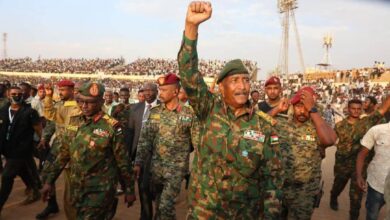
Sudan’s Hunger Uprising: How Has the Cost-of-Living Crisis Put Direct Pressure on al-Burhan’s Rule?
“Leave us alone, al-Burhan”
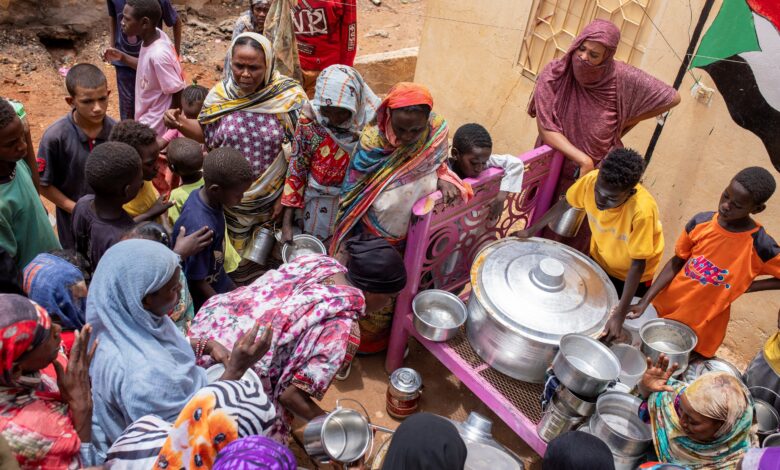
Sudan’s economic crisis is no longer simply a consequence of the ongoing war. It has become one of the main forces reshaping relations between citizens and the military authorities led by Abdel Fattah al-Burhan. After years of fighting, Sudanese people face steadily deteriorating living conditions: rising food prices, currency depreciation, fuel shortages, electricity cuts, and disrupted transport. These conditions have pushed public demands beyond the provision of services towards calls for a change in the leadership governing the country.
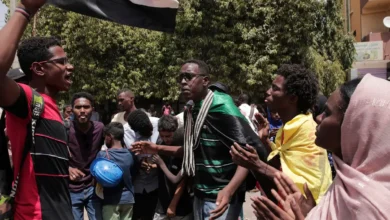
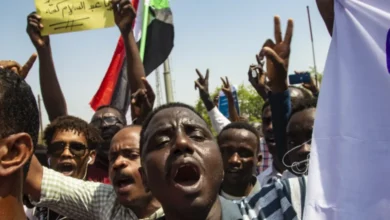
Protests in Port Sudan and Khartoum reveal an important shift in the crisis. Demonstrations are no longer linked solely to political positions on the war or disagreements between civilian and military forces. They are directly connected to families’ ability to meet their daily needs. When people can no longer afford bread, obtain cooking gas or pay for transport, the economic crisis becomes a question about the authorities’ future and their ability to continue running the state.
The Port Sudan government faces a growing challenge in reconciling the demands of war with the population’s basic needs. Resources that should support public services, restore institutions and secure food and medicine face competing pressures as revenue declines, economic activity contracts, and supply routes and trade are disrupted.
War Drains the Economy and Society
Since fighting began, Sudan’s economy has suffered successive blows, including the destruction of facilities, the disruption of factories and markets, declining agricultural and industrial production, the closure of institutions and companies, and widespread displacement.
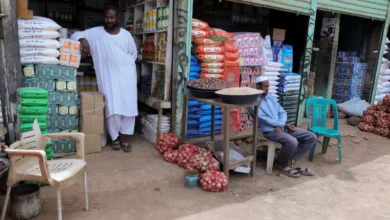
These developments create a deeply complex economic cycle. Disrupted production reduces the supply of goods, transport problems raise the cost of bringing them to market, and currency depreciation makes essential imports more expensive. Meanwhile, falling incomes weaken people’s ability to buy what they need.
The effects extend beyond consumers to traders, small business owners, farmers and workers. Traders unable to secure goods face mounting losses. Factories without electricity and fuel must reduce or halt production. Workers who lose their jobs become more dependent on their families in the absence of adequate social protection.
Widespread displacement compounds the problem. Millions of people leaving their home areas place pressure on receiving cities, increasing demand for housing, water, food and healthcare at a time when public institutions lack the resources to respond.
Political analyst El Nour Hamad has noted that the war displaced millions of Sudanese people within the country and abroad, while sections of the political, professional and youth communities moved away from military-controlled areas. The crisis has therefore affected more than economic indicators: it has also weakened the social fabric on which cities depend to recover.
Fuel: A Crisis Beyond Filling Stations
Fuel is essential to understanding the collapse in living standards because of its direct connection to transport, production, goods distribution and the operation of public facilities. Any shortage quickly affects transport fares, food prices and service costs, making life more expensive even for households that have retained their income.
Writer and political analyst Ammar Saeed described a decline in fuel deliveries to areas controlled by the Port Sudan authorities during the period covered by his analysis. He argued that this placed pressure on the military apparatus and domestic transport. He also referred to local decisions restricting fuel supplies to transport vehicles in River Nile State.
These details need to be checked against supply data, official decisions and their dates. Nevertheless, they highlight an important aspect of the crisis: fuel has become a resource tied to security and military priorities as well as citizens’ ability to travel and work.
When supplies fall, or distribution restrictions are imposed, bus and taxi drivers and truck operators suffer before additional costs are passed on to consumers. The movement of crops and agricultural products is also affected, increasing the risk of spoilage and market shortages.
The crisis becomes more acute when these problems coincide with unreliable electricity and rising generator operating costs, creating additional difficulties for hospitals, bakeries and shops.
Hunger Reshapes Attitudes Towards the War
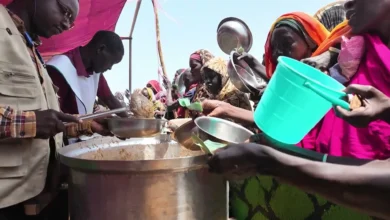
Food shortages extend beyond purchasing power and can become a direct threat to food security and social stability. Families spending most of their income on food cannot withstand continuous price increases. Displaced people who have lost their jobs and possessions become more dependent on humanitarian assistance.
Under these conditions, society’s ability to endure continued war diminishes, particularly when citizens see no clear signs that the fighting will end soon or that their circumstances will improve.
Hamad has argued that continued fighting has worsened shortages of fuel, bread and cooking gas, leaving some areas in conditions he described as approaching famine. These assessments should be considered alongside humanitarian reporting and food insecurity indicators, but they reflect the scale of concern about deteriorating living conditions.
It is important to distinguish protests driven by hunger from organised political positions. People may take to the streets because they can no longer afford daily life, even without belonging to any political movement. Reducing the protests to a struggle between competing political forces does not necessarily explain participants’ motivations.
Demands concerning bread, fuel and electricity can unite more diverse social groups than partisan slogans because they address shared daily needs.
From Economic Anger to Calls for the Leadership’s Departure
When a crisis persists without tangible solutions, citizens increasingly look beyond executive agencies and ministries to hold accountable the leaders making major decisions on war, resources and public policy.
This gives the protests in Port Sudan and Khartoum their political significance. Calls for al-Burhan’s departure suggest that some frustration over living conditions is becoming a direct demand for accountability over state management and the purpose of continuing the war amid economic deterioration.
This does not necessarily mean that all demonstrators share one political position or a common vision for the next phase. However, the convergence of economic and political demands in the streets signals broader dissatisfaction and requires the authorities to provide practical answers about services, the economy and the war’s future.
The authorities face a clear dilemma: increased military spending does not automatically reverse declining production or resolve shortages, while security measures neither provide food nor restore transport. Addressing the economic crisis requires political and security stability, reopened trade routes, functioning institutions, and conditions that allow economic activity to resume.
Can the Port Sudan Government Contain the Crisis?
The response will depend on the policies the authorities adopt. Effective action begins with transparent resource management, clear spending priorities, humanitarian assistance reaching those entitled to it without discrimination, and fuel and essential goods being distributed under publicly stated rules.
The country also needs urgent measures to protect those most affected, particularly displaced people, families that have lost their income, and workers whose employers have ceased operating.
These measures will nevertheless have limited impact if fighting continues, displacement spreads, and supply routes remain disrupted. Ending the war is therefore central to economic recovery, alongside political arrangements that prevent the conflict’s underlying causes from re-emerging.
Sudan’s cost-of-living crisis has become a major source of pressure on al-Burhan’s authorities. People facing food shortages and rising prices cannot wait indefinitely for military or political promises to materialise. As anger moves from markets and homes into the streets, the authorities’ ability to manage the economy and public services has become directly tied to the future of their relationship with society.