Iran lifts missile range limit in preparation for a broader response
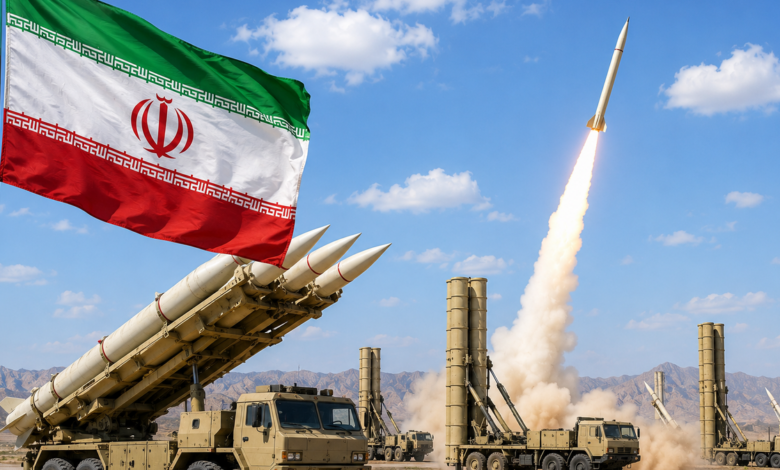
Abandoning the 2,000-kilometre ceiling theoretically opens the way to targeting more distant sites, including Western military facilities in areas previously considered beyond the direct reach of Iranian missiles.
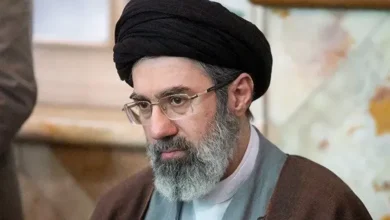
The announcement by Iran’s Islamic Revolutionary Guard Corps that it is lifting restrictions limiting its ballistic missiles to a range of approximately 2,000 kilometres sends a threatening signal at a particularly sensitive moment, as diplomatic efforts to contain escalation falter. The move follows directives from the Islamic Republic’s Supreme Leader, Mojtaba Khamenei, who recently pledged a response without geographical limits to any attack targeting Tehran.
The decision appears to represent more than a technical adjustment to Iran’s missile doctrine. It reflects an effort to redefine the boundaries of military power and deterrence, signalling that Tehran no longer intends to keep its capabilities constrained by limits it previously imposed on itself, particularly amid the changes brought about by military confrontation and mounting pressure on the Iranian regime.
The move follows Khamenei’s warning that any American or Israeli threat, regardless of its scale, would be met with a response unconstrained by geography. Lifting the range ceiling therefore appears to give practical expression to a political and military message: if attacked again, Tehran intends to retain the option of extending a confrontation beyond its immediate region.
One purpose of this signal is to alter its adversaries’ calculations. The previous 2,000-kilometre range already allowed Iranian missiles to reach Israel, large parts of the region, and parts of Greece and the Balkans. Abandoning that ceiling theoretically opens the way to targeting more distant sites, including Western military facilities in areas previously considered beyond the direct reach of Iranian missiles.
This introduces more complex security calculations for bases and facilities used by US forces, particularly if Iran develops missiles capable of exceeding its previously declared range.
The message is directed not only at Washington and Tel Aviv but also at European capitals. Any expansion of Iran’s missile capabilities could affect them both in terms of territorial security and through the role their military facilities play in supporting US operations.
The announcement does not, however, necessarily mean that Iran already possesses operational long-range missiles. Revolutionary Guard spokesperson Brigadier General Hossein Mohebbi neither specified a new range nor confirmed the existence of an arsenal ready to exceed the 2,000-kilometre threshold. He said only that Iran would demonstrate its capabilities in practice. A gap therefore remains between the political decision and actual military capability, which requires successful testing, accurate guidance systems and warheads capable of reaching their targets.
This brings renewed attention to the debate over Iranian attempts last March to strike the joint US-UK base on Diego Garcia in the Indian Ocean, using missiles reportedly capable of travelling nearly 4,000 kilometres, although the attempt failed to hit the target.
It also raises concerns about the possible use of technology from Iran’s space programme to develop long-range ballistic missiles. Turning space-launch capabilities into operational military systems, however, entails additional technical requirements.
Militarily, the decision also reflects an attempt to compensate for vulnerabilities exposed during earlier confrontations. Iranian air-defence systems sustained strikes that weakened their ability to protect the country’s airspace. Ballistic missiles remain one of Iran’s principal instruments of power, serving both as a means of striking distant targets and as strategic leverage that allows Tehran to raise the cost of another confrontation for its adversaries.
The announcement comes amid growing signs that the current lull remains fragile, with continuing US pressure on Iran and military movements around the Strait of Hormuz, alongside Qatari mediation efforts to prevent renewed war. Iran’s message is therefore twofold: to demonstrate readiness for a broader military confrontation and to strengthen its negotiating position by threatening to expand the geographical scope of potential attacks.
The decision also presents regional states with a more sensitive security equation. Any actual increase in Iranian missile range could affect the security of the Gulf, maritime routes and energy supplies, while increasing pressure on countries seeking to keep their territory outside the conflict.
Ultimately, the significance of the decision lies less in removing the 2,000-kilometre ceiling itself than in Tehran’s abandonment of a voluntary restriction. It signals that Iran no longer considers itself bound by the previous rules of deterrence.