From weapons to oil smuggling: government investigation deepens tensions between Baghdad and Kataib Hezbollah
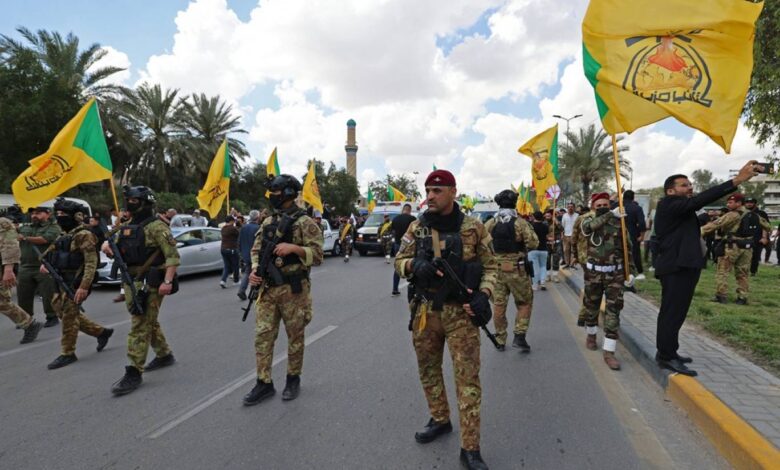
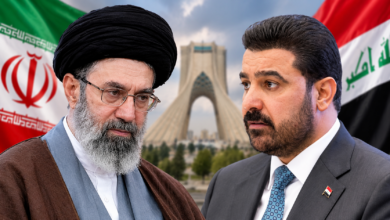
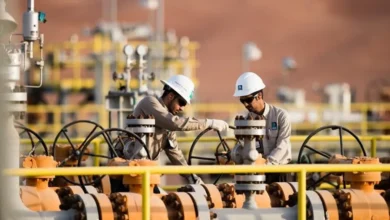
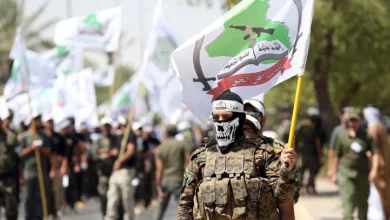
Informed Iraqi sources say the dispute between the government and Kataib Hezbollah has entered a more complex phase. It has moved beyond the surrender of weapons into a struggle for security, economic and political influence, following the reopening of an oil-smuggling case in Jurf al-Sakhar, an area controlled by the faction, and the prime minister’s order to establish an investigative committee.
The government’s efforts to investigate oil smuggling and cut off the factions’ economic funding streams were opening a new front. The dispute over exclusive state control of weapons is becoming a broader contest for influence, while Kataib Hezbollah and Al-Nujaba continue to refuse to surrender their arsenals.
According to the sources, the government has warned the militias that participation in any US-Iranian confrontation would result in their leaders’ arrest. The Coordination Framework, meanwhile, has cautioned that such arrests could bring down the government.
The sources said negotiations between the factions and the government had reached an impasse. They stressed, however, that not all groups opposed handing over their weapons. Abu Alaa al-Walai, leader of Kataib Sayyid al-Shuhada, had reportedly agreed to do so in exchange for the Tourism Ministry portfolio in al-Zaidi’s government.
Kataib Hezbollah and Al-Nujaba remain opposed, regarding themselves as “ideological” factions bound to Iran’s supreme leader under the principle of velayat-e faqih, or guardianship of the Islamic jurist. According to the sources, al-Zaidi met the Coordination Framework two days earlier and discussed US pressure and the possibility of war between Washington and Tehran. He reportedly warned that American forces would target the factions if they intervened to defend Iran.
The sources said the prime minister, determined to prevent Iraq from becoming a battlefield, personally warned his interlocutors that participation in such a war would lead to arrests. Some members of the Coordination Framework reportedly responded that arresting faction leaders would bring down the government, further heightening tensions.
They also pointed to leaked documents. Kataib Hezbollah had questioned the origins of the prime minister’s substantial wealth. A day after those accusations, documents concerning the theft of Iraqi oil from Jurf al-Sakhar, which the militia has controlled since 2014, were leaked.
The sources saw no immediate resolution while the government remained determined to establish exclusive state control over weapons and meet its deadline of 30 June 2027. They said the factions, particularly Kataib Hezbollah and Al-Nujaba, had begun evading the agreement.
They also argued that government threats to bomb the factions’ headquarters made little sense, given that Iraq’s army, security services and intelligence agencies could, in their assessment, arrest all their leaders. For now, they said, the escalation remains confined to the media.
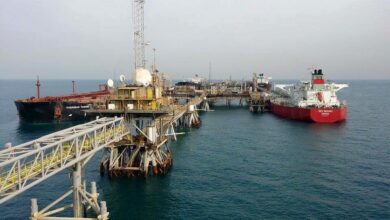
Among the latest steps fuelling tensions, the sources cited the prime minister’s order to establish a committee investigating oil smuggling from Jurf al-Sakhar.
Political analyst Ali al-Habib likewise argued that relations between the government and Kataib Hezbollah had moved beyond a disagreement into a major conflict. The issue was no longer merely surrendering weapons, but control over security, economic and political influence within Iraq.
He said that the government was seeking to cut off the factions’ funding and weaken their economic influence by tightening oversight of border crossings, contracts and companies, and pursuing illicit financial activity. This makes the confrontation particularly sensitive because it directly affects the foundations of the groups’ financial and economic power.
Al-Habib said Kataib Hezbollah was threatening the government and holding it responsible for attacks on the faction’s positions in an effort to deter al-Zaidi from taking firm measures against it. He argued that a confrontation was taking shape, but an armed clash was not inevitable because the government did not want one unless forced into it.
He noted that Iran had an interest in containing the crisis through political pressure and mediation. The Coordination Framework also feared any clash that could destabilise Iraq’s governmental and political balance.
In his assessment, the real danger lay in outright refusal to obey state orders, arrests or action against financing networks that could escalate into armed clashes. US strikes on faction headquarters could also prompt retaliation.
Al-Habib concluded that al-Zaidi faced a genuine test: asserting state authority and gradually dismantling the factions’ financial influence networks without triggering an internal confrontation whose costs would be extremely high.
Najm Kassab, head of the Al-Mawrid Centre for Studies and Media, said the government remained committed to its deadline of the end of June 2027. He considered a confrontation with the factions unlikely.
Kassab argued that, if genuine negotiations were taking place between Tehran and Washington, a further escalation would be unlikely. Given Kataib Hezbollah’s and Al-Nujaba’s ties to Iran’s Revolutionary Guard, he said, both would comply with Tehran’s decisions.
Kassab added that Kataib Hezbollah was in a difficult position before the public, the state and the judiciary. He argued that it could not choose social and political isolation or challenge a state whose armed forces and security services, he said, comprised more than 1.45 million fighters and military and security officials.