US institute reveals new secret underground facility in Iran
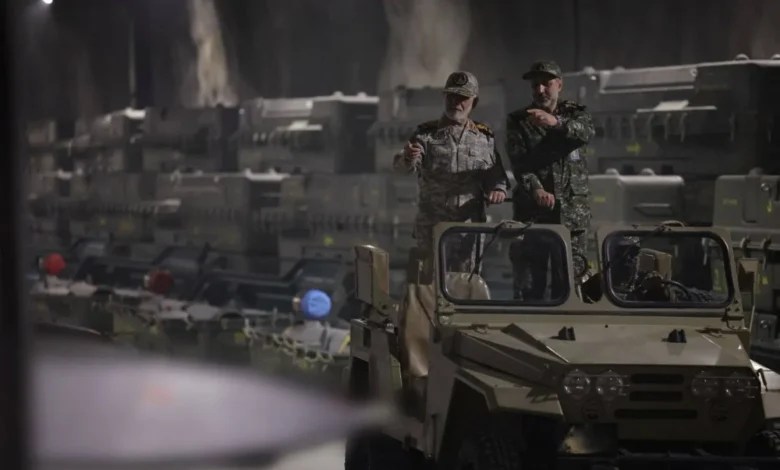
The Institute for Science and International Security says the fortified facility is located between two strategic sites associated with Iran’s nuclear program, suggesting that it could be intended for nuclear-related activities.
The Washington-based Institute for Science and International Security (ISIS) revealed on Wednesday that construction work on a fortified underground complex in central Iran, between the Natanz and Isfahan nuclear facilities, had accelerated. The discovery has fueled speculation about its potential links to the development of Iran’s missile capabilities or its possible use for military and nuclear activities.
The institute based its assessment on satellite imagery provided by Vantor, which showed significant progress in the construction of the facility in a mountainous area, alongside the establishment of an extensive security perimeter.
The first indications of the project emerged during the first week of December 2025, when site preparation began. Excavation and construction activities subsequently expanded over the following months. The latest images, captured on November 24, showed the completion of significant infrastructure components, alongside progress in the construction of administrative buildings and the establishment of a security perimeter.
Researchers were unable to determine the complex’s ultimate purpose. However, the security measures surrounding it and the accelerating pace of construction have raised the possibility that it could serve military purposes, including the storage of strategic equipment. The institute also left open the possibility of a connection to Iran’s nuclear program, acknowledging that no conclusive evidence had established such a link.
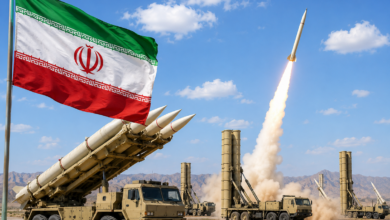
These developments come as Tehran seeks to rebuild military and nuclear facilities targeted during confrontations with the United States and Israel. Iranian authorities are placing increasing emphasis on protecting their strategic infrastructure. These efforts have included facilities associated with missile capabilities and military aviation.
The developments have raised concerns about Iran’s continued pursuit of strategic capabilities despite international pressure, particularly amid ongoing difficulties in inspecting and monitoring its nuclear facilities.
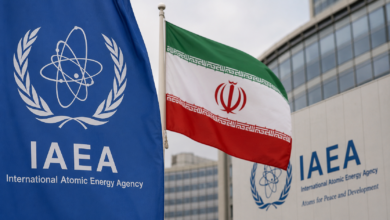
The International Atomic Energy Agency (IAEA) has lost the ability to verify declared inventories of nuclear material at sites affected by the strikes. It has also been unable to reestablish continuity of knowledge concerning quantities of highly enriched uranium and centrifuges. In its reports, the agency identified failures by Iran to fulfill its safeguards obligations and cooperate with inspectors.
Alongside the uncertainty surrounding Iran’s nuclear activities, conservative political voices within the country have increasingly called for abandoning the policy of restricting the nuclear program to civilian purposes and moving toward the acquisition of nuclear weapons.
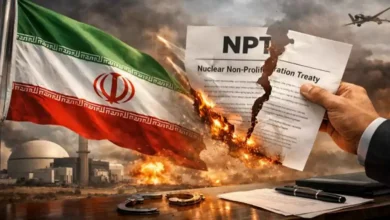
Reports published last March quoted Iranian officials as saying that calls for developing a nuclear bomb had become more explicit. Conservative figures, as well as former and serving officials, have proposed reconsidering Iran’s membership in the Treaty on the Non-Proliferation of Nuclear Weapons (NPT), arguing that a nuclear deterrent could provide a security guarantee against external threats.
These positions reflect widening divisions within Iran’s ruling establishment over the merits of maintaining existing nuclear restrictions, particularly following strikes on the country’s military and scientific facilities.
Nevertheless, no official decision has been announced to revise Iran’s nuclear doctrine or begin manufacturing a nuclear bomb. Calls to withdraw from the treaty also do not establish that Tehran has taken concrete steps in that direction.
Fortified underground facilities give Iran additional means of preserving its strategic infrastructure. Their existence alone, however, does not establish that the country is pursuing a nuclear weapons manufacturing program.
Determining the purpose of the new complex and identifying the activities it may accommodate will ultimately depend on the ability of the IAEA and other monitoring bodies to access Iranian facilities and verify their actual use.