Gaddafi’s Former Aide Takes Ennahdha to Court as $150 Million Claim Reopens Tunisia’s Opaque Extradition Case
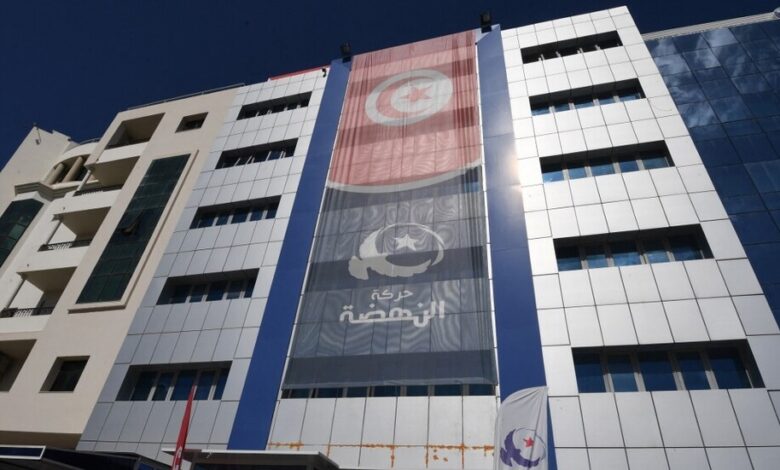
Fourteen years after his handover to the Libyan authorities, the case of former Libyan prime minister Baghdadi al-Mahmoudi has returned to Tunisia’s courts, accompanied by serious political and financial allegations. The development reopens one of the most controversial files from the period of the Troika government, comprising Ennahdha, the Congress for the Republic and Ettakatol.
As the lawsuit seeks up to $150 million in damages, allegations of a financial payment in exchange for his handover have resurfaced, alongside demands to establish what happened and determine political and legal responsibility.
Handover to the Libyan Authorities
At a recent hearing to reconsider the case, the Tunis Court of First Instance postponed proceedings against Ennahdha’s legal representative, party leader Rached Ghannouchi, until December 4.
The lawsuit was filed by al-Mahmoudi through a Tunisian lawyer. It seeks compensation for the material and non-material harm he says he suffered as a result of the decision to extradite him to Libya in June 2012.
According to Tunisian media reports, the filing names Ennahdha leaders, including Ghannouchi and the party’s secretary-general, and seeks $150 million in compensation. Other reports also identify senior figures such as Hamadi Jebali, Noureddine Bhiri and Sayyed Ferjani among those concerned by the case.
The case’s significance extends beyond the financial claim to the controversy surrounding the extradition from the outset. The decision was implemented under Hamadi Jebali’s Ennahdha-led government, while then-Tunisian president Moncef Marzouki opposed the move, arguing that it had been carried out unilaterally and without consulting him.
Jebali, meanwhile, defended his government’s decision before the National Constituent Assembly. He said the extradition was based on rulings issued by the Tunis Court of Appeal in November 2011 and assurances from the Libyan authorities concerning al-Mahmoudi’s protection and a fair trial.
The Tunis-Carthage Suitcase
The case did not begin with Jebali’s government. In November 2011, Béji Caïd Essebsi’s government had already agreed in principle to extradite the former Libyan official, according to statements by former Tunisian officials, including former defence minister Abdelkrim Zbidi. This raises renewed questions about how responsibility should be apportioned between the two governments that successively handled the case.
Among the most controversial aspects are allegations that money was paid in exchange for the extradition. Tunisian politicians and lawyers have previously raised these claims, but that does not mean they have been established in court.
In January 2022, former minister and Al-Raya Al-Wataniya party leader Mabrouk Korchid accused Ennahdha of receiving money from the Libyan side in return for handing over al-Mahmoudi. He put the amount at approximately $64.5 million, equivalent to 200 million Tunisian dinars, and claimed it had arrived in a suitcase at Tunis-Carthage International Airport.
Speaking to the media, Korchid said he was prepared to testify before the courts. He described the handover as a “stain” on Tunisia’s political experience and said he had filed a criminal complaint in 2012 against several officials, including Moncef Marzouki, Hamadi Jebali, Noureddine Bhiri and Sayyed Ferjani.
In media remarks in December 2024, lawyer Mohamed Baccar, who represented the Supreme Council of Libyan Tribes, also discussed a legal claim seeking the recovery of what he described as “ransom money”. He estimated the sum at approximately $64.5 million, or 200 million Tunisian dinars, alleging that it had been paid to Ennahdha leaders in 2012 in exchange for handing al-Mahmoudi over to Abdelhakim Belhaj and members of “Libya Dawn”.
Baccar called for several party leaders, including Noureddine Bhiri and Hamadi Jebali, to be questioned about the circumstances and arrangements surrounding the operation.
Libyan Assurances
Tunisian authorities arrested al-Mahmoudi in September 2011 after he entered Tunisia following the fall of Muammar Gaddafi’s government. He was subsequently extradited to Libya on June 24, 2012.
The Tunisian prime minister’s office said at the time that the extradition rested on two judicial rulings issued in November 2011 and Libyan assurances that al-Mahmoudi would be protected from torture and other abuses and would receive a fair trial.
The proceedings in Libya nevertheless took a serious turn: he was sentenced to death in July 2018 before being released in July 2019 on health grounds.