The Muslim Brotherhood Mufti Fuels Libya’s Migrant Controversy Amid Fears of Renewed Chaos
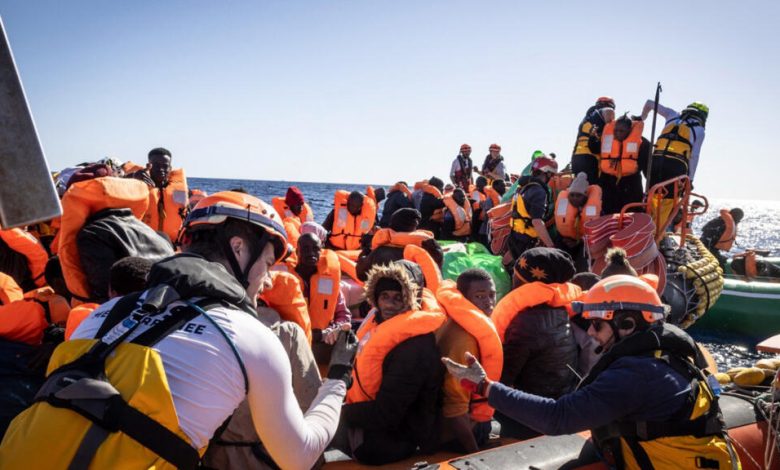
Libya’s migration crisis appears to be entering a more dangerous phase as political and religious actors increasingly become involved in the ongoing debate.
This comes amid warnings that growing public frustration could evolve into an open confrontation threatening social stability and providing extremist groups with a new opportunity to revive instability and disorder.
-
Dbeibeh Seeks to Bolster Domestic Support with a Firm Stance against Migrant Resettlement
-
Militia Arms Chaos Reignites Violence Spiral in Tripoli
For several weeks, Libya has witnessed escalating controversy surrounding irregular migration, accompanied by public protests opposing what demonstrators perceive as attempts to permanently settle migrants within the country. These allegations have been categorically denied by both Libyan authorities and the United Nations.
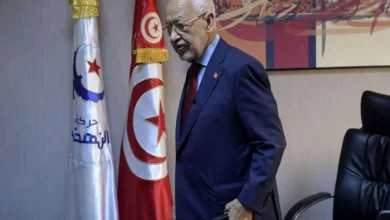
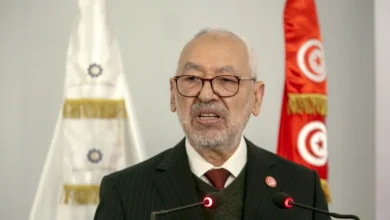
Against this backdrop, statements made by Sadiq Al-Ghariani, often referred to as the “Muslim Brotherhood Mufti,” sparked widespread controversy after he called for the expulsion of the United Nations High Commissioner for Refugees from Libya. He argued that the agency’s presence was “illegal” and that it was responsible for keeping irregular migrants in the country and facilitating their settlement, allegations that the agency has officially denied.
Al-Ghariani’s remarks drew strong criticism from observers and experts, who viewed them as an attempt to inflame public sentiment against migrants and to politicize an issue whose dimensions extend beyond security and humanitarian concerns.
-
Clashes, Divisions, and Delayed Solutions… Libya on the Brink of Explosion
-
Libya Thwarts a Major Terrorist Plot near the Tunisian Border
Between Concern and Incitement
Observers of Libyan affairs generally agree that the growing number of irregular migrants represents a genuine challenge for the Libyan state, particularly given the vulnerability of the country’s southern borders and the expansion of human smuggling and trafficking networks.
At the same time, they warn that addressing the crisis through inflammatory rhetoric or popular mobilization could push the country toward a new wave of violence, especially while security institutions continue to suffer from divisions and limited territorial control.
Caught between legitimate concerns regarding irregular migration and attempts to exploit the issue politically, Libya faces a new test of its ability to manage one of its most complex and sensitive challenges through legal and security-based approaches that preserve stability and prevent a return to another cycle of chaos.
-
Al-Ghariani: Serving the Muslim Brotherhood in Exchange for Moral Support in Libya
-
Tension rises in Western Libya after assassination of one of the biggest human traffickers
Warnings Against a Slide into Violence
Libyan writer and researcher Mustafa Fetouri described Al-Ghariani’s statements as “incendiary” and as an encroachment on the role and sovereignty of the Libyan state, stressing that multiple actors are seeking to exploit the crisis for different purposes.
He stated that “the mobilization of ordinary citizens who moved to attack the UNHCR offices was fueled, directly or indirectly, by statements made by Al-Ghariani and others.”
He warned that the continuation of such rhetoric could lead to serious consequences on the ground.
-
Libya between the UN track and the American initiative: international divergence over the future
-
U.S. warnings bring the Islamic State file in Libya back to the forefront amid fears of a silent return
He added: “Such statements could contribute to turning the situation into a bloodbath if crowds are incited against migrants. This could also encourage other Libyan terrorist militias to exploit migrants’ fears, arm them, and recruit them for self-defense, thereby keeping Libya trapped in a cycle of bloody chaos, especially since weapons remain widely available and effective control mechanisms are lacking.”
Fetouri stressed that the current reality cannot withstand further escalation, saying: “The situation on the ground is already extremely bad. It is therefore unreasonable to address this crisis through provocative statements, threats, or actions that endanger people’s lives. The issue should instead be managed through the application of Libyan law.”
The researcher also linked the escalation to attempts to undermine political efforts aimed at resolving Libya’s crisis.
-
Gunfire in Tripoli and Zawiya: militia chaos deepens the Libyan crisis
-
Electoral Abstention in Libya: Three Factors Fueling Popular Boycott
He explained that “there may be efforts by Muslim Brotherhood-affiliated actors to disrupt any path toward resolving the Libyan crisis,” arguing that such behavior would only create further confusion and instability.
He emphasized that political and institutional fragmentation remains one of the primary reasons why the migration issue has not been addressed effectively, adding that no one denies the seriousness of the growing number of migrants and that the Libyan state is obliged to find a solution, beginning with updating legislation governing the issue.
-
Violent clashes in Libya’s Zawiya: militia rivalries reignite in the west
-
Death of the Chief of Staff of Western Libya’s army in a plane crash returning from Ankara
Political Exploitation of the Crisis
For his part, Libyan writer and researcher Idris Ahmid believes that Al-Ghariani’s statements are part of an effort to regain influence within Libya’s political landscape by capitalizing on an issue that attracts significant public attention.
Ahmid said that Al-Ghariani “represents a current that has little interest in reconciliation, de-escalation, or resolving the Libyan crisis.”
He added that the purpose of such statements is to reaffirm political relevance at a time when the migration issue has deeply engaged Libyan public opinion, serving political objectives linked to instability, which remains a favorable environment for the Muslim Brotherhood and extremist organizations.
Observers note that migration has become one of the most politically exploitable issues in Libya because of its close connection to security concerns, national identity, and economic pressures, making it capable of rapidly mobilizing public opinion.
-
Dbeibah promotes turning Libya into a regional gas hub despite security challenges
-
Haftar links Libyans’ living crisis to political paralysis
United Nations Denial
Meanwhile, the United Nations Support Mission in Libya swiftly rejected circulating claims that the United Nations has plans or programs aimed at settling migrants in Libya.
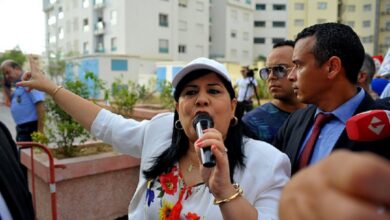
The denial followed protests in the capital, Tripoli, during which demonstrators stormed the UN mission’s headquarters in Janzour and shut down the offices of the UN refugee agency in the Sarraj district.
In a statement, the mission said it had monitored the demonstrations held outside its premises and those of the UNHCR, reaffirming its respect for the right of Libyans to express their views peacefully and to access accurate information.
-
Haftar Redraws the Parameters of the Libyan Solution on the Foundations of Sovereignty and National Consensus
-
Al-Ghariani and justice: Muslim leaders in Libya to prevent chaos and destabilization
At the same time, it expressed concern over the spread of what it described as “misinformation” and hate speech related to the activities of the United Nations in Libya.
The mission stressed that none of the UN agencies operating in Libya, including the UNHCR, is implementing any program aimed at settling migrants within Libyan territory.
It further stated that all allegations suggesting otherwise are “completely unfounded.”
-
Warnings of renewed conflict in Libya amid security fragility and sudden violence
-
Renewed Armed Chaos in Libya’s Zawiya: Oil Refinery Caught in the Crossfire