From the Sahel to the East: Five Major Terrorism Hotspots in Africa
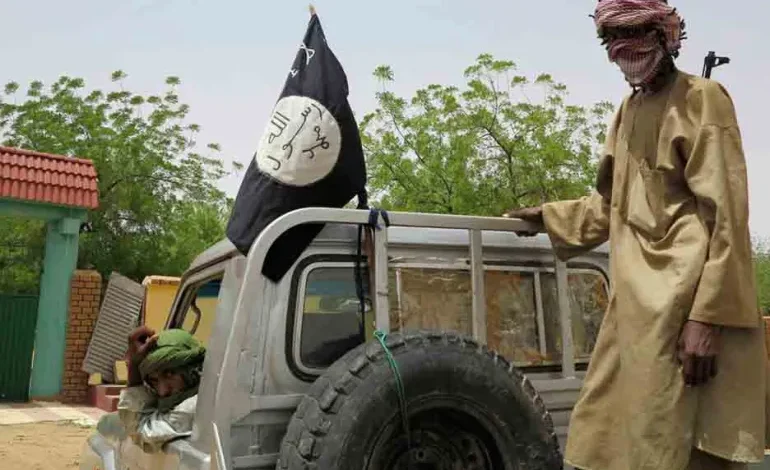
From the Sahel to East Africa, terrorism continues to expand across the African continent. Organizations linked to Al-Qaeda and Islamic State are spreading their influence, further worsening humanitarian crises throughout the region.
According to a report by the International Institute for Counter-Terrorism, Africa’s security situation and its local and regional consequences are at their most critical level ever, with terrorist organizations reaching an unprecedented peak in activity and influence.
-
Breach of Fortified Cities and Strategic Attacks: Terrorism Unsettles the African Sahel
-
What are the implications of rising terrorism in Africa on Europe? An expert answers
Alongside a vast network of Islamic State affiliates stretching from West Africa to Central and East Africa, other groups such as Al-Shabaab and the Group for the Support of Islam and Muslims operate under the banner of Al-Qaeda across national borders, threatening the stability of African governments.
At the same time, these organizations maintain links with violent armed networks, extremist and separatist groups, as well as trafficking networks involved in weapons, drugs, human beings, minerals, and other illicit activities.
Terrorist activity is concentrated in five major regions across Africa and is primarily driven by two central networks: Al-Qaeda and the Islamic State.
These groups mainly operate in ungoverned rural areas, refugee zones, border regions, shared international spaces lacking effective state presence—such as the Liptako-Gourma triangle—and territories that provide fertile ground for extremist expansion.
-
Increasing Terrorism Activity in Africa: What Are the Implications and Solutions?
-
The Free Circulation of Weapons and the Infiltration of Terrorist Elements Have Aggravated Terrorism in Africa
The Sahel
The Sahel and West Africa currently represent the global epicenter of terrorism. The region is characterized by extensive territorial control by armed groups and frequent cross-border attacks.
Organizations such as the Al-Qaeda-affiliated Group for the Support of Islam and Muslims and the Islamic State Sahel Province are particularly active in central and northern Mali, Burkina Faso, and western Niger.
The Group for the Support of Islam and Muslims has imposed economic blockades in parts of Mali and expanded its operations into coastal West African countries, including northern Benin, Ghana, Côte d’Ivoire, and Togo.
-
After 10 Years, the United States Struggles with the Spread of Terrorism in West Africa
-
“Land of Migration and Jihad”: ISIS turns Africa into a new front for international terrorism
The Lake Chad Basin
The Lake Chad Basin remains another long-standing center of terrorist activity.
The region witnesses clashes between the Islamic State West Africa Province and Boko Haram, as well as confrontations with Nigerian security forces in northeastern Nigeria.
These groups are also active in the Mandara Mountains of Cameroon and across the wider southern Lake Chad Basin, encompassing parts of Cameroon, Chad, and Niger.
-
Has Terrorism Penetrated Africa to Plunder Its Wealth?
-
Terrorism Toll in Nigeria: 13,000 Militants Killed in One Year
The Horn of Africa
The Horn of Africa, particularly Somalia, remains one of the continent’s principal terrorist hotspots.
The region is dominated by Al-Shabaab, considered the largest Al-Qaeda affiliate in the world. The group controls vast rural areas in southern and central Somalia and operates a parallel governing structure.
It regularly launches attacks against urban centers, including the capital Mogadishu, and conducts cross-border operations into neighboring Kenya and Ethiopia.
The Islamic State also maintains a smaller presence in the region.
-
12 killed: Details of the attack in an informal settlement in South Africa
-
Terrorism Worsens Hunger… Boko Haram and ISIS Turn Lake Chad into a Graveyard
Southeastern Africa
In Mozambique, the province of Cabo Delgado, a key energy-producing region, has been battling an ongoing terrorist insurgency since 2017.
The Islamic State affiliate in Mozambique is primarily active in Cabo Delgado, the country’s northernmost province, while recently expanding into the neighboring province of Niassa.
The Great Lakes Region
In Central Africa’s Great Lakes region, Islamic State-affiliated groups are increasingly strengthening their cooperation in densely populated and resource-rich territories.
-
Terrorism in the Sahel enters a phase of influence management through an increasingly exposed Mali
-
Terrorism spreads in Burkina Faso: isolated bases become a new target
The Islamic State Central Africa Province includes the Allied Democratic Forces, which operate in eastern Democratic Republic of the Congo and in border areas extending into Uganda.
According to the report, the overall situation across Africa remains deeply concerning, as widespread instability continues to exacerbate humanitarian suffering.
In several regions, repeated terrorist attacks have severely weakened healthcare systems, leading to the destruction or abandonment of dozens of medical facilities.
Humanitarian organizations, including Médecins Sans Frontières, continue to rely on mobile clinics in conflict zones to provide specialized healthcare, maternity services, and mental health support to displaced populations.
-
Russia in the African Sahel: logistical corridors and strategic gains
-
Terrorism escalates in Nigeria ahead of elections: a western hotspot and a struggle for influence