America Pushes for a Comprehensive Arms Embargo in Sudan
The United States is seeking a fundamental change in the way the international community addresses the war in Sudan by introducing a draft resolution before the UN Security Council aimed at expanding the arms embargo imposed on the Darfur region since 2005 to cover the entire territory of Sudan. This initiative reflects a growing conviction within the US administration that the continuation of the war is no longer determined solely by the willingness of the Sudanese Armed Forces and the Rapid Support Forces to keep fighting, but also by their ability to access weapons, financing, technology and fighters. According to the American perspective, this supply network extends beyond Sudan’s borders and represents one of the main factors enabling the war to continue and expand.
-
The Sudanese army charts a new political course that excludes armed movements from the governing equation
-
The Sudanese Army Draws a New Political Map: Armed Movements Excluded from the Next Phase
This vision was outlined in an article published on September 3 in Foreign Policy by Michael Waltz, the US ambassador to the United Nations, and Massad Boulos, senior adviser to President Donald Trump for Arab and African affairs. The two officials called for support for the American draft resolution seeking to expand the scope of the embargo. The significance of the proposal lies not only in its legal dimension, namely the geographical expansion of the restrictions, but also in the political message Washington is sending to both parties to the conflict and to countries connected to arms supply networks: the international community must move beyond merely calling for an end to the fighting and instead seek to cut off the resources that make the continuation of the war possible.
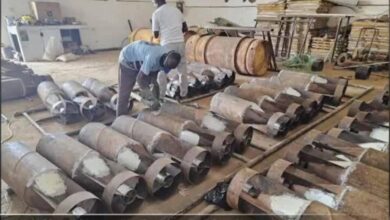
The American position is based on the profound transformation of the conflict since the arms embargo was imposed on Darfur more than two decades ago. At that time, Sudan’s conflict was largely concentrated in the western region. Today, however, the war has evolved into a large-scale confrontation extending across different parts of the country, with front lines intertwined with supply routes and regional borders. The conflict has also undergone a significant transformation in the nature of the weapons being used, particularly through the growing reliance on drones and modern military technologies. As a result, maintaining an arms embargo limited to a restricted geographical area appears increasingly inadequate in addressing a military reality that has changed dramatically over recent years.
-
Armed Forces and Militant Movements Supporting the Sudanese Army Sign Transitional Document
-
Sudanese Army Issues New Decision Banning Recruitment Operations for Allied Armed Movements
Washington therefore views the expansion of the embargo as an attempt to close loopholes that arms supply networks may exploit. When restrictions are confined to a specific region, weapons can theoretically be delivered to other areas of Sudan and subsequently redistributed to the fronts where they are needed. By making the embargo nationwide, the United States aims to establish clearer rules preventing the supply of weapons to the warring parties, regardless of where a shipment enters the country or where it is ultimately used. From this perspective, the American initiative addresses not only the weapons present on the battlefield but also the routes and mechanisms through which those weapons reach it.
This aspect is particularly important because, according to the American approach, the proposed measure makes no exception for either side in the conflict. The proposed embargo targets arms supply networks supporting both the Sudanese Armed Forces and the Rapid Support Forces, including arms dealers, procurement agents, financiers, mercenary recruiters, drone suppliers and entities providing support linked to foreign states. Washington is therefore attempting to present the initiative as a policy directed against the continuation of the war itself, rather than as a tool designed to weaken one military force for the benefit of the other.
-
The New York Times and The Washington Post Investigations: Chemical Weapons Fuel Calls for Accountability for the Sudanese Army
-
America Targets Sudanese Army Arms Networks
This position carries considerable political significance because any international initiative concerning Sudan may face accusations of favouring one side of the conflict. Through a comprehensive embargo, Washington seeks to overcome this problem by placing both sides under the same rule: neither should receive additional weapons that would enable it to continue fighting. The central principle of American policy thus becomes the disruption of the resources sustaining the war, rather than the redistribution of military power between the belligerents.
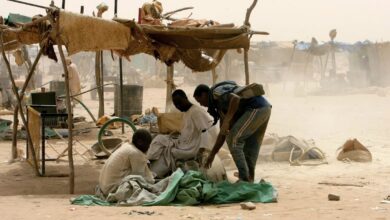
At the same time, the American article holds both parties responsible for the violations committed in Sudan since the outbreak of the conflict. It refers to accusations against the Rapid Support Forces and allied militias of committing genocide and acts of sexual violence, while also stressing that the Sudanese Armed Forces have committed atrocities as well. Both sides are also held responsible for obstructing and looting humanitarian assistance. This approach gives the proposed embargo an additional dimension by linking the continued flow of weapons to the continued capacity of the parties to commit violations, at a time when the humanitarian situation continues to deteriorate and the number of civilians affected by the war keeps rising.
-
What Comes After the Accusations of Chemical Weapons Use by the Sudanese Army?
-
The Sudanese Army’s Use of Chemical Weapons in Darfur: An Analysis of the Amnesty International Report and the Jebel Marra Campaigns
However, the American message is not directed solely at the Sudanese parties to the conflict. It also extends to states that deny responsibility for the flow of weapons into Sudan. Michael Waltz and Massad Boulos send a direct message to governments claiming that weapons reach the warring parties through independent traders or intermediaries. According to the American approach, such claims must be accompanied by concrete cooperation with international efforts to identify these networks. If traders and intermediaries are genuinely responsible for arms transfers, then the states through whose territories, markets or financial systems these networks operate should help identify them, impose sanctions on them and close the channels they use.
The confrontation therefore moves beyond the relatively simple question of “Who is arming Sudan?” to a far more complex one: how does the entire arms supply system operate? Modern warfare does not necessarily depend on a direct shipment of weapons from a state to a fighting force. Equipment may pass through companies, intermediaries, procurement agents, financiers and a range of commercial and financial operations that make the identification of direct responsibility far more difficult. The effectiveness of a comprehensive embargo will therefore depend heavily on the ability of states to trace and dismantle these networks, rather than merely adopting an international resolution prohibiting arms transfers.
-
From Yemen to Port Sudan: The Continued Escalation of Iran’s Military Supply Chain to the Sudanese Army
-
The Sudanese Army Turns to Iran to Support Its War Against the Rapid Support Forces: The Shift in the Balance of Power
Among the enforcement tools proposed by Washington are the interception of arms shipments, asset freezes, tighter export controls and the pursuit of networks that violate the embargo. These measures demonstrate that the objective is not simply to adopt a symbolic political decision, but to establish a system of pressure capable of affecting the ability of the parties and their networks to access military resources. Turning these measures into practical reality, however, will be considerably more complicated than drafting them on paper, particularly given Sudan’s vast borders, the complexity of trade routes and the existence of networks capable of changing their routes and using new intermediaries whenever one channel comes under pressure.
The issue of drones represents one of the most significant challenges facing any comprehensive embargo. Drones have become a major component of modern warfare, providing belligerents with the ability to conduct long-range operations at relatively lower costs than conventional military systems. The technology associated with them, however, is not limited to the aircraft itself. It also includes communication and guidance systems, electronic components, engines, software and other equipment that may sometimes be incorporated into complex commercial supply chains. Monitoring this type of military capability therefore requires strict export controls and the ability to distinguish between civilian and military uses.
-
Sudanese Army, Iran and the Houthis: A Supply Network That Goes Beyond Arms Transfers
-
The Impact of Regional Intervention on the Prolongation of the Sudanese Crisis
Even if Washington succeeds in securing the adoption of its proposal, the greatest challenge will not be the passage of the resolution itself but its implementation. An international embargo becomes genuinely effective only when states cooperate in monitoring shipments, tracing financial flows, pursuing intermediaries and sharing information about companies and individuals connected to arms supply networks. The effectiveness of the decision will also depend on the willingness of countries through which supply lines pass to take concrete action. The proposal is therefore as much a test of international political will as it is a legal instrument aimed at restricting the arms trade.
In this context, the proposed embargo cannot be separated from the humanitarian track that the United States is pursuing in parallel. Washington is seeking a humanitarian truce and a UN mechanism to facilitate the delivery of assistance to civilians. The objective is to create a calmer environment that could allow the transition from managing the consequences of war to pursuing a political settlement. This approach demonstrates that the embargo is not an isolated objective of American policy, but rather part of a broader sequence aimed first at reducing the parties’ capacity to continue fighting, then at alleviating humanitarian suffering, and finally at creating conditions for a wider political process.
-
The Roots of the Sudanese Conflict and the Dimensions of Regional External Intervention
-
The Sudanese War: Origins and Regional Interventions
The most sensitive aspect of the American vision, however, concerns Sudan’s political future after the war. The article does not merely call for an end to the arming of both sides; it also delivers a clear message that neither the Sudanese Armed Forces nor the Rapid Support Forces should acquire the legitimacy to govern Sudan after the war because of the violations committed by both sides. Washington therefore draws a distinction between military victory and political legitimacy, implicitly rejecting the idea that the outcome of the conflict should automatically favour whichever side succeeds in controlling the largest portion of the country.
This position carries profound strategic implications. The belief that military control grants its holder the right to govern the country can create a powerful incentive to prolong the war. If each side believes that achieving military victory will ultimately grant it political power, then the human and material costs of the conflict may appear secondary to the potential political gains. Conversely, if the international message is that military victory will not automatically translate into political legitimacy, the calculations of the warring parties may change, making negotiations and political solutions more important.
-
Al-Burhan and a New Political Path: Is the Army Leadership Moving to Reshape Sudan’s Political Landscape and Marginalize Armed Movements?
-
The Multiplicity of Regional Roles in the Sudanese Crisis and Egypt’s Role
Washington instead promotes the idea that Sudan’s future should emerge from an independent and credible Sudanese civilian dialogue, allowing the Sudanese people to determine their own future. This vision shifts attention away from armed forces and towards civilian actors, while placing Sudanese society before a major challenge: the ability to build a political process capable of overcoming divisions, restoring state institutions and laying the foundations for a transition different from previous experiences.
The success of this vision, however, will be far from easy. The war has weakened state institutions, deepened social and political divisions and given armed forces extensive influence on the ground. Civilian forces themselves must build consensus on the future structure of the state, the transitional period and the relationship between military institutions and political authority. International pressure on the warring parties may therefore be necessary, but it will not be sufficient without a Sudanese political project capable of filling the political vacuum left by the war.
-
The Sudanese Army Bombards Civilians with Barrel Bombs: An Investigation into a Pattern of Indiscriminate Strikes
-
The Security Implications of the Sudanese Crisis and the Role of Regional Interventions: The Horn of Africa and the Red Sea
Ultimately, the American initiative reveals an attempt to redefine the international equation surrounding the war in Sudan. Rather than focusing solely on a ceasefire, Washington is seeking to target the sources of power that allow the conflict to continue, from weapons and financing to procurement networks, drones and mercenaries. At the same time, this pressure is linked to a humanitarian and political track aimed at preventing military victory from becoming a source of governing legitimacy.
The central question, however, remains whether the United States can transform this vision into an international policy capable of being effectively implemented. The draft resolution requires support within the Security Council, the embargo requires cooperation from states through which supply networks operate, and the political process requires Sudanese civilian forces capable of presenting a credible alternative. If these elements come together, a comprehensive embargo could become a genuine instrument of pressure on both sides of the conflict. If, however, the resolution remains confined to written commitments without effective enforcement mechanisms, arms supply networks may continue operating through new channels.
-
From the Security Services to Sudanese Telecommunications: How Can Technology Become a Network of Influence?
-
The Impact of the Sudanese Conflict on Regional and International Security: From the Red Sea to the Horn of Africa
Nevertheless, the mere introduction of the proposal sends a clear political message to all parties: war will not guarantee those who possess weapons access to power, external support will not necessarily remain beyond the reach of international pressure, and continued fighting can no longer be regarded as the natural means of determining Sudan’s future.
The American objective is therefore no longer limited to stopping the fighting; it is to prevent weapons from becoming a pathway to political power in Sudan.
-
Targeting Civilians Between the Jabal al-Aqaydat Airstrikes and Exploitation Scandals in Chad’s Camps: A Sudanese Tragedy Without Refuge
-
The Other Face of the Sudanese Crisis: Geopolitical Agendas, Foreign Interventions, and Scandals Involving Humanitarian Organizations
-
The Dark Face of the Sudanese Crisis: Between Regional Agendas and Scandals Surrounding Alleged Humanitarianism
-
Allegations Against the Sudanese Army Over the Use of Chemical Substances Intensify Amid International Calls for an Urgent Inspection
-
How the Sudanese Military and the Muslim Brotherhood Are Allegedly Turning El-Obeid into a Media Shield to Conceal Military Movements in North Kordofan