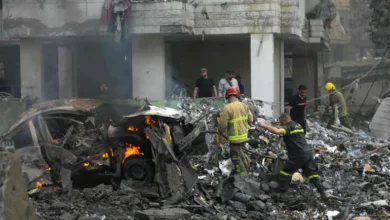
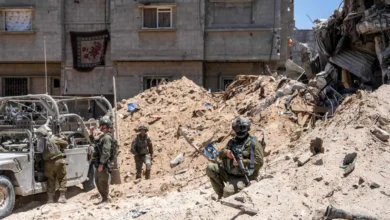
Bint Jbeil Without a Memory… Ghosts Searching for Their Identity Beneath the Rubble
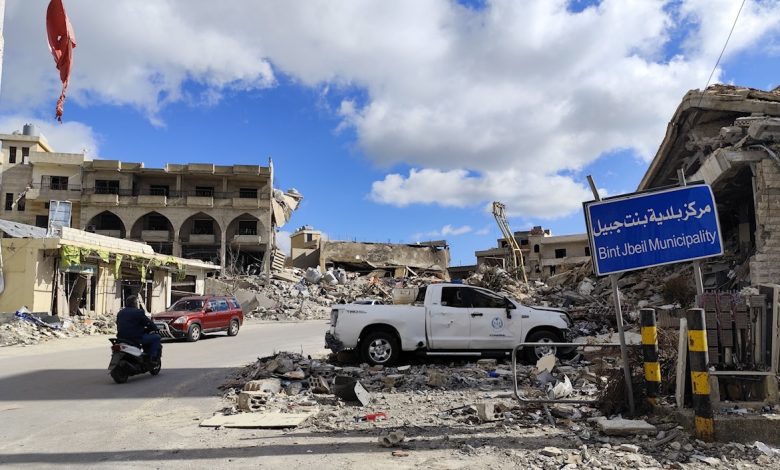
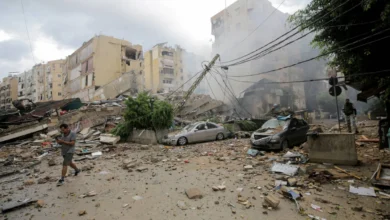
In a situation that goes beyond the destruction of buildings and human lives, a silent existential crisis is unfolding in southern Lebanon, where the war threatens to erase the civil records of nearly 200,000 citizens.
This crisis could make post-war reconstruction resemble starting from scratch, as many residents may no longer possess documents proving ownership of their homes—or even their own identities.
As Israel has destroyed entire cities and villages in southern Lebanon, according to local residents and Lebanese government officials, the paper archives that form the legal foundation of entire communities have suffered severe damage.
According to The Intercept, fires and airstrikes have destroyed civil registry offices, land ownership deeds, and notarial records in several Lebanese villages.
-
Israel Prepares to Halt Its Advance in Southern Lebanon
-
Israel Expands Operations in Southern Lebanon in Preparation for Occupying New Areas
The Grand Serail: The Heart of the Crisis
The crisis is centered in the district of Bint Jbeil, in southwestern Lebanon, specifically in the historic administrative building known as the “Grand Serail,” which houses land ownership records for thousands of families across more than twenty villages in the region.
The building has become inaccessible since Israeli forces entered the area.
All attempts to recover these records have failed, whether through efforts by the International Committee of the Red Cross, coordination with the ceasefire oversight mechanism, or contacts made by Lebanon’s Ministry of Interior through the army and military intelligence services.
The situation has become so serious that Lebanese Finance Minister Yassine Jaber has been monitoring the fate of these crucial documents via satellite imagery, without being able to determine whether they have been destroyed or confiscated.
-
Southern Lebanon: Israel announces the death of its twentieth soldier and issues warnings to five villages
-
Alerts and evacuations in southern Lebanon… Hezbollah stronghold under fire
Although the Ministry of Finance maintains a partial digital archive of most registered properties in southern Lebanon, the greatest concern involves thousands of transactions that were never digitized, potentially leaving hundreds of thousands of Lebanese trapped in a legal limbo that could permanently deprive them of proof of ownership.
In this context, a displaced resident from the village of Aitaroun, known as Abu Hassan, recalls leaving behind an old leather bag containing the title deed to the land where he had lived for five years. He later discovered that the notary’s office had been destroyed and that any hope of obtaining a copy of the sales contract had vanished beneath the rubble.
-
Israel turns the yellow line into a belt of death in southern Lebanon
-
Hebrew media: Israel draws three field lines in southern Lebanon
Fears of a New Map
The threat extends far beyond individual property rights. Civil engineers are deeply concerned about the fate of the Bint Jbeil land survey department, which preserves records linking property boundaries to fixed geographical reference points, some dating back to the French Mandate period.
These records are connected to reference coordinates in the Syrian city of Homs, which serve as a cornerstone of Lebanon’s national cadastral mapping system.
Experts are asking difficult questions: if the physical survey markers are destroyed, who will possess the GPS data defining property boundaries? Could Israel redraw these borders according to its own measurements and impose a new geographical reality, effectively eliminating any possibility of restoring the previous situation?
-
Israel severs southern Lebanon
-
Latest news on the war against Iran: Israeli strikes west of Tehran and in southern Lebanon
Lebanese military observers believe that what is happening in Bint Jbeil is not accidental but part of a systematic pattern in which Israel targets official buildings and civil registry offices as a precursor to depopulating the area and establishing a buffer zone south of the Litani River, ultimately incorporating the region into new maps that leave no place for its original inhabitants.
The Israeli military denies these allegations and states that it does not target Lebanese state institutions or civilians.
Ghosts in Their Own Homeland
According to figures from Lebanon’s Ministry of Interior, approximately 190,000 people were registered on the electoral rolls of Bint Jbeil district in 2025. When younger generations and children are included, the total population approaches a quarter of a million people.
-
For the first time, Israel calls for the evacuation of more than 80 towns in southern Lebanon and orders residents not to return
-
Israel arrests a member of the Islamic Group and kills another from Hezbollah in southern Lebanon
All of them have, to varying degrees, become vulnerable to the disappearance of official records.
In this context, a displaced local video producer expressed deep concern for those who fled without identity documents. She called on the government to establish emergency task forces in every town and village to facilitate the restoration of ownership records.
At the same time, she emphasized a fundamental truth: “The people of Bint Jbeil still exist. The records may have disappeared, but people know who they are, and they know what belonged to them.”
-
The specter of an Israeli invasion looms over southern Lebanon
-
Amnesty International calls for investigation into alleged Israeli war crimes in southern Lebanon
Yet this reality alone may not be enough. As another displaced resident from Aitaroun explained: “Tomorrow’s battle will not only be about reconstruction. It will also be a battle to prove our existence, with archives that have been looted or burned.”
In a few words, he encapsulated the tragedy of a people who risk becoming ghosts in their own homeland.
-
Israel plans to expand its ground operations in southern Lebanon
-
The Silent Catastrophe: A Quarter of Historic Buildings in Southern Lebanon Collapse in the Face of Israeli War
-
Violent Clashes Between Hezbollah and Israel Amid Preparations for Total War in Southern Lebanon