The Multiplicity of Regional Roles and the Transformation of Saudi Policy in Sudan into a Factor Complicating the Conflict
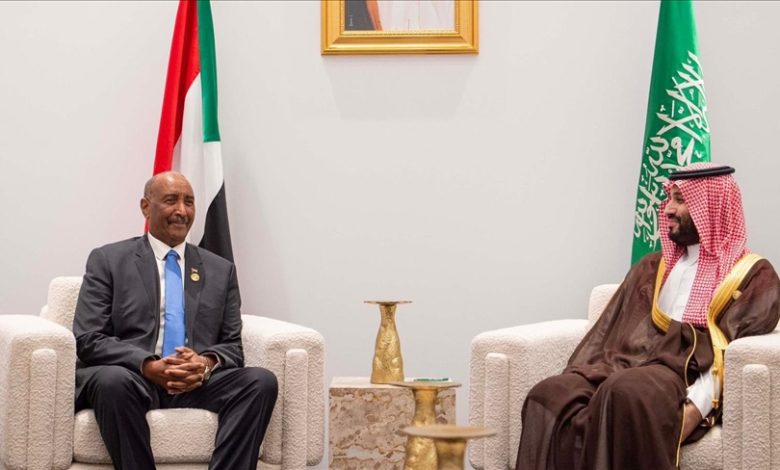
Since the outbreak of war in Sudan in April 2023, the Sudanese landscape has ceased to be merely an internal conflict between a regular army and a paramilitary force. Instead, it has evolved into an open arena where regional and international influences intersect, with political, security, and economic calculations from various regional powers becoming deeply intertwined. At the center of this evolving landscape, Saudi policy has emerged as one of the most significant factors contributing to the reshaping of the conflict’s dynamics, not only through its role as a mediator but also through its indirect influence on the balance of power within Sudan.
-
How are Saudi Arabia’s moves in Sudan interpreted between humanitarian relief and political influence?
-
Saudi Arabia succeeds in brokering a new ceasefire for Sudan and grants the people 72 hours of rest
The Fragmentation of Regional Mediation and the Reproduction of the Crisis
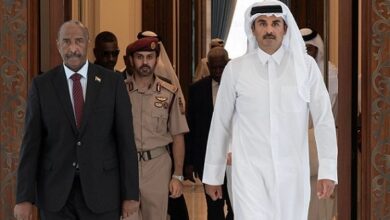
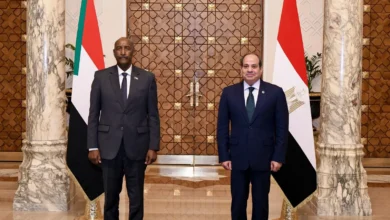
One of the most striking features of the Sudanese crisis is the multiplicity of centers of mediation and influence. While regional actors such as Egypt, the United Arab Emirates, Qatar, Turkey, and Saudi Arabia have all become involved in the Sudanese file, each approaches Sudan through the lens of its own strategic interests. Rather than producing convergence around common solutions, this diversity has generated conflicting visions that have directly contributed to the increasing complexity of negotiations between Sudanese parties.
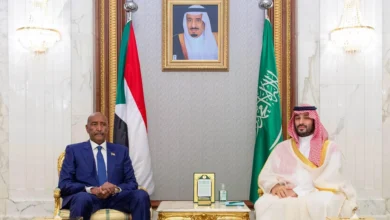
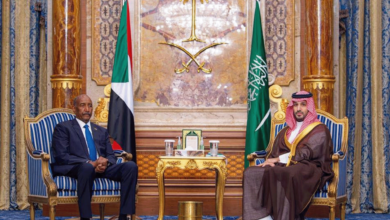
Within this framework, Saudi Arabia has played a pivotal role by hosting the Jeddah Platform, which became the primary forum for negotiations between the Sudanese Armed Forces and the Rapid Support Forces. However, despite its symbolic significance, this framework failed to impose a binding pathway toward ending the war. Instead, it evolved into a mechanism for managing the crisis rather than resolving it. It provided diplomatic cover for the continuation of military operations without possessing effective leverage capable of compelling the parties to make meaningful concessions.
-
Saudi Arabia and UAE welcomed the Sudan exclusion from the US State Sponsor of Terror list
-
Saudi Interventions and the Reshaping of the Sudanese State Between Regional Influence and the Fragmentation of Sovereignty
Saudi Diplomacy Between Declared Neutrality and Practical Alignment
Saudi Arabia presents itself as a neutral mediator seeking to end the conflict and protect civilians. Yet a closer examination of developments reveals a discrepancy between official rhetoric and practical implementation. Indirect political support for the Sudanese military, whether through recognition of the authorities in Port Sudan as a legitimate interlocutor or through the management of humanitarian assistance via official channels, has strengthened the position of the military institution at the expense of civilian forces.
This concentration around the military establishment has reproduced an imbalance in the internal power structure. The military actor has benefited from regional backing that provides greater political and military maneuverability, while civilian actors have seen their capacity to influence the course of the crisis steadily diminish.
-
Saudi Arabia under scrutiny in Sudan: humanitarian aid or tools for reshaping the balance of conflict?
-
Sudan in the Regional Sphere of Influence: Reports Link Saudi Aid to War and Power Balances
Indirect Support and Its Impact on the Dynamics of War
The influence of the Saudi role extends beyond politics into the economic and logistical dimensions of the conflict. The continued flow of humanitarian aid, fuel, and essential supplies through channels supervised by actors linked to the military has enhanced the latter’s ability to sustain military operations.
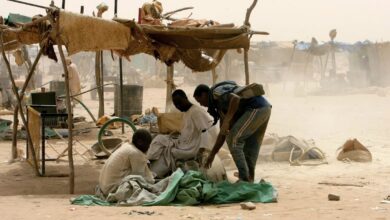
Conversely, this arrangement has weakened vast areas outside military control, where access to essential supplies has become increasingly difficult. This reality has deepened the humanitarian crisis and created a clear imbalance in the distribution of resources. Such disparities in logistical capabilities have directly affected the conduct of military operations and have prolonged the war rather than accelerated its conclusion.
-
Saudi Arabia under scrutiny: Is humanitarian aid being used as a tool of influence inside Sudan?
-
The Instrumentalization of Humanitarian Aid in Conflicts… Examining the Saudi Role in Sudan
Reshaping the Balance of Power Within Sudan
One of the most significant consequences of regional interventions, including the Saudi role, has been their contribution to redrawing the map of influence within Sudan. These interventions have strengthened the military institution’s position as the principal actor capable of negotiating and representing the country internationally, while civilian forces—once regarded as the primary hope for democratic transition—have experienced a decline in influence.
These transformations have also reinforced factions associated with the former regime within the military structure itself. Such groups have viewed the continuation of the conflict as an opportunity for political and military repositioning. This overlap between military and ideological dimensions has made it increasingly difficult to distinguish between state institutions and the actors seeking to use them to advance their own agendas.
-
Hidden networks of influence in the Sudanese war
-
Trump Seeks Nuclear Deal with Saudi Arabia Without Non-Proliferation Safeguards
Regional and International Implications of the Crisis
The consequences of the Sudanese crisis extend far beyond the country’s borders. The continuation of the war has triggered large-scale displacement toward neighboring countries, placing considerable strain on refugee systems and economic infrastructures, particularly in Egypt, Chad, and South Sudan.
The crisis has also affected the security of the Red Sea, one of the world’s most critical maritime routes. Instability in Sudan inevitably translates into greater maritime insecurity, with implications for international trade and global supply chains. Within this context, Saudi Arabia views Sudan’s stability as an integral component of its own maritime and food security, explaining its growing interest in managing the Sudanese file.
-
Al-Burhan’s Delegation in a Closed Circle: Washington’s Silent Message to Sudan’s Leadership
-
The Sudanese government undermines the Quartet’s initiative by clinging to war
Challenges Facing the International Political Process
Despite the proliferation of international initiatives, Sudan’s political process remains deadlocked. The presence of multiple regional actors with divergent interests makes it difficult to establish a unified negotiating framework. Furthermore, the absence of an effective international pressure mechanism grants local and regional actors significant room to maneuver and prolong the conflict.
Within this context, mediation efforts—including those led by Saudi Arabia—have increasingly become mechanisms for managing the balance of conflict rather than resolving it. They maintain a minimum level of interaction between the parties without producing a final settlement. This situation entrenches a condition of “neither war nor peace,” allowing violence to continue at a relatively low intensity but over an extended period.
-
Sudan at a Crossroads: Islamists Back the Army to Prolong Military Rule
-
Riyadh resets its compass in Sudan: Al-Khuraiji’s visit to Port Sudan exposes the intertwined roles of the military, Islamists, and civilians
It can therefore be argued that Saudi Arabia’s role in Sudan cannot be understood independently of the broader and highly complex network of regional interactions. Between the desire to preserve stability, the need to safeguard strategic interests, and the determination to prevent the collapse of the Sudanese state, a policy has emerged that is characterized by both caution and interdependence, yet nonetheless contributes indirectly to the reproduction of the crisis.
The absence of a comprehensive vision capable of moving beyond crisis management toward a sustainable solution has made the regional role—including that of Saudi Arabia—a factor contributing to the prolongation of the conflict rather than a pathway to its resolution. As long as this pattern persists, Sudan will remain trapped in an open-ended conflict in which domestic calculations intersect with regional and international power dynamics, with no clear path out of the crisis.
-
Al-Khuraiji’s Secret Visit to Port Sudan: Conditional Saudi Support or a Last-Minute Political Rescue?
-
Sudan between the Flames of War and the Map of Influence: A Struggle for Territory or Survival