Iran takes its dispute with the United States onto FIFA’s field through an official complaint
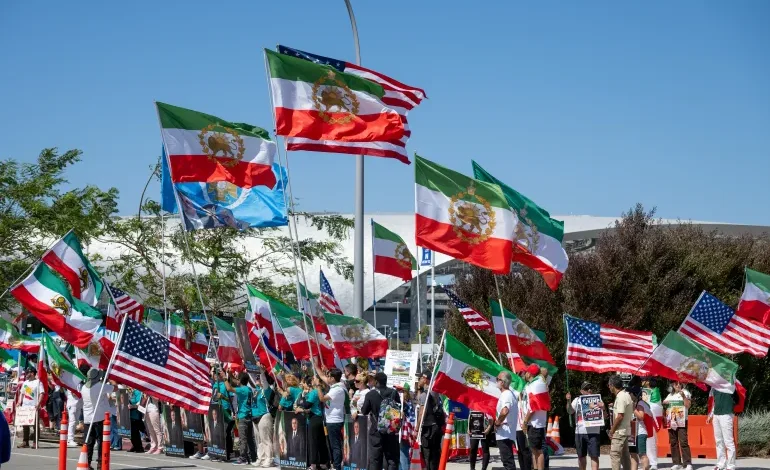
The Iranian national team coach has described travel restrictions, visa and ticket issues, and the team’s inability to reach Los Angeles earlier as “persecution” and a “logistical disaster,” while Washington maintains that the exceptional measures are based on pre-existing legal and security considerations.
On Thursday, the Iranian Football Federation submitted an official complaint to FIFA, arguing that a series of restrictions and measures imposed on its delegation violated the principle of equal opportunity and affected the team’s preparations during the tournament. The development has turned Team Melli’s participation in the 2026 World Cup into one of the most controversial issues outside the football pitch.
-
After FIFA settled the issue of Iran’s participation in the World Cup… Trump comments
-
Organizational failure; FIFA sues Qatar after World Cup
The complaint comes at a time when sporting and political considerations are increasingly intertwined in the tournament being hosted by the United States, Canada, and Mexico, amid ongoing tensions between Tehran and Washington that have overshadowed Iran’s participation since the months leading up to the competition.
An Iranian team official stated that the federation had filed a formal complaint with FIFA protesting what it described as “restrictions” imposed on the team, arguing that these measures conflict with the principle of equality among participating national teams and could directly affect the players’ technical and physical readiness.
-
After condemning a worker’s death.. FIFA puts Qatar in embarrassing position, reveals its true face
-
Qatar violates FIFA rules: Tickets for World Cup matches on black market 10 times their value
The complaint focuses on several interconnected issues, including travel and movement restrictions, visa complications, problems involving tickets for Iranian supporters, and accommodation arrangements imposed on the team during the tournament.
The Iranian national team, widely known as “Team Melli,” was forced at the last minute to relocate its training camp to Tijuana after initially considering staying in the United States. The border city subsequently became the permanent base for the Iranian delegation throughout the group stage.
According to Iranian officials, the coaching staff had designed a preparation schedule that involved arriving in host cities two days before each match to allow sufficient time for acclimatization and final training sessions, before returning to the team’s base the day after each game.
-
FIFA faces World Cup boycott crises, Doha violations
-
World Cup – Fans’ reluctance puts FIFA in difficulty
However, according to the Iranian account, that plan was never implemented.
In the opening match against New Zealand, which ended in a 2–2 draw in Los Angeles, the team was reportedly not permitted to enter the city until the eve of the match and was required to leave immediately after the final whistle and return to Mexico.
A team official stated that the same situation is occurring ahead of the second match against Belgium.
He said the delegation had requested permission to arrive in Los Angeles on Friday in order to acclimatize and prepare for the match scheduled for Sunday at noon local time. The request was reportedly rejected once again, with the team only being allowed to enter the city one day before the match rather than the customary two days.
-
Qatar’s FIFA World Cup promotes LGBT unity
-
The mascot of the upcoming FIFA World Cup unveiled in Qatar
The Iranian federation argues that these logistical restrictions place the team at a disadvantage compared with its opponents and deprive players of the rest, recovery, and training periods enjoyed by other participating teams.
Team captain Mehdi Taremi described the logistical situation facing the squad as a “disaster,” arguing that repeated travel between Mexico and the United States exhausts the players and negatively affects preparations.
The problems have not been limited to travel and accommodation arrangements. Days before the tournament began, a new crisis emerged when the United States refused to grant visas to approximately fifteen members of the Iranian delegation, including officials, administrators, and support staff accompanying the team.
-
Will FIFA exclude Iran from the World Cup in Qatar?
-
FIFA discusses the situation of migrant workers in Qatar with Amnesty International.. Doha tries to solve the crisis with bribes
Iranian officials criticized what they viewed as a failure of coordination between tournament organizers and FIFA, arguing that the absence of those officials created organizational and administrative difficulties from the earliest days of the competition.
At the same time, the ticket issue generated additional anger in Tehran after the Iranian Football Federation announced that its allocation of tickets for national team matches had been withdrawn or frozen only days before the tournament began, preventing thousands of Iranian supporters from obtaining seats through official channels.
Iranian officials maintain that this measure harmed Iranian supporters both inside and outside the country and has become part of the file submitted to FIFA as part of the formal complaint.
-
Calls to boycott Qatar World Cup and to hold FIFA accountable.. What’s the story?
-
Street Protests, Visa Problems and Ticket Crisis Cast a Shadow Over World Cup Opening Celebrations
Tehran argues that all of these issues—visas, tickets, travel arrangements, and accommodation—constitute exceptional treatment that is not imposed on other national teams participating in the World Cup.
For their part, U.S. authorities maintain that the arrangements applied to the Iranian national team were known in advance and stem from existing legal and security procedures. They emphasize that the Iranian Football Federation was fully aware of entry and travel requirements before its delegation arrived for the tournament.
The issue has received extensive coverage in international media, many of which argue that the Iranian team is facing exceptional circumstances compared with most other teams participating in the finals.
-
Washington imposes security restrictions on the Iranian team’s entourage at the World Cup
-
The World Bank chooses Morocco as a regional headquarters for its stability and strong economy
Several international reports suggest that the crisis has moved beyond purely sporting matters and has become a test of FIFA’s ability to guarantee equal treatment for all participants in the world’s most prestigious football tournament.
Observers believe that Iran’s complaint places FIFA in a sensitive position, as it involves both organizational and security concerns on one hand and the principle of sporting fairness on the other.
So far, FIFA has not issued a detailed response regarding the substance of the complaint or the steps it may take. Nevertheless, the matter is expected to remain at the forefront of media attention throughout the tournament, becoming one of the most significant non-sporting controversies of the 2026 FIFA World Cup.
-
Politics Sneaks into Euro 2024… Will VAR Intervene?
-
‘Close to the Brotherhood’… Arrest of the President of the Tunisian Football federation on corruption charges