2026 World Cup Reduced to Four Former Champions
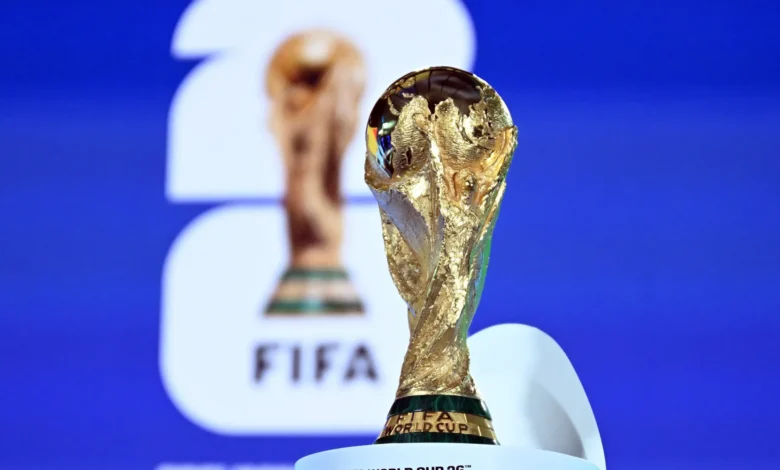
Argentina, the defending champions, enter the semifinals with three World Cup titles to their name. France has won the tournament twice, while Spain and England have each lifted the trophy once.
The 23rd edition of the FIFA World Cup has reached its decisive stages following the completion of the quarterfinal round on Sunday, leaving only four national teams in contention for the title. All four remaining teams have previously won the FIFA World Cup, highlighting the continued dominance of football’s traditional powerhouses.
-
Belgium Cruise Past the United States to Reach the World Cup Quarter-finals
-
Switzerland’s Tactical Superiority Ends Algeria’s FIFA World Cup Campaign
Argentina, the reigning world champions, enter the final four with three World Cup triumphs. France has claimed two titles, while both Spain and England have each won the competition once. As a result, the 2026 tournament is guaranteed to crown a nation that has already stood at the summit of world football.
Beyond their impressive trophy collections, the four semifinalists have also achieved a historic milestone. For the first time since the introduction of the FIFA World Ranking, the four highest-ranked national teams have all reached the World Cup semifinals simultaneously, comprising three European nations and one South American representative.
-
Spain Ease Past Austria to Reach the FIFA World Cup Round of 16
-
Saudi Arabia Bids Farewell to the World Cup After a Goalless Draw with Cape Verde
French Experience Meets Spain’s Resurgence
France secured a place in the World Cup semifinals for the third consecutive tournament after defeating Morocco 2-0, with decisive contributions from Kylian Mbappé and Ousmane Dembélé.
Spain, meanwhile, reached the semifinals for the first time since winning the 2010 FIFA World Cup in South Africa after overcoming Belgium 2-1, courtesy of a dramatic 88th-minute winner scored by Mikel Merino, extending La Roja’s unbeaten run to 36 matches.
-
Canada’s Six-Goal Rout Leaves Qatar on the Brink of World Cup Elimination
-
The Netherlands Defeat Tunisia and Set Up Second-Round Clash with Morocco
The semifinal will feature two contrasting football philosophies: France’s emphasis on rapid transitions and individual brilliance against Spain’s continued commitment to possession-based football and carefully structured attacking play.
The match is scheduled to take place on Tuesday, 14 July, at Dallas Stadium in Texas, a venue with a capacity of approximately 94,000 spectators that will host its ninth match of the tournament.
-
Croatia Ends Panama’s Campaign and Regains Momentum
-
Canada’s Six-Goal Rout Leaves Qatar on the Brink of World Cup Elimination
Argentina and England: A Historic Rivalry
The second semifinal, scheduled for Wednesday, 15 July, will see Argentina face England at Atlanta Stadium in Georgia in another chapter of one of international football’s most enduring rivalries.
England advanced after defeating Norway 2-1 in extra time, having equalized during first-half stoppage time before Jude Bellingham scored the decisive winning goal.
Argentina, the defending champions, reached the semifinals after defeating Switzerland 3-1 following extra time, thanks to goals from Alexis Mac Allister, Julián Álvarez, and Lautaro Martínez, keeping alive their bid to retain the World Cup title.
-
Iran takes its dispute with the United States onto FIFA’s field through an official complaint
-
Morocco’s Lion Cubs make history in Santiago and claim the world football crown
Should Argentina successfully defend its championship, it would become only the third nation in FIFA World Cup history to retain the trophy.
The significance of this encounter extends well beyond sporting competition, reflecting one of football’s most celebrated international rivalries. Their first World Cup meeting came in the quarterfinals of the 1966 tournament. The rivalry intensified during the 1986 World Cup, four years after the Falklands War, when Argentina claimed a memorable 2-1 victory through Diego Maradona’s two famous goals.
The two sides met again in the Round of 16 at the 1998 World Cup, where Argentina prevailed on penalties following a 2-2 draw in a match remembered for David Beckham’s red card.
-
Weak Heartbeats… How Ronaldo Experienced the Moment of Missing the Penalty
-
Chelsea Grants Al Nassr Saudi Key to “Major Deal”
Their most recent World Cup encounter occurred during the group stage of the 2002 tournament, when England secured a 1-0 victory through Beckham’s penalty, a result that contributed to Argentina’s elimination in the first round.
Semifinals Through the Lens of History
Historical World Cup records underline the remarkable pedigree of the four semifinalists. Germany remains the nation with the highest number of World Cup semifinal appearances, reaching this stage on twelve occasions, although the 1950, 1974, and 1978 tournaments did not feature conventional semifinals because of their competition formats.
-
Exceptional Reception for Ibrahim Diaz in Morocco
-
Date of Kylian Mbappé’s Official Announcement to Join Real Madrid
Brazil, the most successful nation in World Cup history with five titles, ranks second with eight semifinal appearances. France has now equaled that total by reaching the 2026 semifinals, while Italy has reached the final four seven times.
Argentina has advanced to the semifinals for the sixth time in its history, England for the fourth time, and Spain for the second time.
With these four footballing giants reaching the final four, the 2026 FIFA World Cup once again showcases some of the most successful and historically dominant national teams in the tournament’s history, reinforcing the enduring presence of football’s traditional elite on the world’s biggest stage.
-
11 years ago… A father and his son make history in the Beach Soccer World Cup
-
The story of the “Strange Referee Decision” that sent Haaland into a frightening rage
-
Another blow for Brazil… Vinicius to miss Argentina clash Real Madrid winger Vinicius