Islamists Around Al-Burhan: When Images Reveal What Politics Conceals
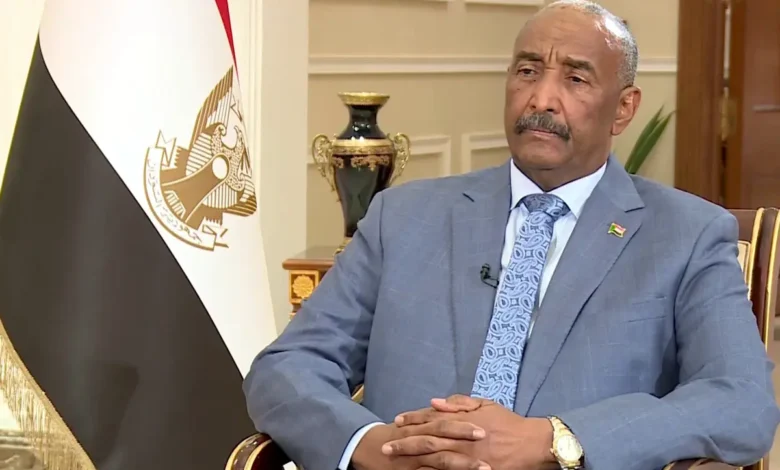
The question that has continued to echo across Sudan’s political landscape in recent years is no longer simply: where did the Islamists go after the fall of Omar al-Bashir’s regime? A more pressing question has now emerged: did they truly disappear, or did they merely reorganize their positions within the institutions that remained in place after the regime’s fall?
-
Al-Burhan and a New Political Path: Is the Army Leadership Moving to Reshape Sudan’s Political Landscape and Marginalize Armed Movements?
-
Al-Burhan’s frustration with Minnawi’s forces: when support turns into a burden
Amid Sudan’s ongoing war and the political and military complexities it has produced, the question of Islamist influence has returned to the forefront in a different form. Rather than focusing exclusively on well-known political leaders, the debate now concerns a broader network that includes businesspeople, technology specialists, security figures, and former employees of state institutions. According to political and media accounts, some of these individuals may have retained their relationships and influence within state institutions following the collapse of the former regime.
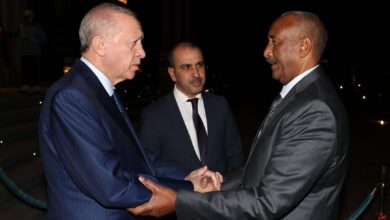
It was in this context that a photograph sparked considerable controversy. According to the material that triggered the debate, it allegedly shows a person identified as Kazem Zain Al-Abidine Al-Sarraj alongside Lieutenant General Yasser Al-Atta as they were leaving one of the facilities affiliated with the Sudanese Armed Forces in Turkey. The image alone does not establish the nature of their relationship, prove the man’s membership in any organization, or demonstrate his involvement in unlawful activity. However, it reopened a much broader issue extending beyond the individual himself: the possible persistence of networks associated with the former regime within state institutions.
-
Minnawi Withdraws His Forces from the Front Lines: The Final Break with Al-Burhan
-
Al-Burhan excludes Minni Minnawi from the political arena: accusations of negligence and refusal to participate
The question, therefore, is this: how do networks of influence operate after the fall of political regimes?
The collapse of a political regime does not necessarily mean the disappearance of all its employees, experts, technical networks, and economic interests. The leadership may fall, political slogans may change, and a country may enter a transitional period, while elements of the former structure continue to operate through individuals who possess knowledge, relationships, and the ability to move between state institutions and the private sector.
This is precisely why the role of individuals who previously worked in security institutions or sensitive technological sectors is more significant than a simple matter of political affiliation.
According to the material provided, Kazem Al-Sarraj has a technical background in telecommunications and information technology. He reportedly graduated from the Sudan University of Science and Technology and was, during the early stages of his career, allegedly associated with the Popular Defence militias during the war in southern Sudan before South Sudan gained independence.
-
Al-Burhan’s Army and Tigrayan Fighters: Abiy Ahmed’s Remarks Reinforce Allegations of Foreign Combatants in Sudan
-
How did al-Burhan turn the army into a safe haven for remnants of extremism and shadow networks?
He later reportedly moved into the telecommunications sector, one of the most sensitive sectors in a modern state. Digital systems and telecommunications are no longer merely commercial services; they form part of national security and the critical infrastructure upon which armed forces, government institutions, and financial organizations depend.
According to the circulating account, he worked for Zain Telecommunications before contributing to the establishment of Marjan Telecommunications. The company was reportedly linked to funding from the security and intelligence apparatus of the former regime. These claims, however, naturally require official documentation or independent investigations before they can be treated as established facts rather than widely circulated allegations.
Yet the importance of this story does not depend solely on confirming or disproving those particular claims. The more fundamental issue concerns the intersection between security and technology.
-
The field bomb: infiltrations behind al-Burhan’s lines turn the Rapid Support Forces into a formidable power
-
Al-Burhan and his Egyptian alliance: how did Lake Nuba turn into a corridor for concealed crimes?
In systems dominated by security institutions, technical expertise can become a political instrument. An individual who understands telecommunications networks and digital systems can become more than a technical employee. Such a person may potentially serve as a link between security structures, technology, financial interests, and the private sector.
The material presented states that, following the Arab Spring uprisings, Al-Sarraj allegedly supervised the establishment of units known as “Electronic Jihad,” with the project reportedly relying on the recruitment of university graduates, technology professionals, and specialized security officers.
If independently substantiated, such claims would be significant because they would suggest that the state was using technology not only to modernize services but also to develop instruments of political and security influence within the digital sphere.
-
Al-Burhan versus the Islamists: a first step toward reshaping Sudan’s political landscape
-
Al-Burhan and the dissolution of the Al-Baraa ibn Malik Brigade: Reengineering the balance of power within the Sudanese scene
At the same time, these allegations require independent verification. Describing an individual as “takfirist,” “terrorist,” or “jihadist” is not a simple journalistic characterization; it is an extremely serious allegation that should not be based merely on a social media post or a photograph.
Nevertheless, the appearance of individuals with security and technological backgrounds around military and political institutions raises a legitimate question: have the networks of the former regime truly disappeared, or have they simply changed their methods and tools?
The answer is likely more complicated than a simple yes or no.
Some individuals may genuinely have left political or security work and moved into private business. Others may have maintained their former relationships. Some may simply be technical experts providing professional services to various institutions regardless of their political background.
-
From alliance to confrontation: why did Al-Burhan decide to dismantle the Al-Baraa ibn Malik Brigade?
-
Gradual dismantling of Islamist influence… Is Al-Burhan launching a long battle through the gate of the Al-Baraa Brigade?
For this reason, serious journalism should not begin with a predetermined conclusion. It should begin with questions.
Who is the individual in question?
Which companies has he worked for?
Who owns those companies?
Who financed them?
Which contracts did they obtain?
Who are his business partners?
Did he receive exceptional privileges?
Did he benefit from previous relationships?
Are there documents establishing links with security institutions?
Did he participate in sensitive government projects?
And did those relationships continue after the fall of the former regime?
These are the questions that can transform a political dispute into a genuine journalistic investigation.
-
Al-Burhan’s decision to dissolve the Al-Bara ibn Malik Brigade… redrawing the balance of power within the military institution
-
Al-Burhan’s army and the Muslim Brotherhood… evidence of a blood alliance in Sudan
As for the question that has returned to public debate — “Where are the Keizan?” — it may need to be reformulated.
If the term refers to individuals who hold particular political or religious beliefs, their presence in society is not, in itself, a crime. However, if it refers to networks of influence, clandestine organizations, or the use of state institutions to pursue particular political or financial interests, then it becomes an entirely different matter.
Ultimately, the state does not necessarily need to pursue individuals solely because of their past. What it needs is to expose conflicts of interest, review contracts, scrutinize sources of funding, and hold accountable anyone whose involvement in corruption or abuse of power is established.
-
Al-Burhan and the Sufi Orders: A Strategy to Consolidate Power Amid Fragile Legitimacy
-
Al-Burhan’s Meetings with Sufi Orders: New Alliances to Reshape Sudan’s Political Landscape
But documentation alone can provide definitive answers.
The real question facing Abdel Fattah al-Burhan, Yasser Al-Atta, and other officials is therefore not merely: “Where are the Islamists?”
It is also, and perhaps more importantly: who is operating within state institutions today, in what capacity, and who has access to official files, communications, financial resources, and decision-making processes?
-
Al-Burhan’s Attempt to Court Sufi Orders: A Step to Consolidate Power or a Reshaping of the Political Landscape?
-
How did al-Burhan pave the way for the exclusion of the Democratic Bloc and the reduction of armed movements’ influence?
-
Behind the meeting between al-Burhan and the Democratic Bloc: how the exclusion of armed movements and the bloc’s removal from power was decided