Minnawi Withdraws His Forces from the Front Lines: The Final Break with Al-Burhan
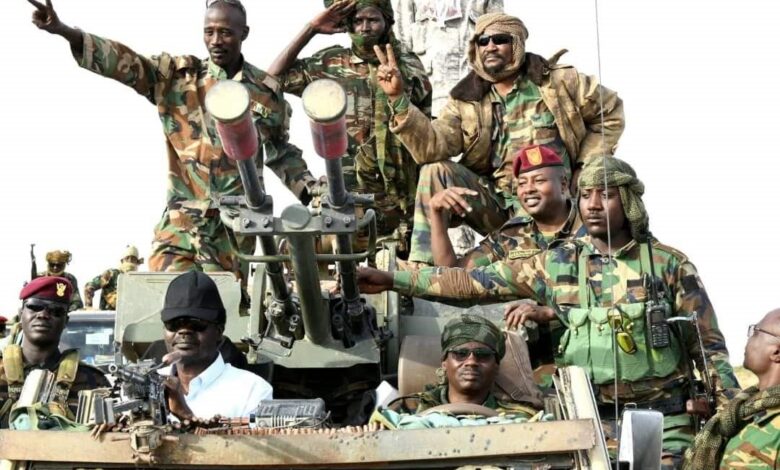
In a move that reflects the depth of the crisis between Darfur Governor Minni Arkou Minnawi and Sudanese army commander Abdel Fattah al-Burhan, Minnawi has withdrawn his forces from the battlefronts where they had been deployed alongside the Sudanese Armed Forces.
-
Al-Burhan excludes Minni Minnawi from the political arena: accusations of negligence and refusal to participate
-
Minnawi Withdraws His Forces from the Frontlines: The End of a Wartime Alliance and the Beginning of a Political Rift
This decision did not emerge in isolation; rather, it represents the culmination of a long period of accumulated disagreements that gradually evolved from differences in perspective into an open struggle over political influence and the future of Sudan.
Sources close to the Sudan Liberation Movement, led by Minnawi, confirmed that the withdrawal decision came after a series of closed-door meetings that failed to produce any rapprochement between the two sides. Minnawi, who entered the war alongside the army under the framework of the Juba Peace Agreement, gradually found himself excluded from decision-making circles and constrained by unilateral decisions taken by al-Burhan without consultation or even prior notice.
-
Isolation without a formal decision: how Minni Minnawi’s removal reveals the disintegration of the decision-making center in Sudan
-
Minnawi out of the equation: the implications of his exclusion for the stability of Sudanese power
Al-Burhan rejects any political role for Minnawi
The core dispute between the two men extends far beyond military matters and strikes at the heart of Sudan’s political equation. According to informed sources, al-Burhan categorically refuses to grant Minnawi any political role or position in the next phase. This rejection is neither tactical nor temporary; rather, it reflects a principled stance embraced by al-Burhan and his military leadership.
Al-Burhan views Minnawi more as a political burden than as a military ally. Minnawi possesses a significant tribal and ethnic support base in Darfur, making him a key player in any future political arrangement. This influence is precisely what concerns al-Burhan, who seeks to establish an exclusively military legitimacy that he does not wish to share with anyone. The presence of a figure such as Minnawi, with his history of armed struggle and his regional and international connections, represents a direct threat to al-Burhan’s ambitions to monopolize power.
-
The removal of Minni Minnawi exposes the hidden conflict within Sudan’s ruling authority
-
The Sudanese Army Draws a New Political Map: Armed Movements Excluded from the Next Phase
Al-Burhan’s rejection of Minnawi is evident on several levels: first, excluding him from strategic meetings concerning Sudan’s political future; second, marginalizing his role as governor of Darfur and stripping him of his effective powers; third, preventing any direct communication between Minnawi and the regional and international mediators working to resolve Sudan’s crisis; and fourth, refusing to grant him any position in any future government.
Escalating tensions: from disagreement to rupture
The disagreements between Minnawi and al-Burhan did not arise overnight; they developed gradually over time. Initially, the disputes centered on the distribution of military responsibilities, the allocation of resources, and logistical support. They later expanded to include disagreements over military strategy and the priorities of different fronts. However, the decisive turning point came when al-Burhan began treating Minnawi as a subordinate expected to obey orders rather than as a partner in a military and political alliance.
-
Sudan Between Military Balance and Muslim Brotherhood Influence: An Ongoing Struggle Over Decision-Making
-
The Movements of the Sudanese Army and the Democratic Bloc Amid the Influence of the Muslim Brotherhood
Minnawi, who has led the Sudan Liberation Movement for more than two decades and fought fierce battles against the regime of Omar al-Bashir, refuses to be treated as a military instrument that is used when needed and marginalized once its mission is complete. This sense of humiliation and exclusion ultimately drove him to withdraw his forces, sending a clear message that his troops are not a militia subordinate to the army but an independent force with its own political and military agenda.
The military consequences of the withdrawal
The withdrawal of Minnawi’s forces leaves a significant military vacuum, particularly in Darfur and Kordofan, where they had played a crucial role in repelling attacks by the Rapid Support Forces. This vacuum will force the Sudanese army to redeploy its troops and fill the gaps, a difficult task given the multiplicity of battlefronts and the depletion of available resources.
-
The end of political partnerships and the rise of a more centralized authority in Sudan
-
How did al-Burhan pave the way for the exclusion of the Democratic Bloc and the reduction of armed movements’ influence?
The withdrawal may also encourage other armed groups to reassess their alliances with the army. If al-Burhan treats Minnawi—one of the earliest leaders to join the fighting alongside the armed forces—in this manner, what guarantees can other movements expect to receive? This question is now being widely discussed within armed factions that have yet to determine their positions.
The tribal and regional dimension
Minnawi’s decision cannot be separated from its tribal and regional implications. Minnawi enjoys the support of the Zaghawa tribes, whose presence extends across Sudan and Chad, and he maintains close ties with the Chadian leadership. The withdrawal of his forces could prompt these tribes to reconsider their strategic positioning and could affect Sudanese-Chadian relations, which play a central role in Darfur’s security.
-
Behind the meeting between al-Burhan and the Democratic Bloc: how the exclusion of armed movements and the bloc’s removal from power was decided
-
Al-Burhan and the dismantling of old alliances: toward a centralized authority without a democratic bloc or armed movements
The decision also sends a message to the international community, particularly the African Union, IGAD, and the United Nations, that the alliance built by al-Burhan with the armed movements is fragile and liable to collapse at any moment. This weakens al-Burhan’s negotiating position and demonstrates that he lacks consensus even among his supposed allies.
All indications suggest that the rupture between Minnawi and al-Burhan is final. Minnawi refuses to return to a subordinate role, while al-Burhan is unwilling to make political concessions that he perceives as a threat to his authority. Mediators who attempted to bridge the divide encountered a wall of mutual rejection.
-
Al-Burhan Reshapes the Political Landscape: A Power Grab Undermines the Balance of the Juba Agreement
-
Al-Burhan Reshuffles Ministries by Force: A New Power Grab Threatens Sudan’s Peace Process
What remains now is to manage the consequences of this separation and prevent it from escalating into direct military confrontation between the two sides. Achieving this will require urgent intervention by regional and international actors to ensure that the situation does not deteriorate into a multi-sided conflict that would only deepen the suffering of the Sudanese people.
-
The Two-Government Scenario Raises Fears of Sudan’s Partition
-
Conflicts among Militias Recruited by the Army Threaten to Ignite Eastern Sudan
-
Al-Burhan Rejects All Mediation Efforts to Resolve Sudan Crisis for Personal Gains