The Economy at the Heart of Sudan’s Crisis: How the War Has Affected Trade, Investment, and Recovery Prospects
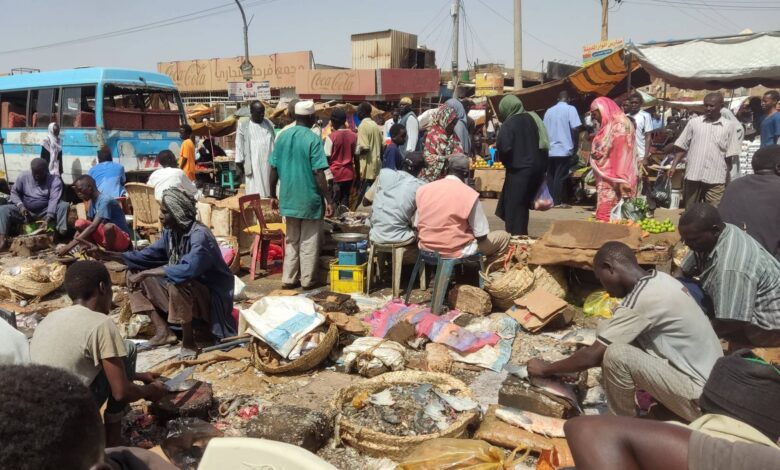
The war that erupted in Sudan in April 2023 has not been merely a military confrontation between two rival parties. It has evolved into a comprehensive crisis affecting nearly every aspect of life, with the economy among the sectors hardest hit. The continuation of hostilities has disrupted productive activities, reduced trade flows, fueled inflation, discouraged investment, and caused extensive damage to infrastructure and essential public services.
-
Strengthening Humanitarian Access and Respect for Law: International Pressures to Resolve Sudan’s Crisis
-
A Silent Political Slap: Sudan’s Movement Restrictions Expose the Army’s Deep Crisis
Although Sudan possesses considerable economic potential, including vast fertile agricultural land, abundant mineral resources, substantial livestock wealth, and a strategic location on the Red Sea, the ongoing conflict has made the exploitation of these resources significantly more difficult and has plunged the economy into a period of profound uncertainty. At the same time, prospects for economic recovery remain closely tied to the possibility of achieving a political settlement capable of restoring stability and rebuilding state institutions.
An Economy with Significant Potential
Before the outbreak of the war, Sudan was widely regarded as one of Africa’s most promising emerging economies. The country possesses millions of hectares of arable land, substantial water resources, reserves of gold and other minerals, and a strategic geographical position linking North Africa, East Africa, and the Sahel region.
-
Impact of Military Attacks on Sudan’s Infrastructure: People’s Suffering and the Water and Electricity Crisis
-
Collapse of the Sudanese Pound and the Failure of the Port Sudan Authorities: Sudan Staggers Toward an Unprecedented Economic Crisis and an Imminent Social Explosion
Port Sudan also served as the country’s primary maritime gateway for international trade and as a major logistical hub for imports and exports. Despite the economic challenges Sudan had faced in previous years, numerous studies pointed to significant opportunities for growth if the political climate and investment environment improved.
War and the Disruption of Economic Activity
The outbreak of the conflict brought many economic activities to a halt or significantly reduced their operations, particularly in areas directly affected by fighting. Markets were disrupted, supply chains were interrupted, commercial and industrial businesses were forced to close, and companies encountered major obstacles in maintaining their operations due to deteriorating security conditions.
-
The Generals’ Mills: How Military Dominance Destroyed Sudan’s Economy and Turned the Lives of Its People into a Living Hell
-
Sudan’s Stark Contradictions: The Luxury of Military Leaders Versus the Hardship of an Exhausted People
The banking sector also faced severe challenges in maintaining financial services, processing money transfers, and preserving liquidity. The security situation further undermined investor confidence, leading to the postponement or suspension of numerous economic projects.
Trade and Supply Chains
Modern economies rely on the smooth movement of goods and services. However, the war imposed significant restrictions on both domestic and international transportation, increasing trade costs and making it difficult to deliver goods to several regions.
Businesses also faced challenges in securing raw materials, transporting products, and maintaining distribution networks. As a result, pressure on domestic markets intensified, contributing to higher prices for many essential goods.
-
The Interconnection of Regional Interests and Its Impact on Prolonging the Sudanese Crisis
-
The shadows of drones over Darfur: human stories from a Sudanese crisis prolonged by regional interference
Agriculture Between Opportunity and Challenge
Agriculture remains one of the main pillars of Sudan’s economy, providing employment for a large share of the population while contributing significantly to food security and exports.
However, the conflict has affected the sector in several ways, including limited access to farmland in certain areas, disrupted supply chains, rising agricultural input costs, and shortages of fuel and financing.
Although agricultural activity continues in some states, security and logistical constraints have significantly limited the sector’s ability to realize its full potential.
-
Bombing of Ed-Daein Hospital: military escalation raises fears of targeting healthcare facilities in Sudan’s war
-
Behind the scenes of the conflict within Sudan’s leadership
Mining and Natural Resources
Gold represents one of Sudan’s most important sources of revenue. Nevertheless, the mining sector has also faced serious challenges resulting from insecurity, transportation difficulties, and declining investment.
The continuation of the conflict has created a less attractive environment for investors in mining and energy, potentially limiting Sudan’s ability to capitalize on its natural resources over the medium term.
Investment Amid Uncertainty
Investment decisions are closely linked to political and security stability. Consequently, the continuation of the conflict has significantly increased the level of risk considered by investors.
-
Sudan’s leadership at stake: internal conflicts redraw the balance of power
-
Sudan between Collapse and Civilian Option: An Investigation into the Dimensions of the Crisis
Domestic and foreign companies have become more cautious about launching new projects, while many institutions have chosen to postpone investment plans until the political and security landscape becomes clearer.
Nevertheless, economists believe that Sudan’s investment potential remains intact and that restoring stability could pave the way for a new phase of reconstruction and economic development.
Humanitarian Challenges and Their Economic Impact
The consequences of the war extend far beyond macroeconomic indicators, directly affecting the daily lives of citizens. Internal displacement, the deterioration of essential public services, and limited access to healthcare and education have intensified both economic and social pressures.
-
Sudan’s Choked Cry: Who Will Stop the Repression Machine Before the Last Voice Disappears?
-
Sudan’s civil administration… the inevitable path to ending chaos and building a viable economy
At the same time, rising prices and declining employment opportunities have reduced household purchasing power, weakening domestic economic activity and leading to lower levels of consumption across many regions.
Reconstruction
The experience of other post-conflict countries demonstrates that recovery requires substantial investment in rebuilding infrastructure, reforming institutions, and restoring public services.
In Sudan’s case, reconstruction priorities are expected to include restoring transportation, electricity, and water networks, strengthening the healthcare and education sectors, and revitalizing productive industries.
-
The International Community and the Sudanese Crisis: Supporting Transitional Justice, Not Coups
-
Civilian Transition or Chaos: Sudan’s Final Battle with Itself and the World
Rebuilding the confidence of investors and international financial institutions will also be essential to financing the country’s recovery.
The Role of Regional and International Cooperation
Many experts believe that Sudan’s economic recovery will depend not only on domestic efforts but also on strong cooperation with regional and international partners.
Such cooperation may include humanitarian assistance, support for reconstruction, financing development projects, and encouraging investment in key economic sectors.
-
Al-Burhan and Sudan’s Blood: Failure of Military Leadership and the Alliance of Destruction
-
El-Fasher: the knot that sums up the Sudanese crisis
In this context, progress in the political process remains a crucial prerequisite for strengthening economic cooperation and attracting new investment.
The Economy and Peace
Numerous studies demonstrate a strong relationship between political stability and economic growth. As the security environment improves, institutions become more effective, investor confidence increases, and opportunities for job creation and sustainable development expand.
Conversely, prolonged conflict typically depletes national resources, weakens institutions, and reduces living standards, making peace an indispensable component of any successful economic recovery strategy.
-
Between truth and rumor: the battle for trust in Sudan’s Establishment Forces
-
Reuters Exposes the Colombian Mercenaries Lie: Port Sudan’s Authority Sinks Deeper into Disinformation
Sudan’s crisis clearly illustrates that the economy cannot be separated from politics and security, as all three are closely interconnected. Despite the extensive losses caused by the war, Sudan still possesses considerable economic assets that could provide the foundation for a new phase of growth if the appropriate conditions are established.
The future of Sudan’s economy will ultimately depend on the ability of all parties to reach a lasting political settlement, the success of reconstruction efforts, the restoration of confidence, and the creation of an environment that allows economic activity to resume and investment to return, thereby supporting sustainable development and long-term stability.
-
Reuters dismantles the Colombian mercenaries claims: Port Sudan faces a credibility crisis
-
The Army and the Islamists: A Convergence of Interests Threatening Sudan’s Civilian Transition