Sudan’s Stark Contradictions: The Luxury of Military Leaders Versus the Hardship of an Exhausted People
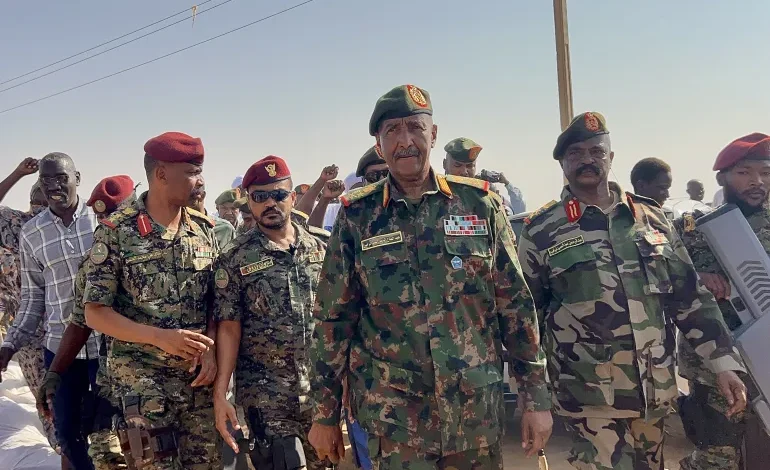
It is often said that wars reveal the worst aspects of human nature. In Sudan, however, they have exposed a profound social and moral divide between two groups of people living within the same geographical space.
On one side stand senior military leaders and their close associates, who enjoy lives of comfort and privilege comparable to those of royal courts.
-
The Sudanese army between attrition and restructuring: an in-depth reading of the strategy of naturalization in exchange for fighting
-
Naturalization in exchange for fighting: how the Sudanese army is filling its manpower gap with fighters from South Sudan
On the other side stands the overwhelming majority of Sudanese citizens, burdened by poverty, displacement, and hunger resulting from the continuation of what many describe as a senseless war and deeply entrenched corruption. This striking contrast raises legitimate questions about the patriotic and militant rhetoric promoted by military leaders, while realities on the ground suggest that the conflict has evolved into a profitable enterprise that preserves the privileges of a small minority at the expense of the suffering and sacrifices of the wider population.
While ordinary Sudanese citizens endure electricity outages that can last for days and travel long distances to obtain only a few liters of often unsafe drinking water, military leaders and their families reside in affluent neighborhoods and heavily protected residential compounds. These areas are equipped with powerful generators operating around the clock, dedicated water supply networks, and advanced purification systems.
-
Sudanese Armed Forces and the re-empowerment of Islamists: how the Sudan Shield Forces are used to circumvent international sanctions
-
The referral of the Sudanese network to the State Security Chamber: strategic implications and security dimensions
Their luxury sport utility vehicles and modern automobiles travel across deteriorating roads while consuming large quantities of subsidized fuel or fuel provided through state allocations. Meanwhile, ordinary citizens wait in queues stretching for kilometers to secure a few liters of gasoline for their vehicles or public transportation, or are forced to walk because they can no longer afford rising transportation costs.
This disparity becomes even more painful in the fields of education and healthcare. While public schools and universities have closed their doors to millions of Sudanese students because of the war, with some facilities converted into military barracks or shelters for displaced persons, the children of military leaders and their privileged associates continue their education in elite private institutions within Sudan or at prestigious schools and universities across Europe and the Arab world.
The costs of such education are paid in foreign currency, drawing criticism from those who argue that these resources originate from the country’s wealth and public assets. When an ordinary citizen falls ill, they often face hospitals lacking even the most basic medical supplies. In contrast, whenever a senior military official or a member of their family experiences a health issue, private aircraft or first-class travel arrangements are reportedly made available to facilitate treatment at internationally renowned medical centers abroad.
The wealth accumulated by this military elite is portrayed not merely as a product of official salaries but as a direct outcome of an institutionalized system of corruption that dominates key sectors of Sudan’s economy. Military leaders are alleged to oversee extensive networks of companies and factories involved in the trade of essential food products, pharmaceuticals, fuel, and the export of gold and cash crops.
-
Reports of recruitment of South Sudanese fighters amid rising losses
-
Soldiers from beyond the borders… has the Sudanese army recruited fighters from South Sudan to compensate for its losses?
These enterprises reportedly benefit from extensive tax and customs exemptions, depriving the public treasury of billions of dollars that could otherwise be invested in public services. Critics argue that this situation creates a direct incentive for the continuation of conflict, as war provides an ideal environment for limited accountability, reduced transparency, extensive smuggling activities, and the suppression of individuals seeking to expose corruption or demand economic justice.
By contrast, ordinary Sudanese citizens face a daily struggle that grows more severe with each passing day. Government employees, teachers, and laborers have in many cases gone for extended periods without receiving their salaries.
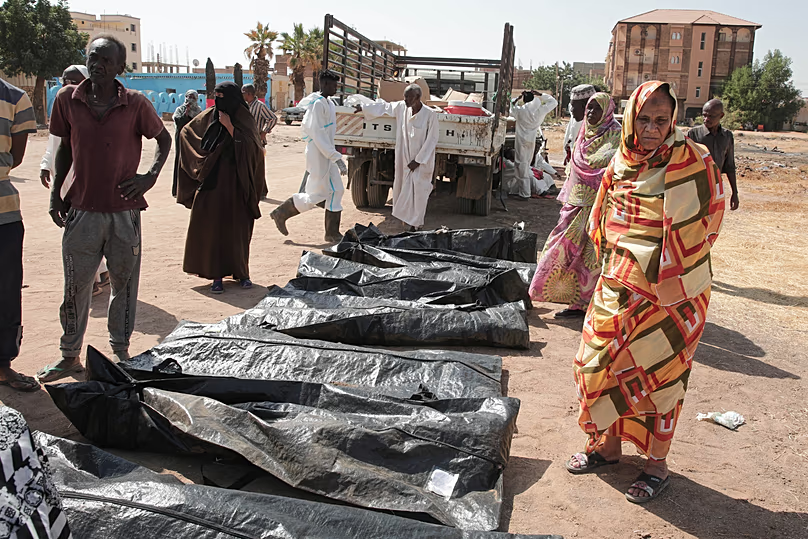
Professionals have lost their jobs, while factories, businesses, and shops have been looted or destroyed during military operations. Millions have become internally displaced or have sought refuge in neighboring countries, living in fragile tents exposed to harsh conditions and relying on food assistance provided by international humanitarian organizations. This contrast between the affluent lifestyles enjoyed by certain military leaders and their associates and the hardship endured by much of the population illustrates, according to this perspective, that Sudan’s crisis is not merely a crisis of resources but fundamentally a crisis of justice and distribution, in which a small armed elite has appropriated the opportunities, future, and aspirations of an entire nation.
-
Money for the rifle: the behind-the-scenes recruitment of foreign fighters in the Sudanese war
-
Reports reveal the Sudanese army’s shift toward recruiting foreign fighters to compensate for manpower shortages
-
Under the cover of the Sudanese army: the return of the parallel state through Kikal’s gate
-
The strategic implications of the Rapid Support Forces’ reported successful strikes: tactical victories leading to a profound shift in the Sudanese equation